Warm Neutral Living Rooms · THE GUIDE
Flank a Non-Working Fireplace with Low Book Benches
Non-working fireplaces often create awkward alcoves on either side of the chimney breast. Standard tall bookcases can crowd the room and make the hearth appear smaller than it is. Low book benches offer a functional, grounded alternative that keeps sightlines open while utilizing underused perimeter square footage. By keeping the horizontal surface low to the floor, you preserve architectural symmetry, establish dedicated areas for reading material, and gain flexible bench space for casual lounging or decorative trays. This approach anchors the room in warm neutral tones without visual heaviness.
Jump to the checklist ↓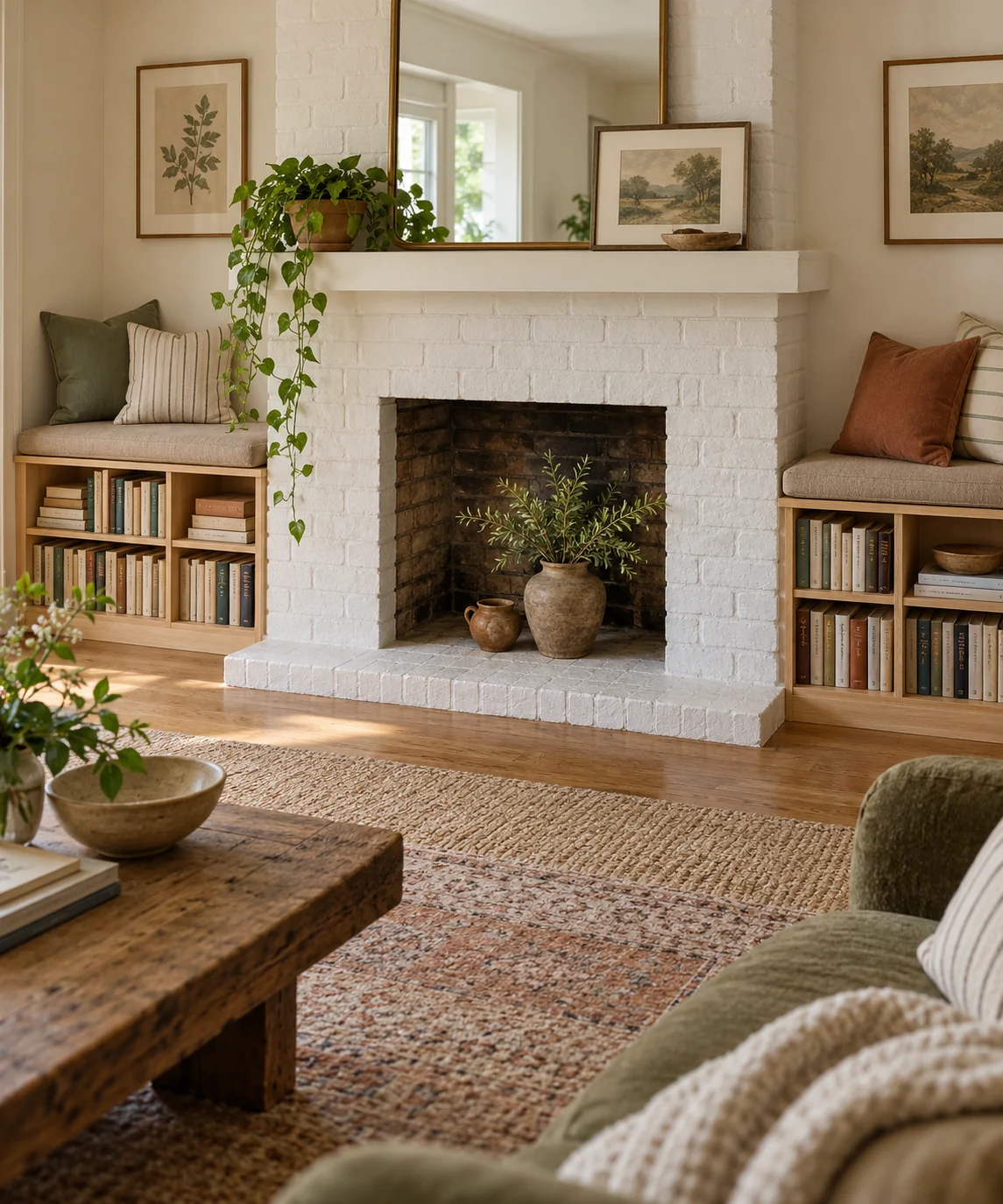
Measuring Alcove Width and Depth
Accurate planning begins with verifying alcove dimensions on both sides of the chimney breast, as historical alcoves often vary in both width and depth. Measure the distance from the front face of the chimney breast back to the rear wall, and record the width along the floor and baseboards. Selecting low furniture that leaves breathing room on either side prevents scuffing finished walls and makes placement easier. Consider choosing a bench depth that remains flush with or sits back from the hearth projection, which keeps normal walking paths unobstructed and maintains clean sightlines around the fireplace surround.
Selecting Low-Profile Birch or Light Wood Frames
Birch ply, ash, or light oak frames introduce gentle warmth without dominating a soft, neutral palette. A low profile matching standard lounge seating creates a grounded horizontal line across the alcove. Open compartments beneath the bench top provide accessible space for stacking art books or arranging paperbacks vertically with supportive bookends. Review the manufacturer's specified shelf weight capacities when planning heavy book storage, as longer unsupported spans may require center support legs or thicker material profiles to support dense paper weight over time.
Arranging Books to Maintain Visual Lightness
An open lower shelf benefits from thoughtful weight distribution to avoid a crowded look. Group paperbacks and hardcovers loosely by cover tone, or lay larger illustrated volumes flat in modest stacks. Leaving open breathing room between book groupings keeps the alcove feeling balanced rather than congested. For loose paper items, small accessories, or media cables, consider using lidded fabric or woven storage bins that slide neatly into the compartments to keep visual clutter to a minimum.
Layering Wool Pads and Neutral Seat Cushions
To soften the wooden surface, top each bench with a low-profile cushion or wool felt pad. Choosing neutral woven textiles like wool blends, heavy linen, or textured cotton canvas in sand, oatmeal, or muted taupe maintains a calm living room aesthetic. Non-slip grip underlays placed beneath cushions help limit sliding during everyday use. Keeping cushion profiles relatively slim helps preserve the low visual proportion of the bench relative to surrounding lounge chairs and the fireplace mantle.
Managing Wall Clearances and Baseboard Obstacles
Baseboards and decorative moulding often prevent rectangular furniture from sitting entirely flush against a wall. Take note of the height and profile of any skirting boards before selecting furniture. Some modular units include recessed legs or slight rear top overhangs designed to clear standard trim. If a bench has straight, flush sides, allowing a slight intentional gap behind the frame prevents abrasion against plasterwork and provides a channel to route low-voltage lighting or lamp cords neatly without pinching.
YOUR STARTING POINT
A little checklist.
Original editorial guidance. Images are AI-generated concepts, not photographs of completed projects. Our sources and approach.
Questions to consider
Can low book storage benches be used for adult seating during gatherings?
Only if the specific piece is explicitly rated and certified by the manufacturer as a seating bench. Many low units are designed strictly for display or book storage and lack the joinery, load rating, and lateral stability required to safely hold adult weight. Always check product specifications before using storage furniture for secondary seating, and do not attempt DIY structural modifications on unrated cabinets.
How do I keep books from gathering dust on lower alcove shelves?
Choose units where the bottom shelf sits raised above the floor rather than directly on carpeting or hardwood. Regular vacuuming around the perimeter with a soft brush attachment minimizes airborne particles, and gently wiping the shelving surfaces with a dry microfiber cloth helps prevent dust buildup along book edges.
What cushion materials work best for low alcove benches?
Medium-density foam cores wrapped in breathable covers such as wool, linen, or cotton canvas balance comfort and shape retention. Removable, washable covers simplify maintenance over time, while non-adhesive grip netting positioned underneath stops the pads from shifting across finished wood.