Indoor Plant Styling · THE GUIDE
Flank an Entryway Mirror with Symmetrical Air Plant Sconces
Entryways frequently have tight spatial constraints, making floor planters difficult to accommodate without impeding pathways. Flanking a central foyer mirror with a matched pair of wall sconces holding air plants introduces greenery while preserving console and floor space. Because epiphytic plants like Tillandsia absorb moisture and ambient light through their foliage rather than soil, they avoid dirt spills and heavy drainage in high-traffic hallways. Proper positioning requires checking clear traffic routes, matching plant types to available daylight, and securing sconces according to wall construction.
Jump to the checklist ↓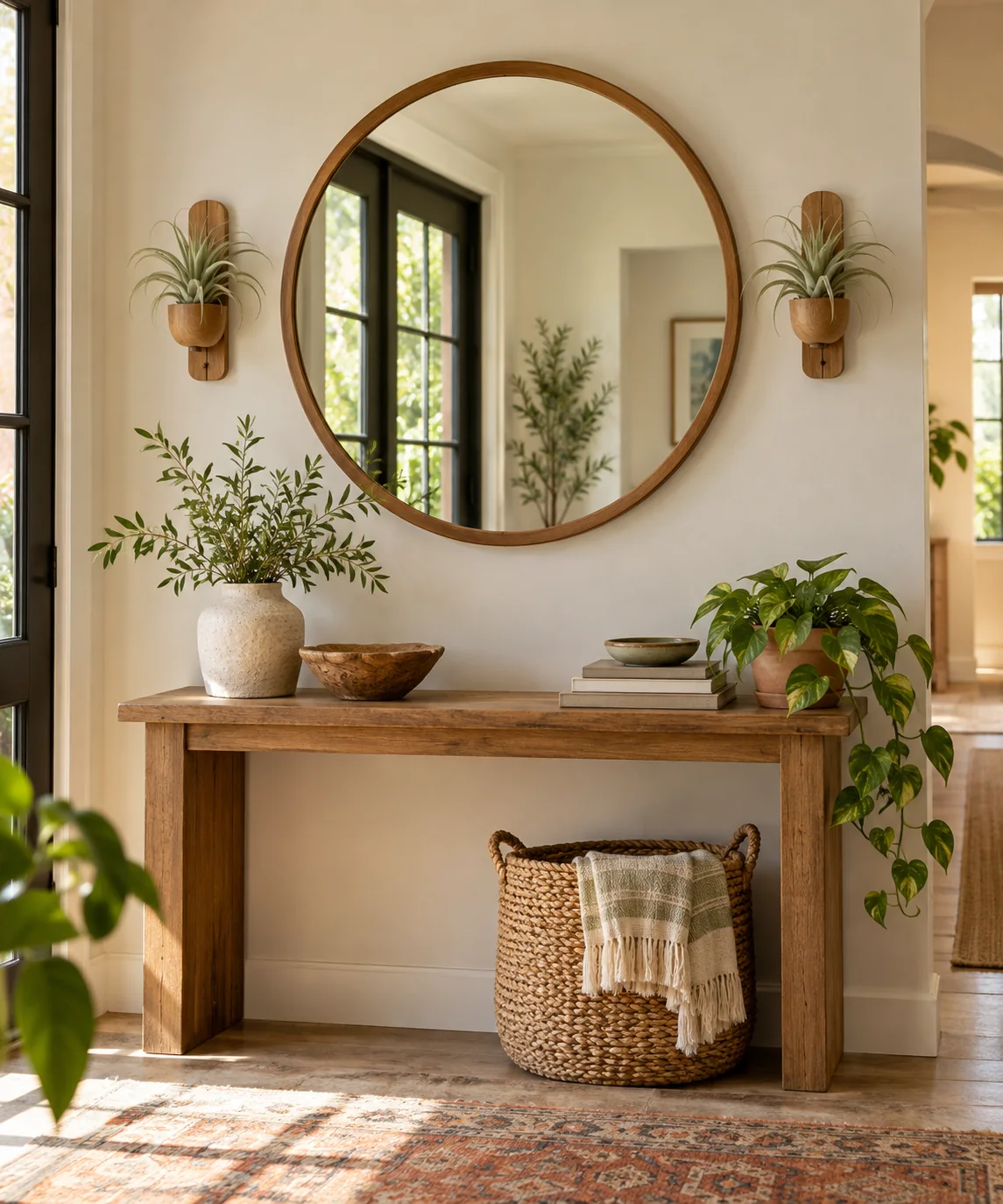
Evaluating Mirror Proportion and Sconce Scale
Examine the size and shape of your entryway mirror along with the available wall area before selecting sconces. Instead of relying on rigid spacing formulas, assess visual balance by checking that the sconces neither crowd the mirror frame nor appear lost on a broad wall. Ensure the placement leaves adequate clearance on both sides so that individuals entering the home, carrying bags, or removing outerwear do not brush against the plants or dislodge them from their mountings.
Selecting Air Plant Varieties for Entry Hallways
Choose Tillandsia varieties suited to the light levels present in your foyer. Silvery xeric varieties like Tillandsia xerographica generally tolerate brighter, more direct illumination and drier ambient air. Greener mesic species like Tillandsia ionantha prefer moderate, filtered light. Avoid placing live air plants in enclosed, windowless entryways without adequate natural daylight, as they require sufficient ambient light to sustain growth unless supplemented with dedicated horticultural lighting.
Planning Placement and Checking Clearance
Before installing permanent wall hardware, test the layout using lightweight paper templates or masking tape markings. Observe how household members move through the entry during busy morning or evening hours to verify that shoulders, coat racks, and opening doors clear the sconce zone comfortably. When ready to mount the sconces, select fasteners and anchors suited to your specific wall material following the hardware manufacturer's guidelines.
Managing Hydration Routines Off the Wall
Maintain the plants by removing them completely from their sconces prior to watering, which protects wall paint and wood finishes from moisture damage. Submerge the plants in a bowl of room-temperature water or mist them thoroughly according to the humidity in your home. Shake off excess droplets and allow the plants to dry completely upside down in a well-ventilated area before returning them to their wall holders, preventing moisture accumulation at the plant base that can lead to rot.
Adapting to Entryway Drafts and Temperature Shifts
Entryways often experience rapid temperature fluctuations from frequently opened exterior doors. Observe plants closely during seasonal changes for curled leaves, browning tips, or premature drying. If your entryway experiences severe winter drafts or intense summer heat, relocate the air plants to a more sheltered interior space with stable conditions, keeping the sconces as decorative wall accents until outdoor conditions moderate.
YOUR STARTING POINT
A little checklist.
Original editorial guidance. Images are AI-generated concepts, not photographs of completed projects. Our sources and approach.
Questions to consider
How do I know if my entryway receives enough light for air plants?
Air plants need reliable indirect daylight to survive. If the area is dim or lacks natural light from windows or door glass, consider using artificial greenery or adding a dedicated plant light.
Can I glue air plants directly into the sconces?
Avoid gluing air plants into holders. Keeping them loose allows you to remove them easily for thorough watering and complete drying, which helps prevent base rot and wall damage.
What should I do if my entryway is subject to severe drafts?
Place sconces away from the direct rush of exterior air, or temporarily move sensitive plants further into the home during extreme cold snaps to prevent chilling injury.