Warm Neutral Living Rooms · THE GUIDE
Float a Linen Sofa to Create an Entry Pathway
When your front door opens directly into a compact living room, footsteps often cut straight across the conversation area. Floating a linen sofa away from the wall offers a structural solution without adding permanent partitions. By turning the back of the sofa toward the entryway, you create an intentional corridor that catches arriving footsteps and guides them cleanly past the seating cluster. Warm neutral linen softens this boundary, providing a calm visual backdrop the moment you cross the threshold while keeping the seating zone cozy, distinct, and protected from daily entry commotion.
Jump to the checklist ↓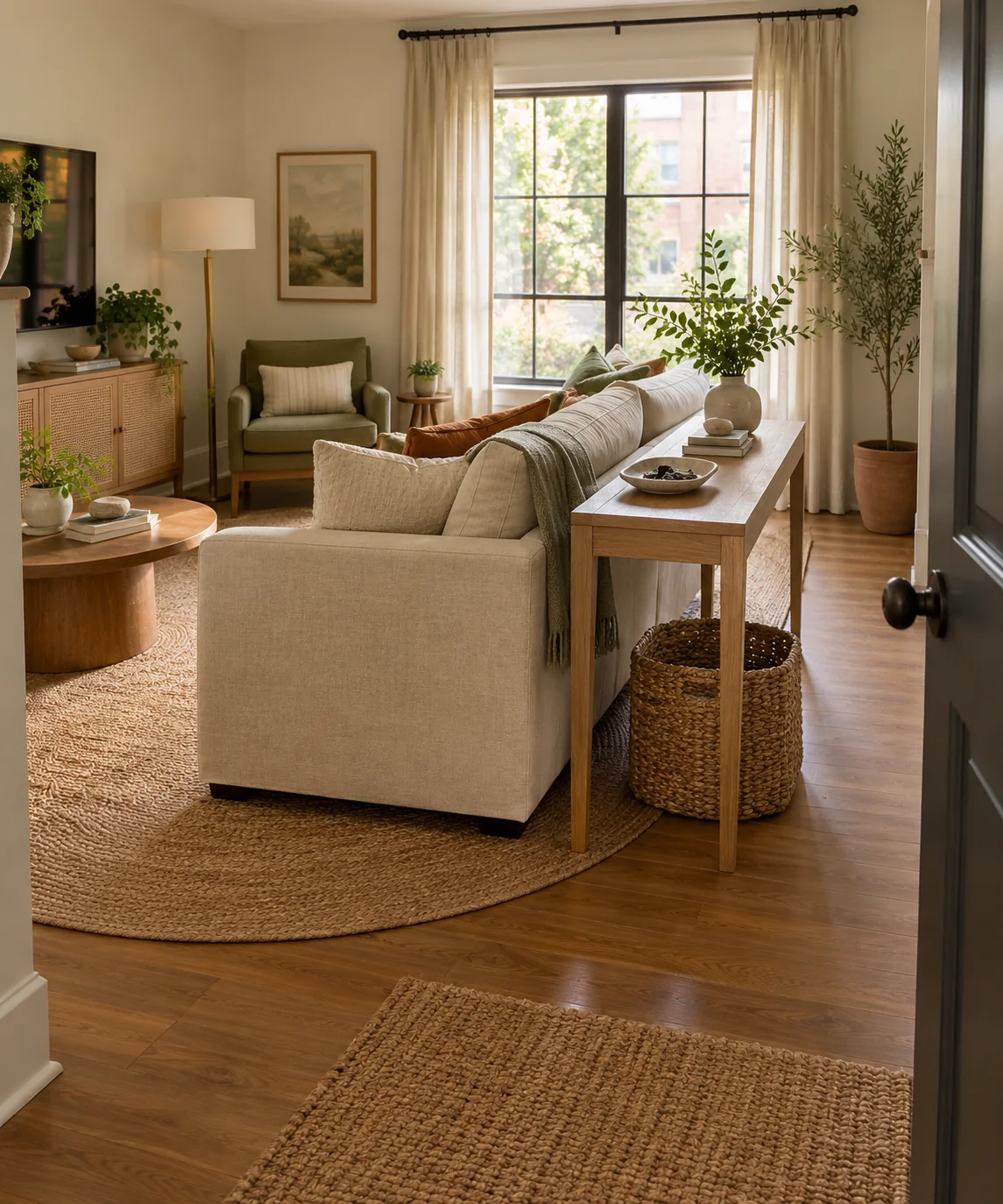
Map Clearances Before Shifting Furniture
Begin by assessing circulation routes before moving heavy furniture. A functional entry corridor benefits from generous walking space, often planned around roughly three feet depending on door swings, wall fixtures, and household traffic patterns. Verify that the primary entry door opens smoothly without clipping sofa corners or forcing awkward side-stepping. If your living room is narrow, adjust the sofa forward incrementally until the transit line feels unobstructed. Test the route during routine activities, such as carrying groceries or laundry baskets, to confirm that the corridor supports realistic daily movement rather than an uncomfortably cramped squeeze.
Position the Linen Sofa as a Boundary
Place the sofa parallel to the entrance wall to establish an immediate, functional room divider without erecting permanent walls. An oat or sand linen fabric works effectively in high-visibility locations because its matte, textured weave softens ambient glare while cleanly delineating the edge of the seating lounge. Orient the back of the sofa so it extends slightly past the door frame, catching the primary sightline upon entry. This layout visually signals the end of the arrival threshold and the start of the living room, helping shield seated occupants from doorway drafts and visual entrance clutter.
Integrate a Narrow Console Behind the Back
A slim console table positioned against the back of the sofa adds practical landing space for a compact entryway. Choose a shallow table scaled to leave comfortable passage through the walking zone without protruding into traffic. Aim for a table height that sits slightly below the sofa back cushions so it remains visually quiet from the seated side. Keep this surface dedicated to basic everyday items, such as a shallow tray for keys or mail, ensuring items do not spill over or obstruct the open sightlines across the room.
Ground the Living Area with Separate Rugs
Strategic floor coverings prevent a floating sofa arrangement from feeling disconnected. A durable flat-weave runner placed along the entryway path delineates the walking corridor and catches preliminary foot traffic. Within the conversation circle, anchor the sofa and complementary seating with a larger woven wool or natural-fiber area rug. Ensuring the front legs of the sofa sit securely on the living room rug ties the furniture grouping together, visually separating the transit walkway from the quiet relaxation space.
Manage Textile Care Near High-Traffic Zones
Locating textured linen near an exterior entry exposes the upholstery to tracked-in soil, dust, and changing light conditions. Protect the fabric by regularly vacuuming the back panel, welting, and crevices using a soft brush attachment to prevent dust from settling deep into the weave. Place an absorbent mat at the exterior threshold to capture grit before footsteps enter the sofa corridor. If strong direct sunlight reaches the sofa from sidelights or open doors, adjust window coverings during peak exposure to minimize fabric fading over time.
YOUR STARTING POINT
A little checklist.
Original editorial guidance. Images are AI-generated concepts, not photographs of completed projects. Our sources and approach.
Questions to consider
Can I float a sofa if my living room is relatively narrow?
Yes, provided the sofa depth and overall room proportions allow adequate walking space without obstructing primary doorways. Opt for streamlined furniture silhouettes and use low-profile wall storage to keep floor space clear.
How can I manage lamp cords safely behind a floated sofa?
Avoid running electrical cords under rugs or across active walkways, as walking on hidden cords can cause wire damage, overheating, and fire hazards. Instead, position the sofa near an existing floor outlet, use certified surface raceways along baseboards, or choose rechargeable cordless accent lamps for console tables.
Will floating the sofa make the living room feel much smaller?
Not necessarily. Creating a clear entrance path can reduce awkward visual drift across the room. Anchoring the lounge area with an appropriately sized rug and cohesive neutral finishes helps the living space feel organized and intentional.