Small Bedroom Layouts · THE GUIDE
Floating Bedside Ledges to Free Floor Space Around Entryways
In compact bedrooms, placing a standard bedside table next to an entry door often obstructs the door swing or pinches the walking path. A floating bedside ledge solves this friction by providing essential nighttime surface area without occupying precious floor real estate. Raising the storage plane off the carpet or hardwood allows entry doors to open fully and maintains uninterrupted sightlines across the threshold. This practical adjustment preserves bedside convenience while eliminating awkward navigation when entering or exiting the room, turning a chaotic high-traffic boundary into a clean, functional transition zone.
Jump to the checklist ↓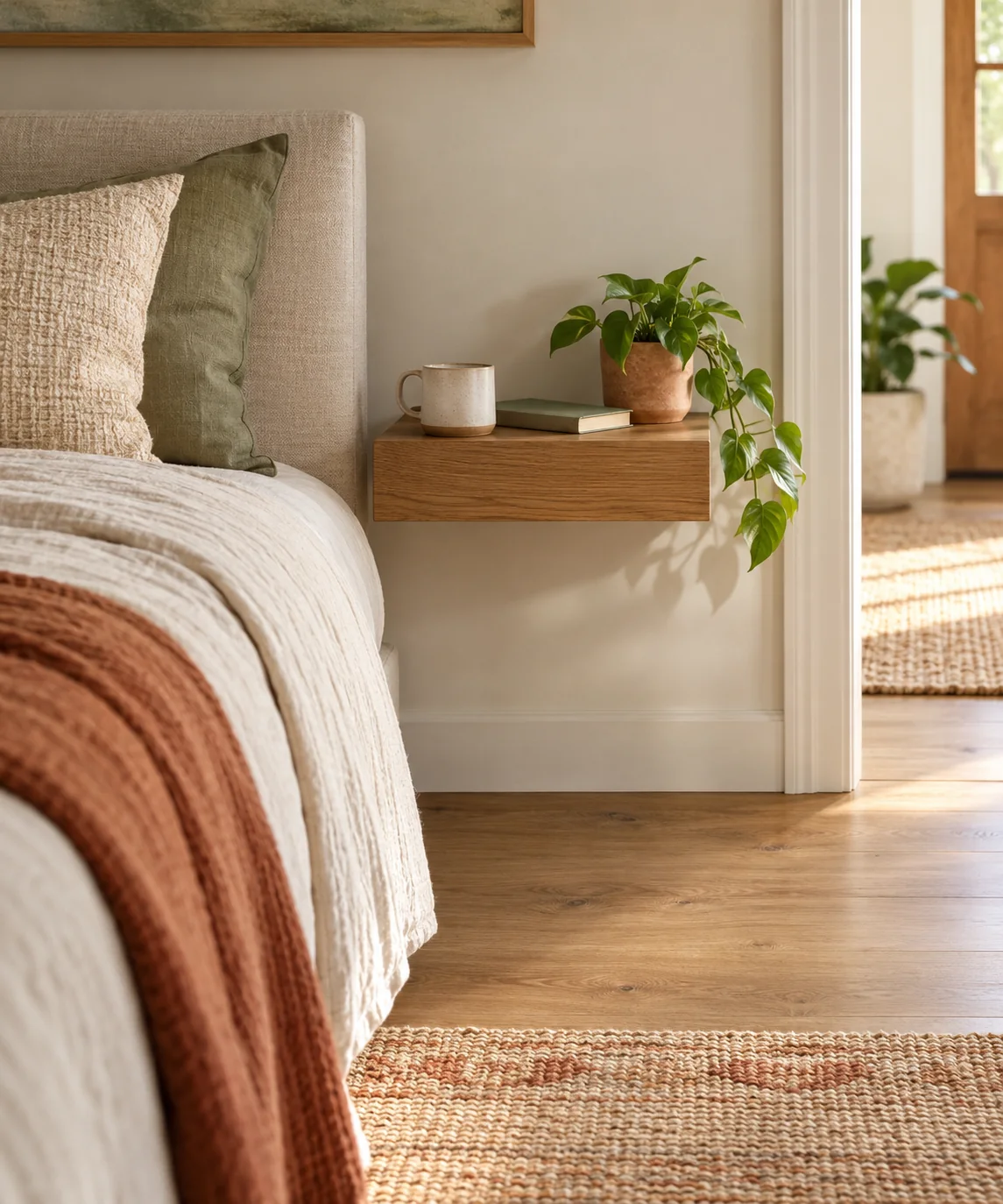
Determining Entry Door Clearances
Measure the arc of the inward-swinging bedroom door before selecting your ledge depth. A standard door requires an unobstructed 90-degree swing, typically spanning 30 to 36 inches from the hinge jamb. Map this arc using painter's tape on the floor. If a floor-standing nightstand intrudes into this zone, test shallow ledge depths between 4 and 8 inches. Ensuring the shelf terminates well outside the handle trajectory prevents accidental strikes against knuckles, phone cords, or edges when someone enters in the dark.
Vertical Height and Bed Alignment
Set the height of your floating ledge relative to the compressed mattress top rather than eye level. Ideally, position the top surface level with or up to two inches above the bedding. This proximity allows you to reach a water glass, spectacles, or a book without leaning precariously over the bed frame. Keeping the shelf compact horizontally—around 12 to 16 inches wide—leaves sufficient elbow clearance and prevents the corner of the ledge from snagging blankets during routine bed-making.
Trialing Depths with Cardboard Mockups
Before choosing shelf hardware, create a folded cardboard mock-up taped temporarily to the wall at mattress height. Place your essential nighttime items—such as a phone, glasses case, and small lamp base—on the mock-up to verify surface utility. Walk through the doorway carrying laundry baskets or bags to test whether the simulated projection impedes movement. This reversible test confirms whether a 5-inch picture ledge suffices or if an 8-inch shelf is necessary, preventing ill-fitting wall additions.
Curating Surface Load and Clutter
A floating ledge cannot support the sprawling clutter often dumped onto wide tabletops. Restrict the surface strictly to two or three essentials: a phone, an alarm device, and a single drink coaster. Route charging cords along the baseboard or secure them with adhesive clips behind the bed frame so cables do not dangle into the entryway path. For reading light, opt for a clip-on light or headboard-mounted fixture rather than a tabletop lamp that claims valuable shelf space.
Cleaning Access and Practical Maintenance
Removing table legs against an entry wall significantly streamlines floor cleaning. Vacuum nozzles and dust mops can sweep straight through the threshold into the under-bed zone without requiring awkward furniture shifting. Regularly wipe the ledge surface with a damp cloth to prevent dust accumulation near pillows. Periodically inspect the shelf connection for loosening caused by heavy leaning or accidental bumps from stray pillows, ensuring the horizontal surface remains securely positioned over time.
YOUR STARTING POINT
A little checklist.
Original editorial guidance. Images are AI-generated concepts, not photographs of completed projects. Our sources and approach.
Questions to consider
How deep should a floating bedside ledge be?
Aim for a depth between 5 and 8 inches. This size securely holds a phone, spectacles, and a small water glass without protruding into the doorway clearance or creating an accidental hazard for your shoulders when moving past.
Can I use an adhesive picture ledge instead of drilled shelves?
Adhesive ledges work only for extremely lightweight items like empty glasses or phones. Because bedside shelves frequently experience accidental downward pressure during sleep or waking, mechanically supported shelving is far more reliable for long-term everyday use.
What should I do if a bedside light does not fit?
Pair the ledge with a wall-mounted plug-in sconce or a headboard reading light. This keeps the narrow shelf entirely clear for immediate handheld personal items and prevents lamps from being tipped over when opening doors.