Kitchen Herb Gardens · THE GUIDE
Floating Open Shelf Herb Display Between Upper Cabinets
An open wall niche or existing shelf span between upper kitchen cabinets can provide an accessible location for potted culinary herbs, provided the space receives adequate direct natural sunlight. Potted herbs require sustained daytime illumination to produce vigorous foliage and aromatic oils, making natural light exposure the primary requirement before planning any display. Rather than attempting untested structural installations into finished cabinetry, evaluate existing shelving, manufacturer weight guidelines, and clearance for surrounding cabinet doors. By planning non-porous trays, checking airflow, and verifying that nearby cooking heat and steam do not stress the plants, you can maintain a tidy and practical culinary green space.
Jump to the checklist ↓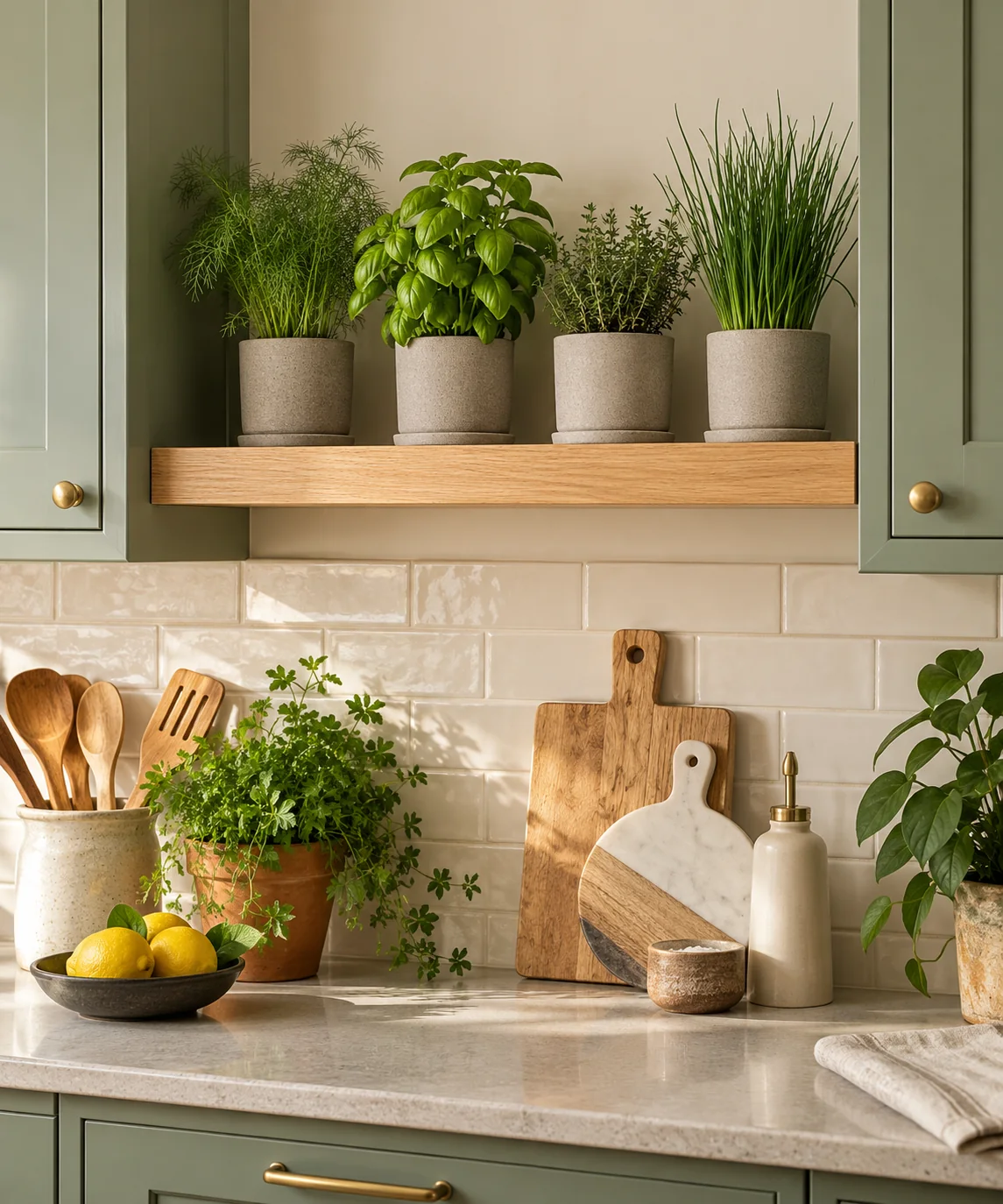
Evaluating Natural Light Levels in Kitchen Alcoves
Natural sunlight must remain the first consideration when evaluating the open space between upper cabinets. Culinary herbs such as basil, chives, and flat-leaf parsley require several hours of strong daylight to avoid etiolation, pale leaves, and weak growth. Kitchen recesses flanked by deep wall cabinets often sit in heavy shadow throughout the day. Before placing plants in these spaces, observe how direct sun shifts across the target area over several days to confirm that daylight reaches the proposed plant height consistently.
Checking Cabinet Door Clearance and Surrounding Hazards
Upper kitchen cabinets vary widely in exterior depth, hinge throw, and door style. Any shelf or resting surface placed between them must leave ample room for cabinet doors to open fully without striking foliage, pots, or drainage saucers. Measure the complete swing path of adjacent cabinet doors before arranging containers. In addition, ensure the selected location sits safely away from the direct exhaust of range hoods, toaster stations, or stovetops, as concentrated heat, grease, and steam will rapidly scorch delicate herb foliage.
Verifying Structural Support and Manufacturer Guidelines
Never anchor heavy shelving directly into the side gables of kitchen cabinetry without consulting the cabinet manufacturer or a qualified carpenter. Many residential cabinet boxes are constructed from thin composite panels or veneered boards not designed to support lateral cantilevered loads or the combined weight of damp soil and pottery. If using an existing built-in shelf or wall-anchored bracket, verify that mounting hardware is securely fastened into wall studs rather than hollow drywall or cabinet trim.
Container Selection and Weight Considerations
Selecting lightweight containers with dedicated drip containment protects both the shelf surface and the cabinetry below. Small glazed ceramic, food-grade composite, or lined planters measuring four to five inches in diameter provide sufficient root space for individual herb starts while keeping overall weight manageable. Avoid heavy unsealed concrete or solid stone vessels. Arrange containers with several inches of breathing room between them to encourage ambient airflow and reduce localized moisture accumulation against adjoining cabinet walls.
Safe Watering Routines and Surface Protection
Moisture runoff from elevated shelves poses a continuous threat to finished woodwork, veneers, and kitchen work surfaces below. Always seat potted herbs on non-porous glazed trays or waterproof cachepots rather than raw terracotta or permeable saucers. To minimize the risk of accidental spills onto countertops or adjacent cabinetry, take individual herb pots down to the kitchen sink for watering. Allow excess moisture to drain completely through base holes before wiping the pot dry and returning it to its resting spot.
YOUR STARTING POINT
A little checklist.
Original editorial guidance. Images are AI-generated concepts, not photographs of completed projects. Our sources and approach.
Questions to consider
Can herbs grow between upper cabinets if the area only receives ambient room lighting?
No. Standard ambient indoor lighting is inadequate for culinary herbs. Without direct natural sunlight from an adjacent window or skylight, indoor herbs quickly stretch, shed leaves, and succumb to decline within a few weeks.
How much space is needed between cabinet doors and potted herbs?
Door clearance depends on cabinet hinge type and door thickness. Allow enough clearance so adjacent doors can swing completely past their ninety-degree opening position without grazing plant foliage, pot edges, or shelf supports.
What is the safest way to prevent water damage to cabinetry beneath herb shelves?
Keep herbs in removable inner nursery containers placed inside solid, watertight outer cachepots. Removing pots to water them at the sink eliminates the hazard of overflowing saucers and protects cabinetry from chronic moisture exposure.