Small Kitchen Organization · THE GUIDE
Fold-Down Wall Leaf Table as a Prep Counter Extension
Compact kitchens frequently suffer from interrupted workflow caused by scarce continuous counter surfaces between major appliances. When everyday meal preparation requires extra space for chopping boards, ingredient bowls, or cooling trays, a wall-mounted fold-down leaf table functions as an auxiliary work station. Unlike freestanding butcher blocks or rolling carts, a fold-down leaf occupies zero floor area when lowered flat against the wall. By selecting appropriate dimensions, establishing proper clearance around circulation lanes, and pairing the surface with existing counters, you expand functional food prep capacity without compromising daily mobility.
Jump to the checklist ↓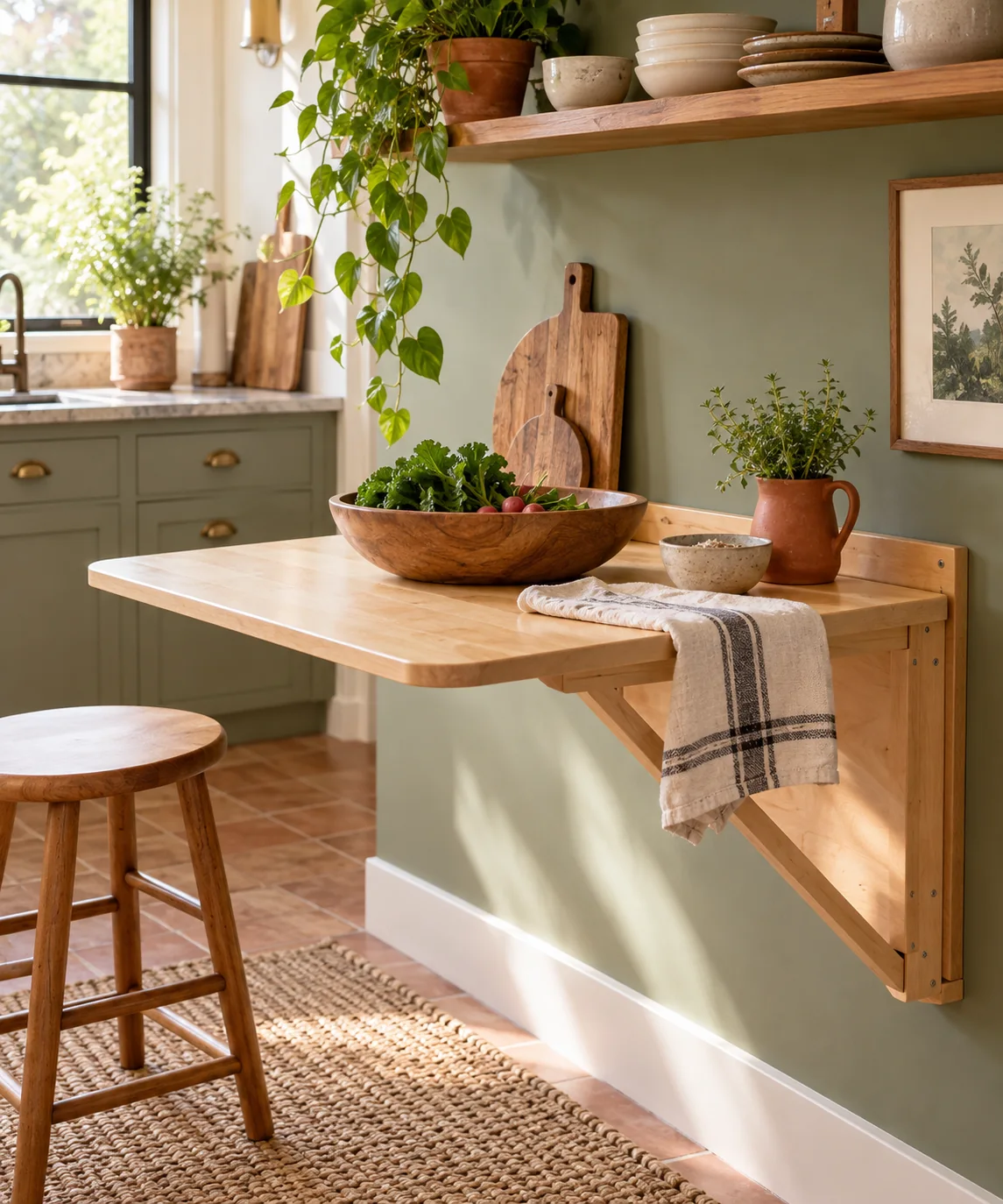
Assessing Circulation and Doorway Clearances
Before selecting a wall location for an auxiliary fold-down leaf, evaluate circulation paths throughout your kitchen work area. An extended prep surface must leave comfortable clearance for cooks to navigate between the sink, refrigerator, and range without obstruction. Check the full swing arcs of nearby cabinet doors, oven doors, and kitchen entryways to ensure the table does not create a pinch point or collision hazard when raised. The ideal position occupies an underutilized stretch of perimeter wall where the leaf can be lifted during active food preparation and returned flat against the wall during routine cleaning or high-traffic periods.
Ergonomic Height Planning and Surrounding Surfaces
Prep surfaces perform best when tailored to the physical comfort of primary users rather than arbitrary measurements. While many standard base cabinets sit near thirty-six inches from the finished floor, personal comfort varies depending on whether tasks involve seated prep work, rolling dough, or standing vegetable chopping. Consider how the extended leaf relates to adjacent countertops, allowing you to transfer prep bowls or baking sheets without awkward reaching. Before committing to a permanent position, review the manufacturer's mounting specifications and confirm that the intended height aligns comfortably with your natural elbow angle during standard kitchen tasks.
Testing Layouts with Cardboard Mockups
Cardboard mockups provide an effective, non-destructive way to evaluate how a fold-down leaf interacts with your kitchen workflow before purchasing or securing hardware. Cut a piece of rigid corrugated cardboard matching the exact dimensions of your proposed tabletop. Position the template against the wall at your planned height and extend it into the room to simulate the open work surface. Walk through your typical cooking routines, open adjacent drawers, and carry cookware past the mockup to confirm that the proposed depth and width provide practical work area without restricting essential room movement.
Understanding Hardware Ratings and Task Demands
Fold-down leaf tables rely on specialized folding brackets, meaning their weight-bearing performance depends entirely on the manufacturer's rated load limits and secure attachment into sound wall framing. Review the hardware documentation carefully to understand static and dynamic load ratings before use. Auxiliary leaves are best suited for manual prep tasks such as chopping vegetables, holding ingredient bowls, and resting baking pans. Avoid operating motorized, high-vibration countertop appliances such as grain mills, heavy stand mixers, or blenders on folding leaves, as recurring mechanical vibration can loosen fasteners over time.
Daily Operation and Surface Maintenance
Maintaining a fold-down prep surface requires consistent operational routines to preserve both the leaf mechanism and surrounding wall finishes. After completing food prep, clear the tabletop completely and wipe it clean with a damp microfiber cloth to remove food debris, oils, and moisture. Always allow the surface to dry fully before releasing the support brackets and lowering the leaf flat against the wall, preventing moisture from becoming trapped against the wall finish. Consistent folding discipline ensures your kitchen walkways remain open and unobstructed between meal preparation sessions.
YOUR STARTING POINT
A little checklist.
Original editorial guidance. Images are AI-generated concepts, not photographs of completed projects. Our sources and approach.
Questions to consider
Can I chop vegetables directly on a fold-down wooden leaf table?
Avoid cutting directly on the tabletop surface. Knife marks cut through protective sealants and allow food moisture to penetrate the wood or laminate core. Always use an independent cutting board with non-slip silicone feet on top of the extended surface during food prep.
What dimensions should I consider when selecting a prep leaf?
Choose dimensions that provide sufficient surface area for your cutting boards while preserving unhindered walkway movement when extended. Always consult the bracket manufacturer's recommended depth limits, as excessively deep leaves increase mechanical leverage on wall fasteners.
How do I prevent the lowered leaf from marking wall surfaces?
Apply small adhesive felt or silicone bumper pads to the lower back edge of the table leaf. These cushions dampen contact sound when the leaf is lowered and prevent wood or metal edges from rubbing against painted drywall or baseboard trim.