Bookshelf Styling · THE GUIDE
Fold Linen Table Runners and Napkins into Dining Room Open Shelves
Open dining room shelves often host culinary anthologies, regional guides, and family recipe binders, yet wide horizontal gaps can leave the composition looking sparse. Storing washed, pressed table linens alongside reading material softens hard wooden or metal shelf edges while keeping dinner textiles within arm's reach of the dining table. By using disciplined folding techniques and grouping items by fabric weight, you turn utilitarian table dressings into structured visual dividers. This method protects textiles from deep creasing while ensuring entertaining volumes stand neatly upright without requiring extra decorative shelf props.
Jump to the checklist ↓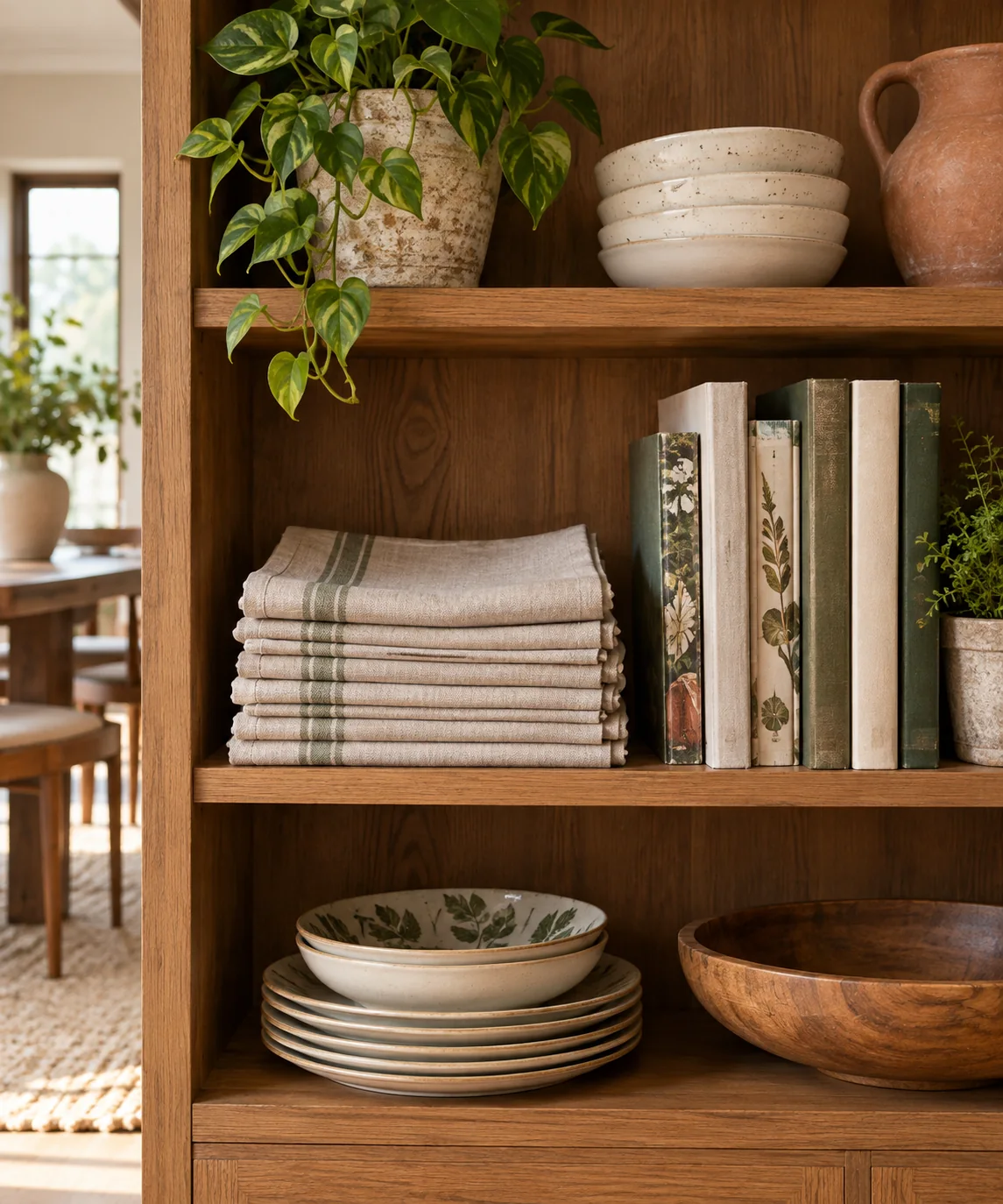
Sorting Linens by Fabric Weight and Tone
Begin by separating everyday cloth napkins, seasonal hemstitched runners, and heavier plain-weave runners into distinct groups. Natural flax, undyed linen, and muted oat tones pair smoothly with vintage cloth-bound or paper-jacketed culinary books. Keep synthetic blends apart from open-weave linens, as differing fabric textures, weights, and surface slipperiness can cause mixed piles to shift and lean. Aim for three to four stacks maximum across a standard three-foot shelf tier so books remain the primary vertical feature while textiles serve as tidy horizontal breaks.
Consistent Folding Profiles
Achieving a tailored look requires identical dimensions across folded sets. Iron linens flat while slightly damp to remove stiff wrinkles, then fold napkins into thirds or fourths with all raw seams turned inward. Smooth runners into long, shallow rectangles that match the depth of your shelf without draping over the front edge. Always place folded edges facing forward toward the room; exposed hems or corners create visual clutter that detracts from the clean, quiet presence of neighboring book spines.
Integrating Vertical Culinary Volumes
Flank stacks of table linens with upright books arranged strictly by size. Place heavier reference volumes, such as bread baking guides or food encyclopedias, to the far left or right of a shelf tier to establish structural weight. Rest the textile stack against the side of these sturdy volumes or keep a slight gap between fabrics and paper jackets. Avoid leaning paperback volumes directly against linen piles, because flexible book covers will bow over time when pressed against soft fabric.
Managing Dust and Ambient Light
Open storage leaves fabrics vulnerable to ambient airborne dust, dining room grease, and ultraviolet fading. Position textile-bearing shelves comfortably away from active cooking zones and out of direct, intense sunlight from nearby windows. Rotating the top napkin to the bottom of the pile periodically prevents localized fading or dust lines along exposed upper folds. If a runner stays unused for an extended period, shake it out and refold along fresh lines to prevent sharp, set-in creases.
Rotating Stacks for Everyday Access
A practical open display must withstand real mealtime use without collapsing into disarray. Place the most frequently used weekday napkins at waist level, reserving higher or lower tiers for formal runners and reference tomes. Keep stacks low, ideally four to six napkins per pile, so lifting two off the top does not destabilize the remaining linen. When returning laundered napkins to the shelf, slide them under the stack rather than tossing them on top to maintain even fabric rotation.
YOUR STARTING POINT
A little checklist.
Original editorial guidance. Images are AI-generated concepts, not photographs of completed projects. Our sources and approach.
Questions to consider
Can I store fine linen alongside older books without damaging either?
Yes, provided books are fully dry and dust-free. Keep an inch of clearance between book cloth and linen to promote air circulation, which prevents paper moisture transfer or color rubbing onto delicate natural flax fibers.
How many napkins can safely stack together on an open shelf?
Limit stacks to six standard napkins. Piles taller than that tend to list to one side, look untidy against rigid book spines, and become difficult to pull from during busy weeknight dinners.
What should I do if my dining shelf receives direct sunlight?
Avoid placing dark or dyed linens there, as solar radiation will bleach the exposed edges. Choose naturally unbleached oat or flax textiles instead, or reserve sunlit tiers strictly for modern, fade-resistant books.