Household Reset Routines · THE GUIDE
Foldable Drying Rack Collapse and Corner Stowage
A portable wooden accordion drying rack offers generous linear drying space, yet leaving it open clutter-blocks small utility zones once garments are dry. Establishing a predictable breakdown habit restores room flow immediately after unpinning the last item. Stowing the rack in the unused dead zone behind a laundry room door keeps it accessible without encroaching on walkways. When executed properly, collapsing and stowing takes less than a minute, protects the wooden joints from accidental impacts, and ensures the door swings freely without striking horizontal dowels or scraping wall paint.
Jump to the checklist ↓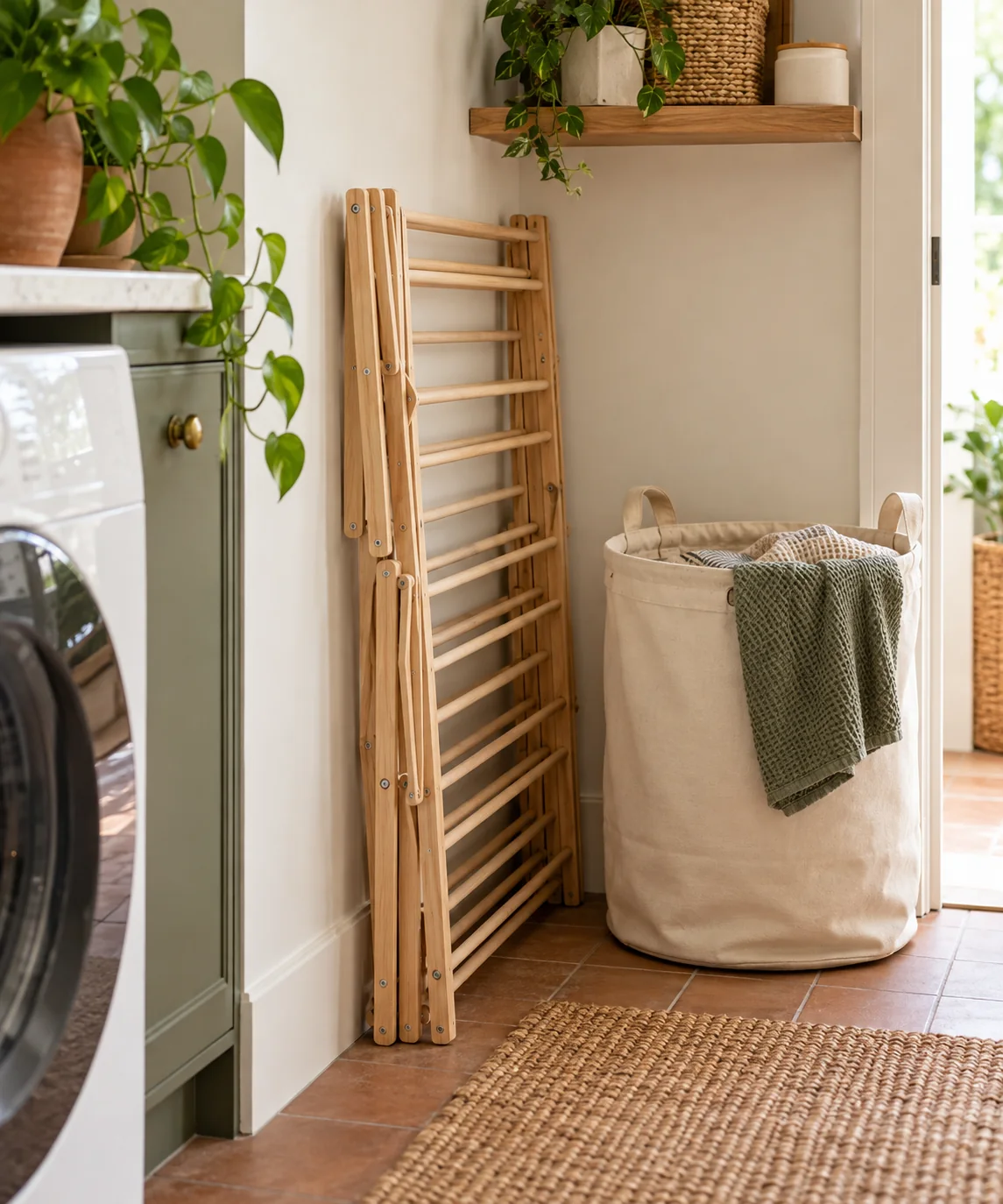
Garment Clearance and Joint Inspection
Begin by clearing all garments, socks, and clips from the rack, checking each wooden crossbar as you unload. Moisture can transfer from damp fabrics to raw or sealed timber dowels, so verify that all surfaces feel dry to the touch before collapsing the structure. Inspect the pivot points, plastic end caps, and side hinge rivets for loose movement or mechanical shifting. If any hinge pins have moved outward during use, press them gently back into alignment. Clearing the rack systematically prevents caught fabrics, snagged hems, or sudden joint twisting when disengaging the upper frame rungs.
Collapsing the Accordion Frame Safely
Grasp the top horizontal bar with both hands, positioning your fingers along the outer wood surfaces rather than curling them into the interior scissor intersections. Disengage the top horizontal locking rungs from their retaining grooves according to the manufacturer's folding design. Lower the upper section smoothly, allowing gravity to bring the accordion lattice inward. Maintain an even, balanced drop on both sides so the wooden scissor slats fold symmetrically without binding the hardware. Keep fingers clear of all folding junction points until the unit rests flat.
Assessing Behind-the-Door Storage Clearances
Evaluate the gap between the opened laundry room door and the adjacent wall before positioning the folded rack. Because folded rack profiles and door hardware projections differ across homes, measure the clearance established by your existing baseboard doorstop rather than relying on standard estimates. Confirm that the door handle or lever does not strike the stowed wooden dowels when the door is pushed open. The storage space should allow the door to swing open sufficiently to preserve unhindered room egress while preventing scuffs against both the door surface and finished wall trim.
Securing Base Stability on Smooth Flooring
Smooth utility room surfaces such as sheet vinyl, glazed tile, or sealed concrete can cause a vertically leaned drying rack to slide outward at the base. To reduce the risk of accidental slipping, place the bottom feet against a textured rubber mat, an adhesive felt pad, or a friction-backed runner set against the baseboard. Lean the rack at a slight, stable backward tilt where the top rail rests evenly against the wall surface. Avoid positioning the rack in active travel paths where passing household members could brush against or jostle the leaned timber.
Timber Care, Residual Moisture, and Ventilation
Wooden drying racks maintain structural integrity best when stored in spaces with adequate passive air movement. Stowing damp timber in a tight, unventilated pocket behind a closed door can trap residual moisture against wall surfaces and encourage finish degradation over time. Wipe dowels down with a dry microfiber cloth periodically to eliminate lint and surface dust. If the laundry area tends to hold humidity after heavy washing cycles, keep the utility room door slightly open to support consistent drying around the folded wood frame.
YOUR STARTING POINT
A little checklist.
Original editorial guidance. Images are AI-generated concepts, not photographs of completed projects. Our sources and approach.
Questions to consider
How do I check if there is enough clearance behind the door for the folded rack?
Measure the depth of your folded rack against the distance provided by your doorstop when the door is fully opened. Ensure the door handle, lockset, and panel clear the wooden dowels completely without contacting the rack or restricting normal door swing.
Can damp wood warp or develop mildew when stored collapsed?
Yes. Folding and stowing a damp accordion rack traps moisture between closely packed dowels and against interior walls. Ensure all wooden surfaces are dry to the touch before folding, or allow the rack to stand open in a ventilated room until completely dry.
How do I prevent a leaned drying rack from sliding on hard floors?
Rest the bottom feet on a dedicated non-slip rubber pad, silicone strip, or textured rug runner placed next to the baseboard. This friction barrier prevents the base dowels from creeping forward across slick vinyl or tile.