Dining Nooks · THE GUIDE
Frame an Alcove Dining Nook with Shallow Wall-Hung Book ledges
Alcove dining spaces offer inherent coziness, but their constrained footprints leave little floor space for storage sideboards or freestanding cabinets. When cookbook collections, tea tins, and spice jars migrate onto the dining table, meal settings quickly feel cramped. Framing the perimeter of a dining alcove with shallow, wall-hung display ledges takes advantage of unused vertical space without encroaching into essential shoulder room. By carefully testing ledge depth, mounting height relative to seated occupants, and spacing between tiers, you can introduce practical culinary display that keeps the dining surface clear for daily meals.
Jump to the checklist ↓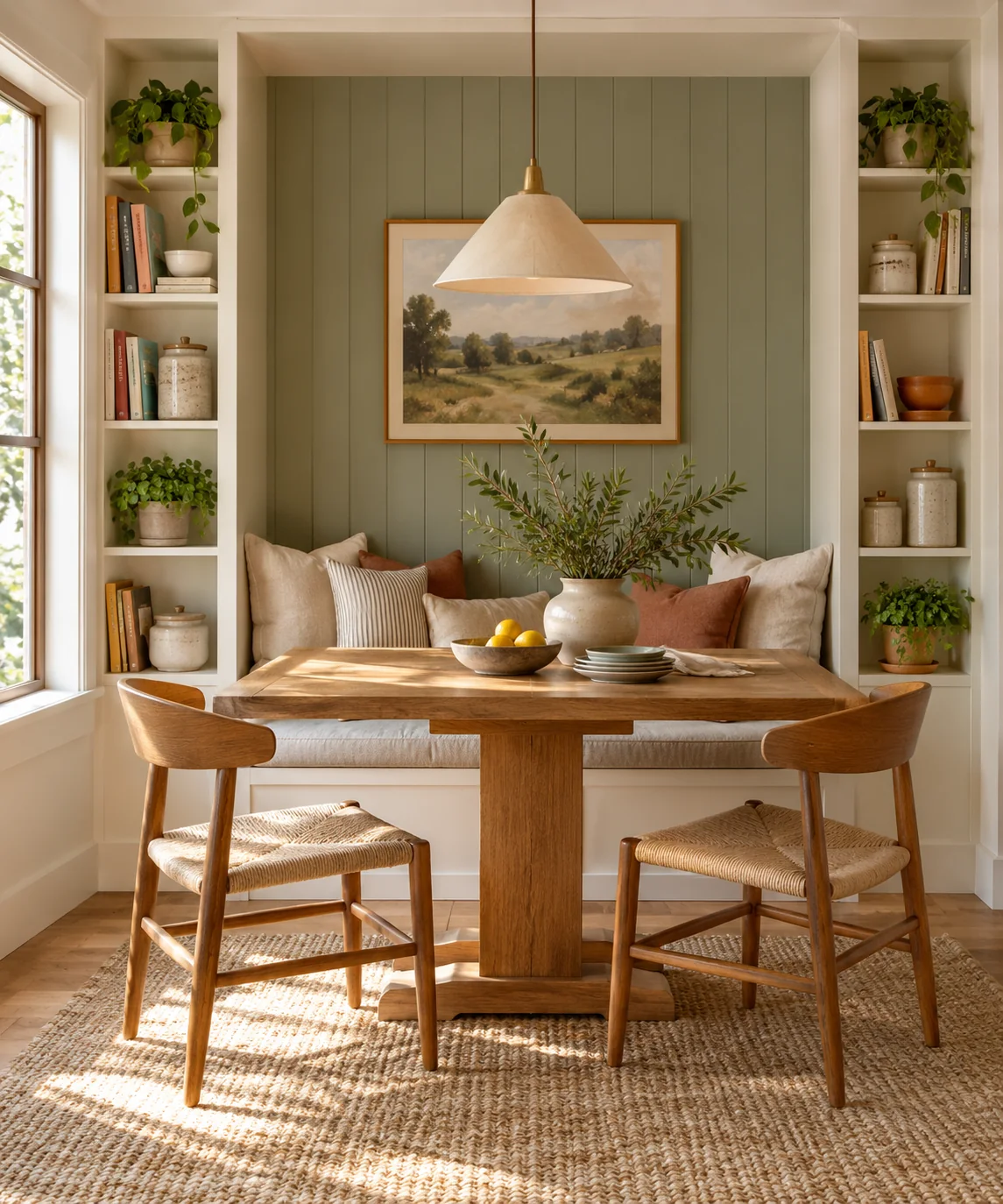
Select Shallow Shelf Depths for Seated Comfort
Deep shelving installed directly above dining seating can create uncomfortable overhangs and make a compact alcove feel enclosed. In tight dining nooks, shallow ledges projecting roughly 3 to 4 inches from the wall surface generally allow enough resting surface for upright cookbooks, small spice containers, or framed prints without crowding diners. Because the shelves remain close to the wall plane, people using the bench or chairs can shift, lean, and converse without feeling boxed in. Always confirm that the selected depth does not protrude past the back edge of the seat cushions.
Determine Mounting Heights Based on Seated Clearance
Rather than relying on generic height measurements from the floor, determine the lowest ledge position using your specific seating setup. Banquette cushions compress when occupied, and custom benches or counter-height seating alter head levels significantly. Have household members sit upright on the cushions, then mark a line well above the tallest diner's head when seated and leaning naturally. This individualized observation ensures diners will not brush against the lower edge when sitting down, turning, or standing up to leave the table.
Incorporate Retaining Lips and Secure Framing
Because dining alcoves experience regular vibration from shifting chairs, sliding banquette occupants, and active table use, items placed on narrow ledges need physical retention. Choose picture ledges designed with an integrated front lip or raised retaining rail to stop leaning books or spice tins from sliding off the edge. When selecting hardware, consult the manufacturer instructions and anchor into wall studs whenever possible, using appropriate drywall anchors rated for the intended display weight when stud locations do not align.
Distribute Weight and Manage Visual Balance
Overloading wall ledges in an alcove creates clutter and places unnecessary strain on mounting hardware. Distribute weight thoughtfully across two or three tiers. Place heavier, sturdier items on lower ledges where they are easier to handle and visually grounded, while reserving upper ledges for lighter items like paper recipe notebooks, dried herb tins, or small prints. Leaving intentional intervals between objects helps the nook maintain an open, uncluttered appearance while ensuring individual items can be retrieved without disturbing neighboring pieces.
Mock Up Reach and Movement Before Final Mounting
Before drilling into drywall, map out your planned ledge layout using low-tack painter's tape on the alcove walls. Sit at the table to simulate typical mealtime movements, such as reaching for a frequently referenced recipe binder or sliding along a bench seat. This physical dry run reveals whether an intended shelf height requires awkward reaching over other diners or interferes with natural sightlines. If reaching for an item feels strained, adjust the tape layout toward the open alcove entrance before securing any permanent hardware.
YOUR STARTING POINT
A little checklist.
Original editorial guidance. Images are AI-generated concepts, not photographs of completed projects. Our sources and approach.
Questions to consider
How can I tell if a book ledge is securely attached to an alcove wall?
Check that the mounting screws are driven directly into wall framing studs where feasible. If studs are unavailable at your preferred spacing, use heavy-duty hollow-wall anchors explicitly rated for the combined weight of the shelf and your displayed items, following the anchor manufacturer's installation guidelines.
What vertical spacing works best between multiple display ledges?
Vertical spacing depends on the height of your tallest items. Measure the tallest cookbook or art print you intend to display and add at least 2 to 3 inches of clearance above it so items can be lifted out smoothly without striking the shelf above.
Which materials and finishes hold up best near dining spaces?
Sealed timber, factory-painted wood with a washable satin or semi-gloss finish, and powder-coated metal are well suited to dining areas. These surfaces resist steam and can be wiped clean with a damp cloth, unlike unsealed raw wood which readily absorbs kitchen oils and moisture.