Small Kitchen Organization · THE GUIDE
Freestanding Wire Microwave Riser with Lower Storage Nook
Countertop microwaves take up significant prep surface, while the vertical space directly above the housing often remains underutilized. A freestanding wire riser spans across the appliance footprint, introducing an elevated tier for lightweight kitchen essentials without requiring wall anchors or cabinetry modifications. Because microwave housings release warmth and depend on passive exterior ventilation, selecting a frame with adequate clearance requires careful verification against appliance specifications. Deliberate planning prevents heat accumulation around intake or exhaust ports, helps isolate small appliance movement, and provides a reversible organization solution that keeps everyday items organized.
Jump to the checklist ↓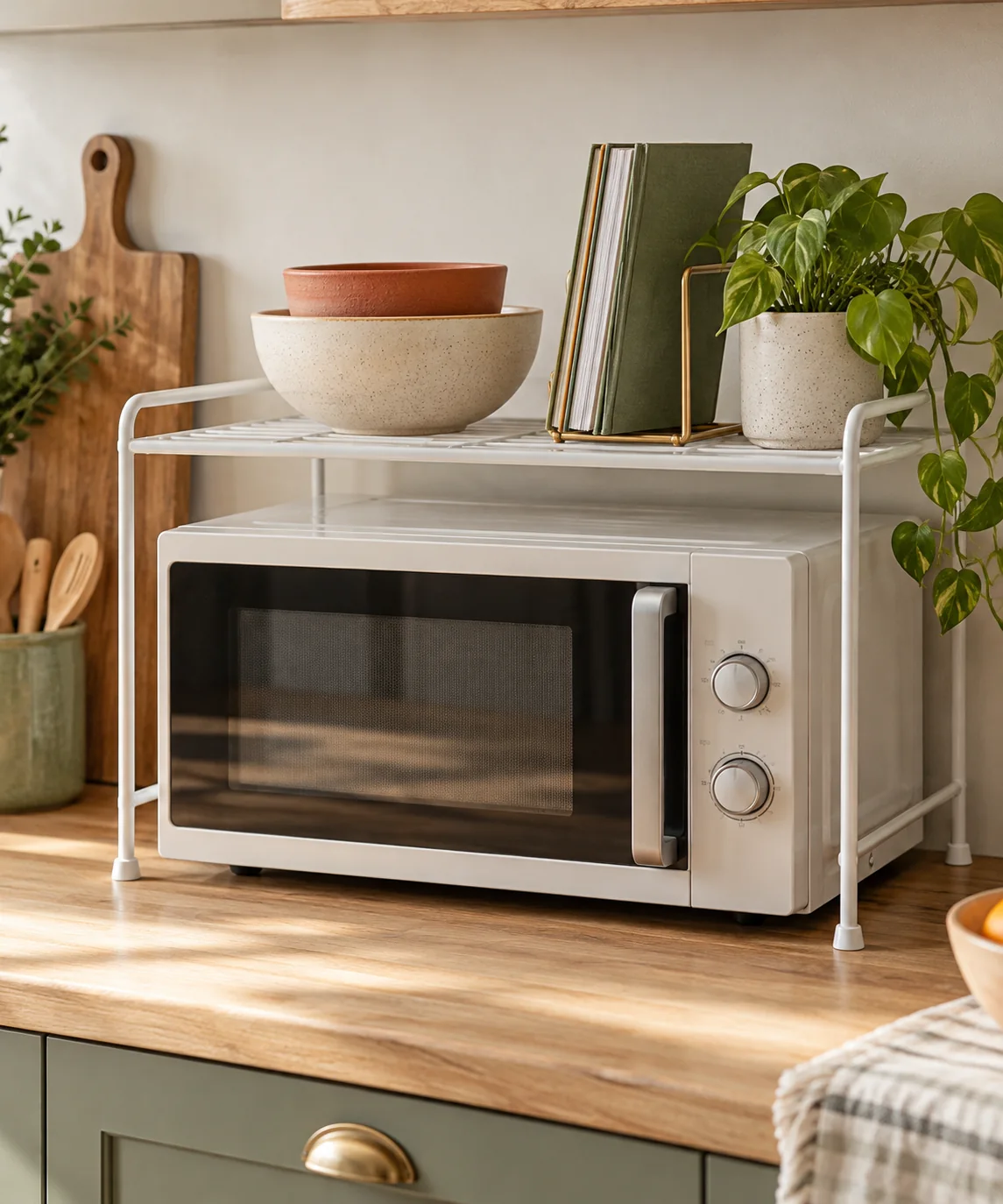
Ventilation Requirements and Manual Guidance
Every microwave model has specific airflow clearances outlined in its manufacturer manual, identifying whether heat vents from the side, rear, or top panel. Before selecting a freestanding riser, consult this documentation to identify required distances from adjacent surfaces. Risers must never constrict vents or rest directly against the microwave casing. An open-frame metal riser supports ambient air movement around the chassis, but items stored on the elevated tier must be compatible with the gentle radiant heat that naturally dissipates from working kitchen appliances.
Weight Distribution on Countertops
A freestanding riser channels downward weight through four narrow contact points. To protect stone, laminate, or solid-surfacing counters, select frames that come factory-equipped with broad non-marring rubber or silicone feet. Reserve the elevated platform for lightweight goods such as dry pantry baskets, lightweight ceramic bowls, or cloth napkins. Heavy cookware, dense ceramic casseroles, and tall stacks of dinner plates should remain on permanent shelving to prevent center sag in the wire frame and reduce top-heavy imbalance.
Checking Clearances and Reach with Mockups
Before adding a riser to a crowded counter, assess spatial clearances using simple household items. Arrange tall cereal boxes or clean cardboard pieces alongside the microwave to represent the riser uprights, then test the microwave door to confirm it swings open smoothly without making contact. Practice lifting items down from the planned tier height to ensure overhead upper cabinets leave sufficient hand room. This quick check confirms whether the setup maintains easy, two-handed access during food preparation.
Routine Care and Surface Upkeep
Kitchen risers gather grease-laden airborne dust and cooking residue over time. Clean the wire frame periodically using a soft cloth dampened with warm water and mild dish detergent, drying immediately to maintain the factory finish. Inspect the rubber footings during cleaning to verify they remain free of trapped crumbs or grit, which could otherwise scuff countertop sealants under normal kitchen activity. Avoid using abrasive scrubbing pads or aggressive scouring powders that can abrade protective powder coatings.
Functional Limits and Thermal Boundaries
Freestanding wire risers are intended exclusively for ambient storage and cannot serve as hot pads or cooking surfaces. Avoid transferring hot cookware or warm containers directly from the microwave to a coated metal shelf, as residual heat can degrade plastic finishes or warp thin wires. If a microwave vents directly through its top cover, avoid placing heat-sensitive groceries, oils, or medications on the shelf above, as regular appliance use will expose those goods to warm exhaust air.
YOUR STARTING POINT
A little checklist.
Original editorial guidance. Images are AI-generated concepts, not photographs of completed projects. Our sources and approach.
Questions to consider
Can I place an electric kettle or toaster on the riser?
No. Heat-producing small appliances should not be operated on a wire riser. Steam, intense surface heat, and appliance operation can damage finishes, warm the microwave casing below, and present tipping risks on an elevated wire rack.
How much clearance is required between the microwave and riser?
Follow the exact clearances listed in your microwave user manual, as ventilation patterns vary significantly between side-, back-, and top-venting models. Maintaining the manufacturer's specified spacing prevents restricted airflow and component strain.
Will opening the microwave door destabilize the riser shelf?
A freestanding riser rests independently on the countertop rather than on the microwave itself. Provided the riser frame does not contact the microwave chassis or obstruct the door hinge path, normal door operation will not displace items.