Container Vegetable Gardens · THE GUIDE
Freestanding Wooden Ladder Shelf for Culinary Chilis
A freestanding wooden ladder shelf organizes culinary chili peppers vertically, taking advantage of open wall exposure without requiring destructive wall anchors or invasive hardware. Capsicum species demand full sun, high ambient heat, and well-drained root zones, all of which align naturally with tiered, individual containers. Utilizing independent tiers allows you to isolate pepper types by growth habit, pot capacity, and watering demands. By observing weight distribution, structural clearance, and drainage pathways, an outdoor ladder shelf transforms narrow patio boundaries into a stable, efficient vertical growing station suited for culinary chili production.
Jump to the checklist ↓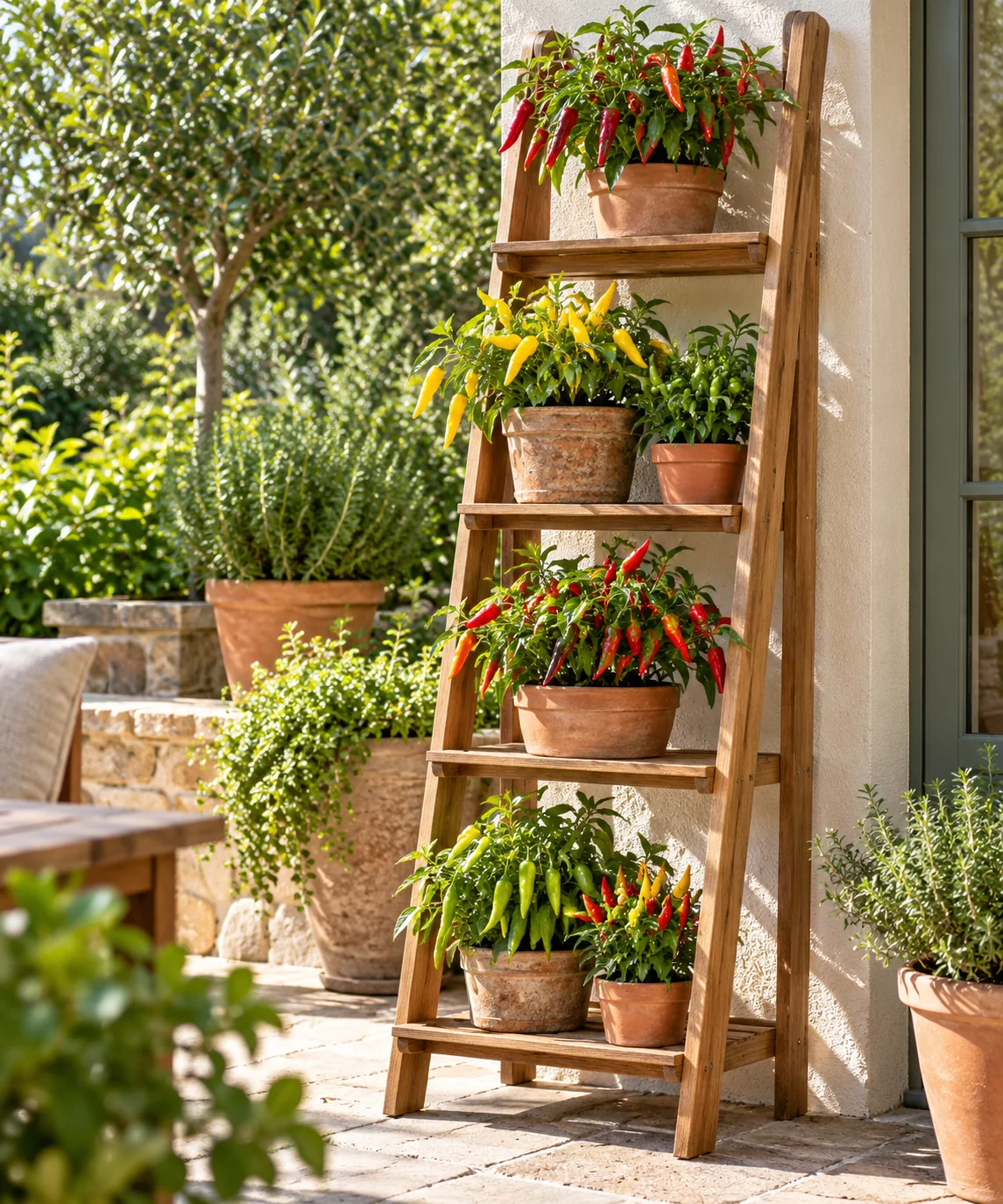
Ladder Positioning and Ground Clearance
Place the freestanding shelf on an even, firm exterior surface such as concrete pavers, stone, or ground-level decking. Verify that the unit rests flat without rocking before introducing containers. Position the shelf with a sensible buffer from exterior wall cladding to allow ventilation and avoid moisture contact against siding. Choose an outdoor spot receiving direct sunlight throughout the day, as fruiting chili peppers require strong sun exposure to set blossoms and ripen fruit reliably.
Pot Sizing Across Shelf Tiers
Distribute pot sizes thoughtfully across vertical steps to maintain overall balance. Position larger containers housing vigorous pepper varieties on bottom tiers, and reserve lighter, compact pots for smaller ornamental or dwarf chili selections on upper rungs. Always check the shelf manufacturer's stated maximum load limit for each tier and for the total structure, factoring in the combined mass of pots, wet potting mix, and fully grown plants.
Sun Exposure and Thermal Retention
Tiered steps prevent upper plants from completely shading lower containers when taller plants are kept on the lower levels. Nearby exterior walls can absorb daytime heat and release warmth gradually during evening hours, which benefits heat-loving pepper foliage. Because elevated tiers expose container surfaces to passing breezes, potting soil warms more quickly in early summer than ground soil, though this exposure also increases the rate of moisture loss.
Water Drainage and Tier Protection
Water draining freely from top tiers can drip onto lower plants, wetting foliage and carrying potting runoff down the frame. Fit each pot with an individual shallow saucer or drip tray to collect excess drainage. Empty sitting water from saucers shortly after thorough irrigation to protect root zones from waterlogging. Treating the wooden shelf components with an exterior-rated, non-toxic sealant helps preserve the wood when exposed to watering runoff and outdoor humidity.
Wind Stability and Seasonal Safety
Vertical shelving units present broad profiles to ambient wind. Always check the manufacturer's safety instructions regarding wall anchoring or tethering, especially in breezy outdoor locations. Avoid placing tall, top-heavy plants on upper tiers where gusts create tipping leverage. When severe weather, high wind warnings, or major storms are forecast, temporarily move elevated pots down to ground level and secure or fold the empty shelf until conditions stabilize.
YOUR STARTING POINT
A little checklist.
Original editorial guidance. Images are AI-generated concepts, not photographs of completed projects. Our sources and approach.
Questions to consider
Can terracotta pots dry out too quickly on an outdoor ladder shelf?
Porous terracotta allows air exchange through pot walls, which helps prevent overwatering but accelerates evaporation in warm, breezy locations. Check potting mix moisture regularly by inspecting the top two inches of mix before peak afternoon heat.
How do I prevent tall chili varieties from tipping their pots on upper rungs?
Keep larger chili varieties on the lowest shelf tier, supporting them with small stakes set directly into the pot. Choosing naturally dwarf or patio bush cultivars helps maintain a compact, low-profile growth habit better suited for tiered vertical displays.
Does an outdoor ladder shelf require anchoring?
Check the manufacturer's installation manual, as many tiered shelves recommend mechanical wall ties or ground anchoring for outdoor use. Pot weight alone cannot be relied upon to prevent tipping in strong wind gusts, so take down elevated containers when storms are forecast.