Kitchen Herb Gardens · THE GUIDE
French Balcony Door Threshold Stand for Kitchen Access
Sun-loving woody herbs like bay laurel and rosemary often fail on dim interior kitchen counters, requiring direct sunlight to maintain dense growth. Placing a compact floor stand beside a French balcony door threshold bridges this gap, giving high-light plants essential sun exposure while keeping them within arm's reach of the cook. This location captures southern or western light through floor-to-ceiling glass and allows quick transitions outdoors during warm days. Selecting stable stands, heavy containers, and non-slip floor protection keeps doorways safe, functional, and productive for daily culinary harvesting.
Jump to the checklist ↓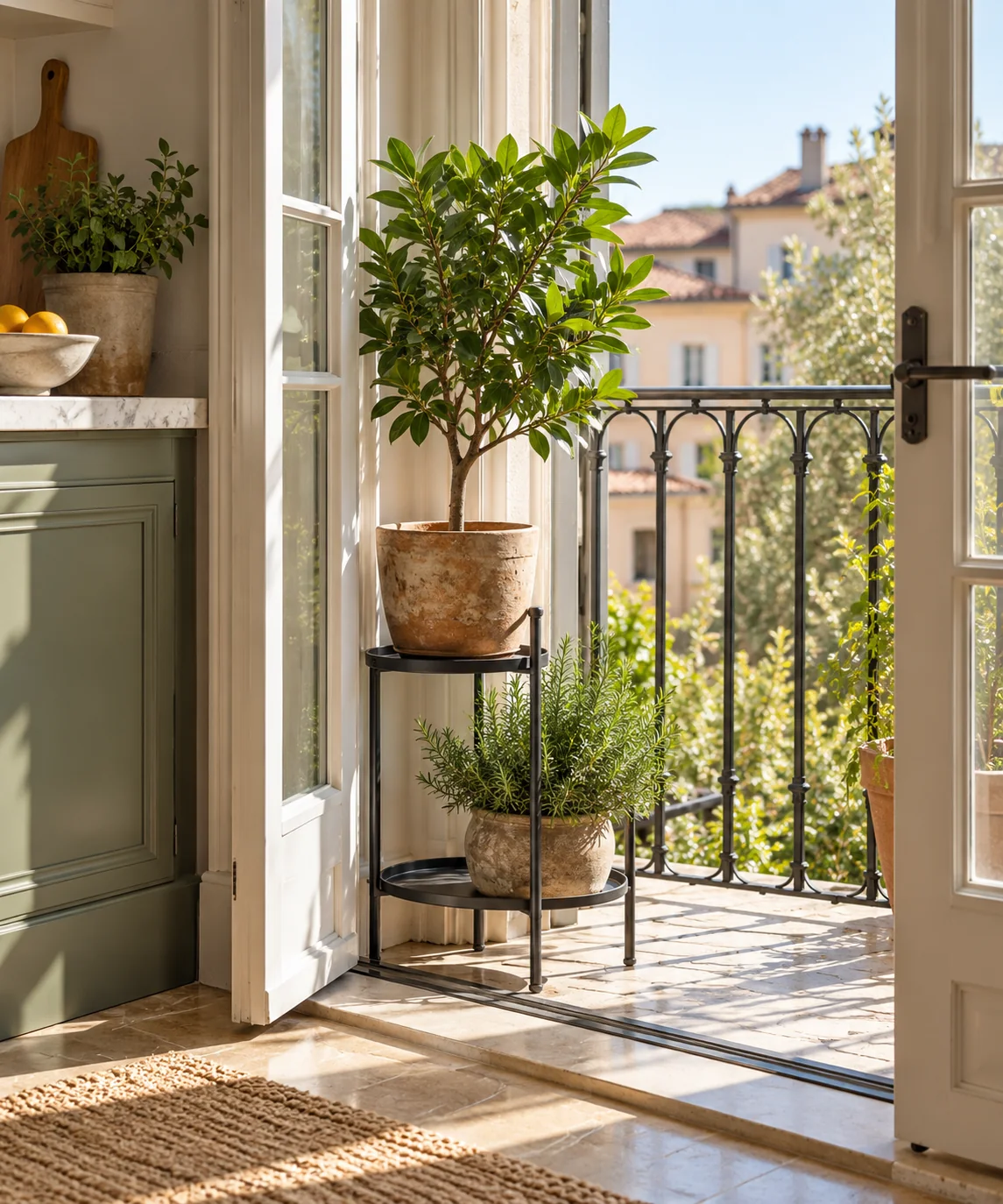
Doorway Clearances and Egress Planning
Doorway placements require careful assessment of circulation and exit routes. Rather than relying on a generic clearance dimension, measure your specific door leaf swing arc and verify that the stand sits entirely outside normal foot-traffic patterns. In homes with French doors where one leaf remains stationary, positioning the stand against the fixed panel or adjacent wall jamb keeps the active door clear. Local residential codes and building rules often define specific minimum corridor widths for emergency egress, so verify that adding furniture does not restrict required passageways. Keeping the profile shallow helps prevent handles, leaves, or container rims from catching aprons or clothing during busy meal preparation.
Light Exposure and Draft Awareness
Floor-to-ceiling glass doors provide substantial direct natural light that woody Mediterranean perennials like rosemary and bay laurel require to maintain sturdy growth. In sunny south- or west-facing exposures, these plants receive the several hours of direct illumination needed to prevent weak, etiolated stems. However, glass thresholds also experience rapid microclimate shifts. During winter, cool air pools along floor levels, and uninsulated glass can transfer exterior chill directly to nearby foliage. Observe your threshold during seasonal changes, repositioning the stand several inches away from cold glass panels if leaves show signs of chill stress or leaf drop.
Stand Stability and Container Selection
Top-heavy woody herbs like standard-trained bay laurel or upright rosemary present balance challenges in dynamic kitchen environments. While wide-stance metal stands and heavy earthenware planters lower the center of gravity, no freestanding threshold arrangement is completely immune to tipping if bumped by pets, children, or moving equipment. Select stands featuring broad footings rather than narrow tripod bases, and choose planters with wide, flat bottoms to maximize contact area. Avoid placing stands directly where doors might blow open against them during sudden drafts, and periodically inspect joints or fasteners on modular stands to ensure continued rigidity.
Floor Protection and Water Management
Water intrusion near exterior door thresholds can compromise finished flooring, subfloors, and door frame sills over time. High-traffic doorways frequently experience air movement that can cause unseen splashes during watering. To protect wood, laminate, or tile, pair containers with deep, non-porous glazed saucers or continuous catch trays rather than unsealed terracotta, which allows moisture migration through porous walls. Adding an impermeable protective mat underneath the stand base creates a secondary barrier against spills. Plan watering routines so that excess runoff is discarded promptly after soil saturation, rather than allowing standing water to sit in trays near wooden baseboards.
Harvesting and Pruning for Compact Form
Regular, purposeful pruning keeps woody threshold herbs contained within their allocated footprint, preventing branches from extending into the walking corridor. Use clean bypass shears to take modest cuttings just above outward-facing growth nodes, which encourages dense, branching foliage rather than elongated single shoots. Stagger harvests across the plant rather than stripping one side, preserving an even canopy balance that supports overall pot stability. If an herb begins outgrowing its threshold location, root-pruning or stepping down container size during standard repotting seasons can help manage overall plant volume without relying on aggressive structural cutbacks.
YOUR STARTING POINT
A little checklist.
Original editorial guidance. Images are AI-generated concepts, not photographs of completed projects. Our sources and approach.
Questions to consider
Can drafty balcony doors harm overwintering herbs?
Yes, sudden thermal swings and chilly floor-level drafts can induce stress, leaf drop, or slowed water uptake in Mediterranean herbs. If floor temperatures dip significantly or glass panes frost over, temporarily move the stand slightly inward toward warmer room air until severe weather passes.
How often should indoor threshold containers be rotated?
Rotating pots a quarter turn every one to two weeks encourages even canopy development, as single-direction window light causes stems to lean toward the glass. Regular rotation maintains an upright, balanced habit that fits neatly within the threshold footprint.
Can the threshold stand be shifted onto the balcony during warm months?
Stands can be positioned outdoors only if the balcony deck is level, structural threshold clearance permits easy transit without tripping hazards, and building regulations permit freestanding exterior furniture. Always monitor outdoor wind exposure, as sudden gusts can topple lightweight or tall arrangements.