Household Reset Routines · THE GUIDE
Friday Mudroom Shoe Bin Sorting and Mat Shakedown
Entryway floors collect grit, stray footwear, and dried outdoor debris throughout the week, creating an overcrowded threshold that tracks dirt deeper into the home. Establishing a dedicated Friday afternoon reset clears the floor before weekend traffic begins. This routine focuses on pairing scattered shoes, culling seasonal excess from floor bins, and lifting entryway mats to address trapped particulate matter beneath. By inspecting floor surfaces, clearing dry debris, and returning shoes to structured landing zones, you preserve flooring materials and restore an orderly, functional entry path that withstands heavy household activity.
Jump to the checklist ↓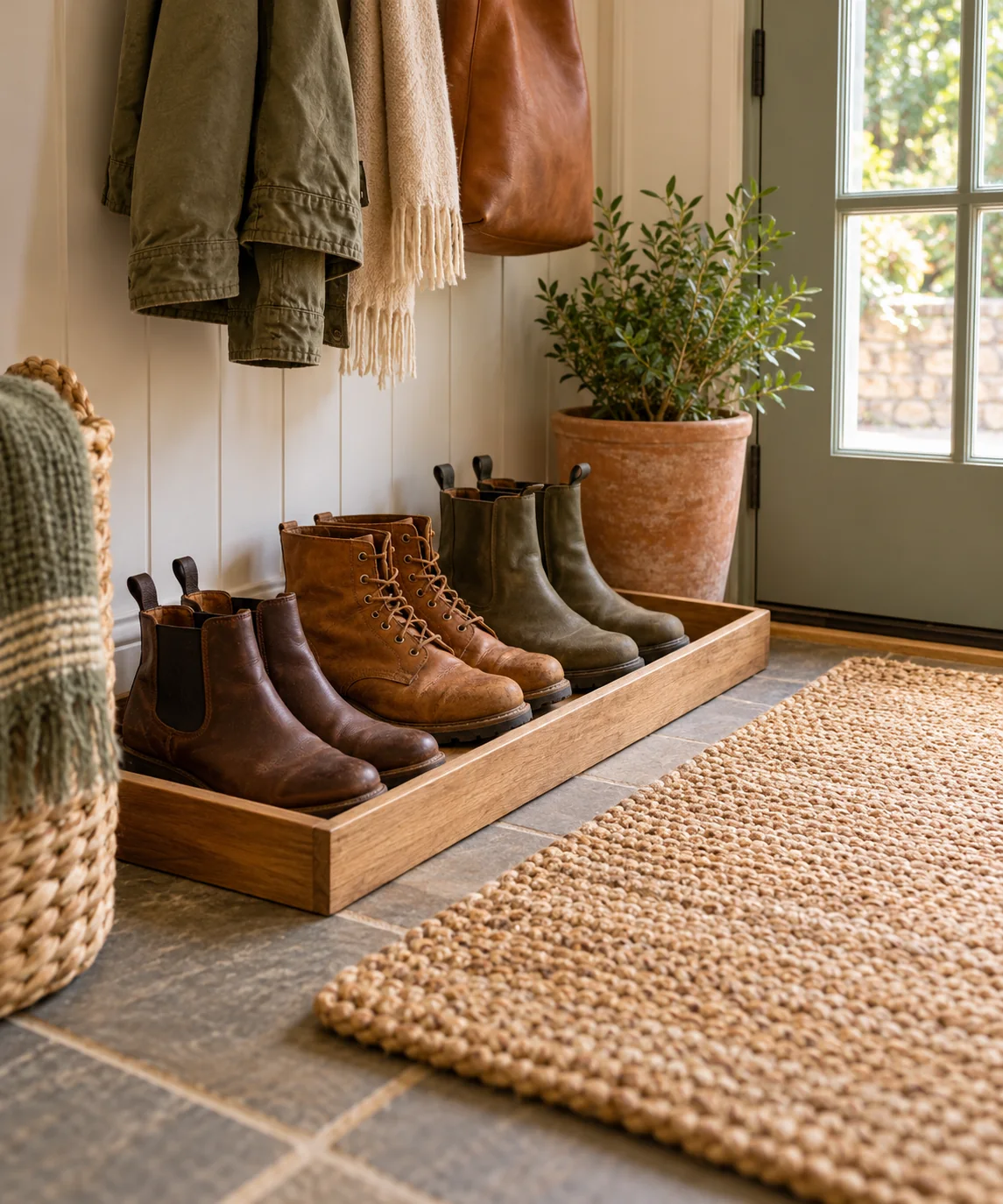
Emptying and Auditing Floor Footwear
Begin by pulling every shoe out of entryway bins, floor trays, and the immediate perimeter of the doormat. Line footwear in a single row against an adjacent wall to pair stray shoes and identify true weekly rotation pieces. Limit open floor trays to the footwear actively needed for the current season, moving athletic gear, out-of-season boots, and surplus sneakers to bedroom closets. Paring down the floor inventory immediately frees up floor space, speeds up sorting, and eliminates footwear overflow that blocks doorway swings and gathers dust.
Managing Coir Mat Grit and Fiber Shedding
Natural coir doormats trap heavy outdoor soils exceptionally well, but fine grit continuously sifts through the woven backing onto the finished floor below. Carefully pick up the doormat by its edges, carrying it outdoors to an open, ground-level area away from entry thresholds. Shake the mat firmly downward over open pavement or use a stiff hand brush on the reverse backing to dislodge packed soil. Avoid striking mats against exterior railings, which can damage architectural coatings, bend metal spindles, or violate building safety guidelines.
Sweeping and Protecting the Threshold Subfloor
Once the mat is outside, inspect the exposed floor surface underneath. Dirt particles trapped under a rubber-backed or rough coir mat act like sandpaper under foot traffic, dulling wood polyurethane and scratching vinyl planks. Use a soft-bristled broom or vacuum wand to collect loose pebbles and fine sand from the floor surface and perimeter baseboards. Avoid wet mopping heavily gritted areas until completely swept dry; adding water to loose soil creates a slurry that stains grout lines and wedges into wood grain seams.
Reorganizing Low-Profile Shoe Trays
Wipe down the interior of your shoe tray with a dry dusting cloth to remove dried mud flakes before reloading footwear. Position the tray parallel to the entry wall, ensuring the door swings completely free without catching on tray edges or protruding soles. Keep the primary walking path open and unobstructed so household members can step inside securely without navigating tight footing. Return everyday shoes heel-to-toe or side-by-side in distinct pairs, leaving slight gaps between damp soles to promote healthy air circulation.
Setting Up a Sustainable Weekly Cadence
A five-minute reset every Friday afternoon stops mudroom clutter from snowballing into an unmanageable weekend chore. Keep a small natural-fiber broom hung near the entry closet for fast spot-clearing without hauling out heavy vacuum equipment. If winter moisture brings road salts into the house, add a designated folded towel beside the tray strictly for blotting saturated boot bottoms before placement. Establishing clear placement boundaries ensures incoming guests and household members naturally deposit footwear where it belongs throughout the entire weekend.
YOUR STARTING POINT
A little checklist.
Original editorial guidance. Images are AI-generated concepts, not photographs of completed projects. Our sources and approach.
Questions to consider
How often should I shake out an indoor coir mat?
Shake coir mats weekly during dry seasons and twice weekly during muddy or snowy periods. Regular shaking prevents trapped dirt from grinding through the mat backing and abrading the floor finish underneath.
What is the ideal capacity for an entryway shoe tray?
Size shoe trays to hold no more than three to four pairs of adult footwear at once. Overcrowding trays causes boots to spill onto the floor, trapping dirt and blocking door swings.
Can I vacuum a natural coir mat directly?
Vacuum coir mats using a suction-only setting without a rotating beater bar. Beater bars can fray natural coconut coir fibers, pulling tufts from the backing and shortening the useful life of the doormat.