Kitchen Herb Gardens · THE GUIDE
Galley Kitchen Side-Wall Rail for Hanging Mini-Planters
Galley kitchens present unique space constraints where narrow corridors and active work triangles limit countertop real estate for culinary herbs. While vertical arrangements can make use of open wall space, adding projecting containers along primary kitchen walkways introduces significant snag, collision, and spill risks. Evaluating whether a side wall can safely accommodate hanging planters requires careful planning around corridor clearances, door swings, and building or rental restrictions. Rather than attempting structural wall modifications, a cautious approach focuses on assessing traffic flow, exploring reversible and non-invasive storage methods, verifying adequate natural light, and establishing mess-free watering routines that protect kitchen surfaces.
Jump to the checklist ↓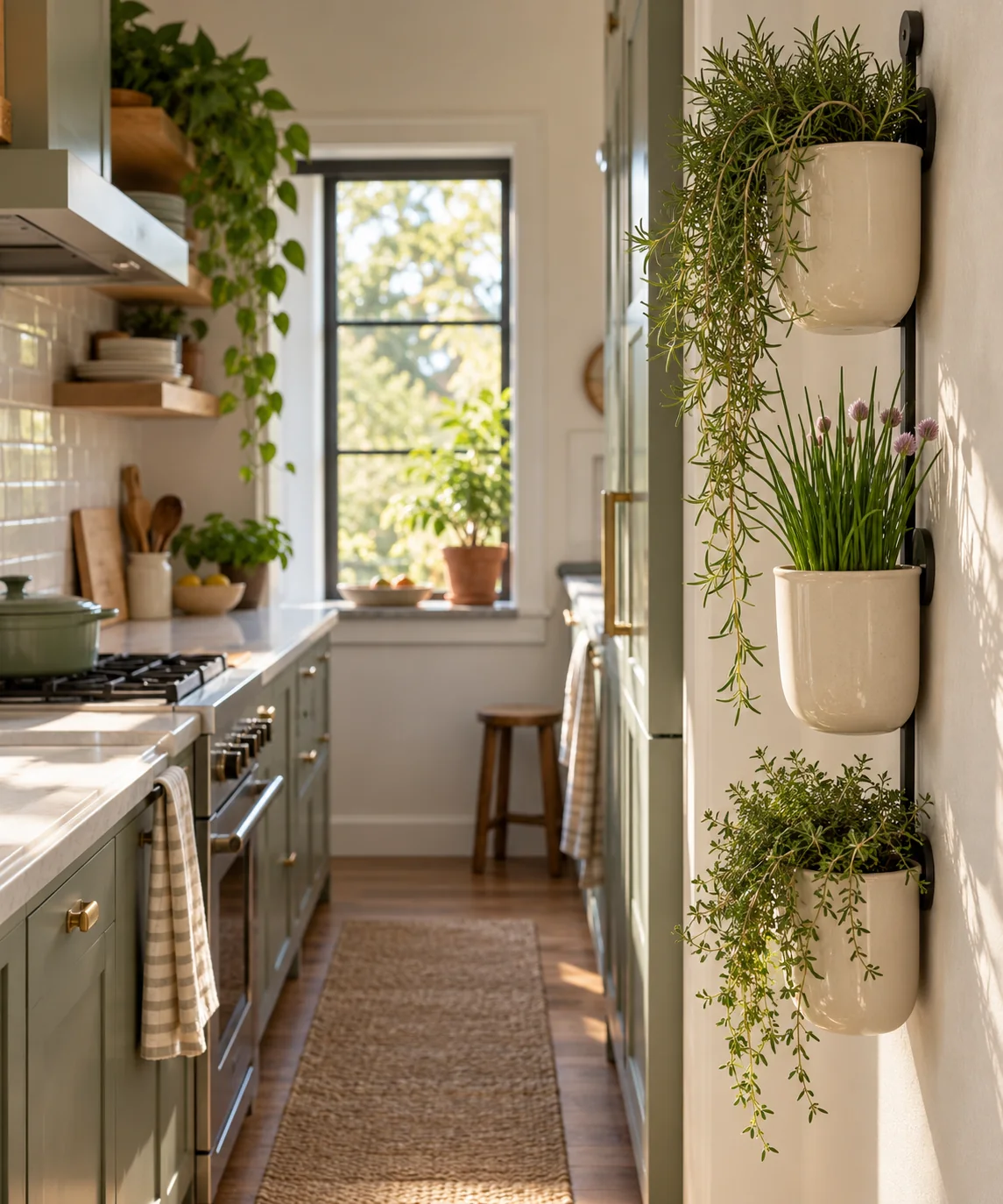
Walkway Clearance and Kitchen Traffic Planning
Kitchen corridors require generous clearance to maintain safe movement between cooking, prep, and washing zones. Standard residential building guidelines typically recommend a minimum clear walkway of 36 inches, expanding to 42 or 48 inches in multi-cook layouts to avoid trapping occupants or causing collisions near hot appliances. Introducing wall-hung planters into walkways narrower than these dimensions risks catching aprons, bumping elbows, or interfering with open cabinet and oven doors. Before considering any wall arrangement, observe how household members move through the space during peak meal preparation. If passage feels tight or if opening a refrigerator door sweeps near the intended wall zone, keep the vertical surface entirely clear to maintain unhindered egress and kitchen safety.
Reversible Mounting and Landlord Guidelines
Permanent wall modifications, such as drilling into framing studs or masonry anchors, carry risks of damaging hidden electrical wiring or plumbing lines common in kitchen walls. In rental properties or multi-unit buildings, lease agreements often prohibit structural fasteners or wall-mounted rails altogether. Instead of invasive structural work, prioritize reversible planning and lightweight, non-permanent fixtures certified by their manufacturers for kitchen environments. Freestanding vertical shelving units, tension-mounted floor-to-ceiling poles, or removable over-door organizing racks often provide vertical herb display without penetrating wall surfaces. Always consult property management rules and review manufacturer weight ratings before placing loaded pots onto any temporary support system.
Container Selection and Weight Management
Wall-supported plant holders must balance compact physical dimensions with sufficient soil volume for healthy root development. Flat-backed containers that rest flush against a vertical plane reduce room projection, but their overall loaded weight must be carefully evaluated. Soil saturated with water weighs substantially more than dry potting medium, and heavy stoneware or ceramic vessels add further structural strain to hanging points. Lightweight composite or thin metal outer sleeves paired with removable inner plastic nursery pots reduce total load. Ensure that any selected container profile does not protrude into natural head, shoulder, or hip paths, and verify that the mounting mechanism firmly secures the vessel against accidental dislodgement when brushed.
Drainage Management and Surface Protection
Moisture management is critical when positioning live plants along finished interior walls. Water escaping from elevated drainage holes can streak paint, seep into drywall, or pool near baseboards and low-voltage electrical outlets. To eliminate runoff risks without sacrificing plant health, avoid pots with open bottom holes hung directly over walls. Implement a nested cachepot system where herbs remain in standard plastic nursery containers set inside sealed decorative outer holders. For regular watering, lift the inner liner out, hydrate the root ball over a sink, and allow all gravitational water to drain completely before wiping the container base dry and returning it to its station.
Light Requirements and Routine Rotation
Most culinary herbs, including rosemary, thyme, and basil, demand sustained exposure to bright light to maintain compact stems and rich essential oil production. Interior galley walls often sit several feet away from windows, where light levels drop off dramatically. Assess light intensity across the entire vertical column throughout the day, as upper positions may receive direct sun while lower levels remain in deep shadow. Because unidirectional window light causes stems to stretch toward the light source, rotate inner containers regularly to support balanced foliage. If natural light proves insufficient, relocate the plants to a sunlit window sill rather than forcing growth in dim corridor conditions.
YOUR STARTING POINT
A little checklist.
Original editorial guidance. Images are AI-generated concepts, not photographs of completed projects. Our sources and approach.
Questions to consider
Are hanging wall planters safe in narrow galley kitchens?
They are only appropriate if the corridor comfortably exceeds standard clearance recommendations (typically 36 to 42 inches) and remains clear of appliance swing paths. In tight aisles, projecting containers present burn, spill, and collision hazards during meal prep.
Can I mount heavy ceramic planters using adhesive strips?
No. Standard adhesive strips are generally not rated for the combined weight of ceramic, damp potting soil, and plant foliage, and kitchen humidity can cause adhesives to fail suddenly. Use freestanding or manufacturer-rated mechanical supports.
How do I prevent kitchen wall surfaces from water and grease damage?
Water plants exclusively over the sink using removable inner liners, drying the bottoms before replacing them. Keep vertical plant arrangements well away from stovetops to prevent cooking grease and steam from coating foliage and finishes.