Kitchen Herb Gardens · THE GUIDE
Galvanized Metal Boot Tray Base for Overwintering Pots
Bringing potted patio herbs indoors for the cold season helps protect sensitive root systems from freezing temperatures, but grouping multiple containers indoors can expose flooring to soil grit and moisture. A galvanized metal boot tray provides a sturdy, low-profile barrier that groups overwintering pots into a single organized area near sunny doors or low windows. While indoor winter conditions present cultural challenges such as lower light levels and dry air, utilizing a durable containment tray helps protect finished flooring from drips and debris while simplifying cold-weather plant monitoring.
Jump to the checklist ↓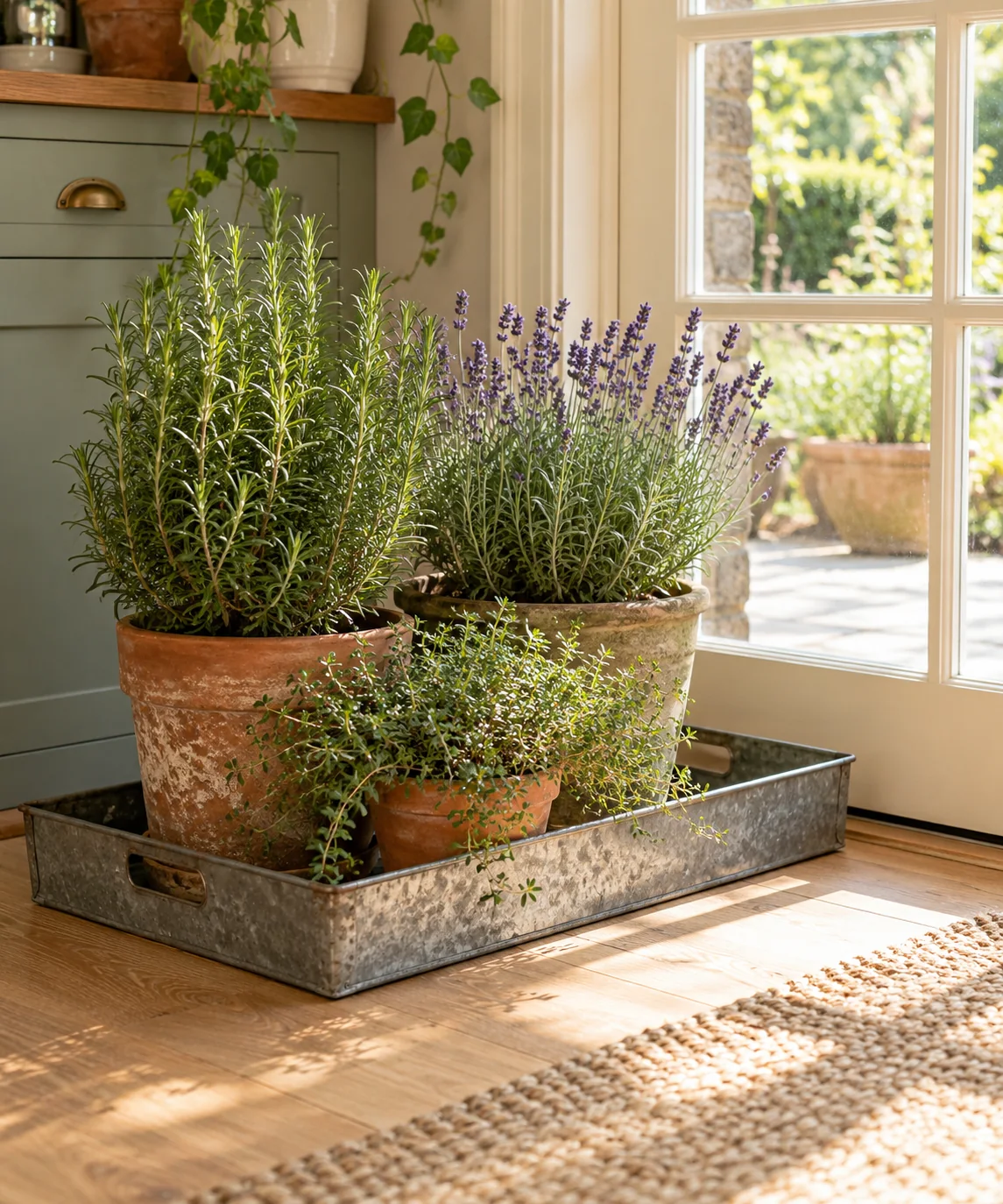
Selecting Floor Space and Clearances
Position the tray where containers can receive the maximum available natural light, such as beside an unobstructed patio door or low windowsill. Ensure the tray placement does not obstruct walking routes, access points, or door swings. Avoid locating the tray directly over forced-air floor registers or adjacent to baseboard heaters, where hot, arid airflow can dehydrate foliage and desiccate root balls prematurely. Verify that the floor area is level so water runoff does not pool unevenly in one corner of the tray.
Preparing Outdoor Pots for Indoor Housing
Thoroughly inspect and clean containers before moving them indoors from patios or decks. Scrub loose exterior soil, cobwebs, and mineral grime from the outside and underside of pots. Prune away dead or damaged foliage and inspect closely for outdoor garden pests like aphids or spider mites, which can proliferate in indoor temperatures. Attaching protective felt or rubber pads beneath heavy ceramic or stoneware pots prevents surface scratches against the metal tray interior.
Plant Spacing and Air Circulation
Overwintering herbs indoors are vulnerable to fungal issues and leaf drop if placed too close together in stagnant indoor air. Arrange containers across the tray with clear gaps between foliage boundaries rather than jamming pots rim to rim. Position taller, upright plants toward the back or adjacent to walls where they cannot be easily bumped, keeping smaller containers accessible in front for easy soil checks. Providing adequate air movement helps foliage dry quickly and minimizes microclimates that invite mold.
Managing Reduced Winter Watering
Short daylight hours and cooler ambient indoor temperatures slow herb metabolism significantly, reducing water demand compared to summer levels. Water pots only when soil tests dry to the touch beneath the surface, applying water carefully to avoid massive runoff. Although the galvanized tray collects incidental drips and loose soil crumbs, containers should not sit in pooled runoff, which blocks root oxygen and promotes root decay. Blot or sponge away standing water from the tray bottom promptly after watering.
Floor Surface Protection and Tray Care
While galvanized coatings provide water resistance, prolonged contact with moisture or temperature differentials can potentially affect underlying wood, laminate, or vinyl finishes. Place a breathable protective mat or discrete non-marking pads underneath the tray to allow airflow and prevent surface marring. Periodically inspect the floor beneath the tray during routine housekeeping. Clean the metal tray with mild soapy water and dry it thoroughly before seasonal storage to maintain its protective zinc finish.
YOUR STARTING POINT
A little checklist.
Original editorial guidance. Images are AI-generated concepts, not photographs of completed projects. Our sources and approach.
Questions to consider
Can outdoor herbs survive all winter inside on a tray?
Survival depends heavily on adequate sunlight, humidity, and temperature. Sun-loving woody perennials like rosemary and lavender often struggle in low indoor light and dry heated air. Providing unshaded southern light, cool indoor temperatures, and careful watering improves their chances of surviving until spring.
How do I prevent standing water from harming plant roots in a boot tray?
Avoid using the tray as a standing reservoir. Water plants individually and allow excess moisture to drain into a saucer or catch basin, or sponge out any standing water that collects on the tray bottom shortly after watering so pots do not remain submerged.
Will a galvanized metal tray damage hardwood or vinyl floors?
Direct contact between cold metal and warm floors can trap moisture or cause scratches if the tray shifts. Placing low-profile silicone feet or a breathable mat underneath the tray creates an air buffer that helps protect delicate floor finishes.