Container Vegetable Gardens · THE GUIDE
Galvanized Tub Patio Potato Growing Corner
Setting up a dedicated potato growing corner using a repurposed galvanized steel wash tub provides courtyard gardeners with a structured method to cultivate tuber crops on paved ground. A broad tub offers generous rooting volume, but metal containers demand deliberate management regarding solar heat transfer, drainage, and structural weight. When filled with damp growing media, large tubs become exceptionally heavy, requiring careful site selection on ground-level paving or confirmation of structural load limits where paved surfaces sit over subterranean structures. With proper drainage preparation and thoughtful positioning, a metal container garden can remain productive, tidy, and manageable throughout the growing season.
Jump to the checklist ↓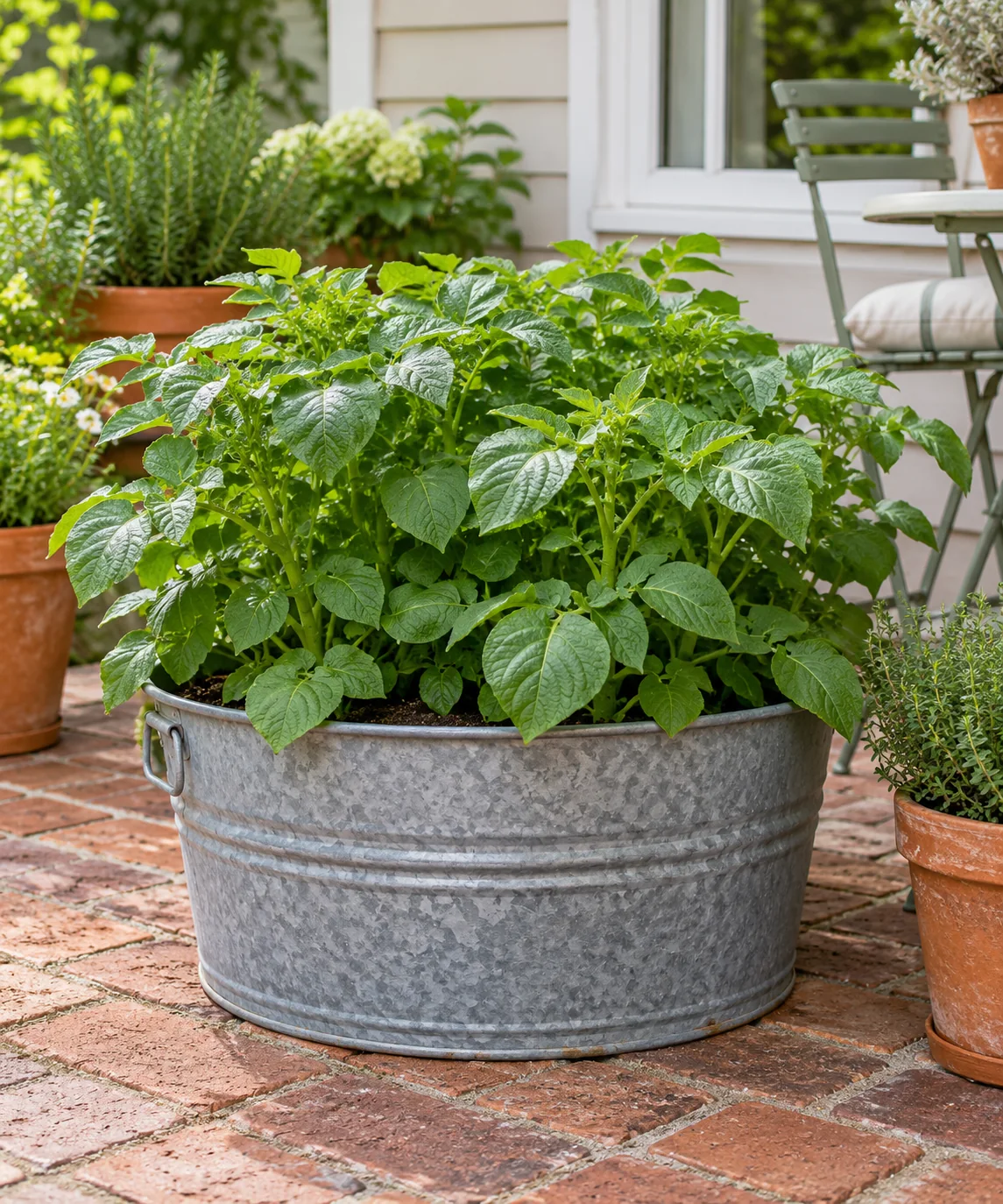
Base Drainage Preparation and Surface Protection
A solid metal tub lacks natural drainage and will retain standing water unless adequate drainage outlets exist across its bottom. If modifying a container, use proper eye and hand protection when drilling sheet metal, or choose agricultural stock tanks with factory-installed drainage plugs. To protect underlying paving and encourage unimpeded outflow, elevate the vessel on stable masonry pavers or broad pot risers. Raising the container keeps runoff moving toward courtyard drains and reduces the risk of mineral staining on exterior stone or brick paving.
Weight Assessment and Ground Placement
A large metal tub filled with moist potting soil, growing tubers, and dense foliage can weigh several hundred pounds. Always confirm the final footprint before filling, as shifting the container once loaded risks personal injury and container deformation. On ground-level solid concrete or pavers on grade, bearing capacity is rarely an issue; however, if your courtyard sits over a cellar, parking garage, or waterproof membrane, consult property management or structural plans before installing high-capacity planters. Keep walking paths comfortably clear around the perimeter for safe maintenance.
Thermal Regulation for Root Zones
Galvanized metal absorbs and conducts heat rapidly under direct summer sun, which can cause root-zone temperatures to climb and stall tuber development. Situate the tub where plants receive necessary direct light during cooler morning hours while benefiting from ambient afternoon shade if local summers are intense. If midday sun is unavoidable, you can shade the southern exterior curve of the metal tub using lower companion containers or breathable screening. This exterior buffering reduces direct thermal transfer through the steel walls without blocking sunlight from the foliage canopy.
Layered Planting and Soil Management
Start the growing season with a moderate base layer of loose, well-aerated container mix rather than dense garden soil. Arrange seed potatoes with sufficient spacing to allow unimpeded shoot emergence. As green stems grow upward, gradually add more growing medium around their stems over several weeks, leaving top leaves exposed to capture light. This incremental hilling accommodates subterranean stem elongation and protects developing tubers from sun exposure, which causes greening and bitter glycoalkaloid buildup.
Material Suitability and Post-Harvest Maintenance
Newer galvanized tubs feature zinc coatings that resist rust, but acidic potting mixes can slowly dissolve zinc over time, potentially impacting sensitive crops. Avoid antique wash tubs with peeling paint or unknown histories, as older materials may contain lead. At harvest, empty the soil onto a durable tarp rather than prying tubers out with sharp steel shovels that could gouge the zinc finish. Clean the interior with water and a soft bristle brush, then invert or shelter the dry container during winter to avoid stagnant moisture accumulation.
YOUR STARTING POINT
A little checklist.
Original editorial guidance. Images are AI-generated concepts, not photographs of completed projects. Our sources and approach.
Questions to consider
Can standard garden topsoil be used in a galvanized tub?
Heavy garden topsoil is not recommended for deep metal planters. In containers, field soil compacts readily, restricting oxygen flow and impeding drainage around tubers. A loose potting blend supplemented with perlite or coarse horticultural bark maintains better porosity, resists compaction, and helps control the overall wet weight of the container.
How do I monitor moisture levels in a large metal wash tub?
Because metal sides heat up and dry the outer perimeter faster than plastic or wood, probe the soil several inches below the surface before watering. Irrigate thoroughly when the upper few inches feel dry to the touch, ensuring water drains freely from the base. Avoid rigid calendar schedules, as water uptake varies significantly with plant size and ambient weather.
Is galvanized steel safe for edible potato cultivation?
Modern galvanized steel manufactured for livestock or storage uses zinc coatings that are generally stable under neutral to slightly acidic soil conditions. However, vintage or decorative containers with chipped enamel, unknown past chemical storage, or peeling paint should be avoided due to potential heavy metal contaminants. If uncertain, line the container interior with a food-safe fabric grow bag.