Container Vegetable Gardens · THE GUIDE
Glazed Stoneware Planter Trio for Kitchen Window Harvests
Culinary herbs planted right at the kitchen window offer immediate access during meal preparation, but indoor environmental conditions can challenge delicate root systems. Glazed stoneware planters provide a functional advantage over unglazed terracotta by limiting moisture evaporation through the pot walls. This non-porous barrier helps maintain steady root hydration, especially near warm indoor drafts. Selecting a uniform trio of containers establishes visual order on a wide interior ledge while allowing you to group moisture-sensitive kitchen staples such as chives, parsley, and basil. Proper placement requires direct sunlight and independent saucers to safeguard indoor sill surfaces from runoff.
Jump to the checklist ↓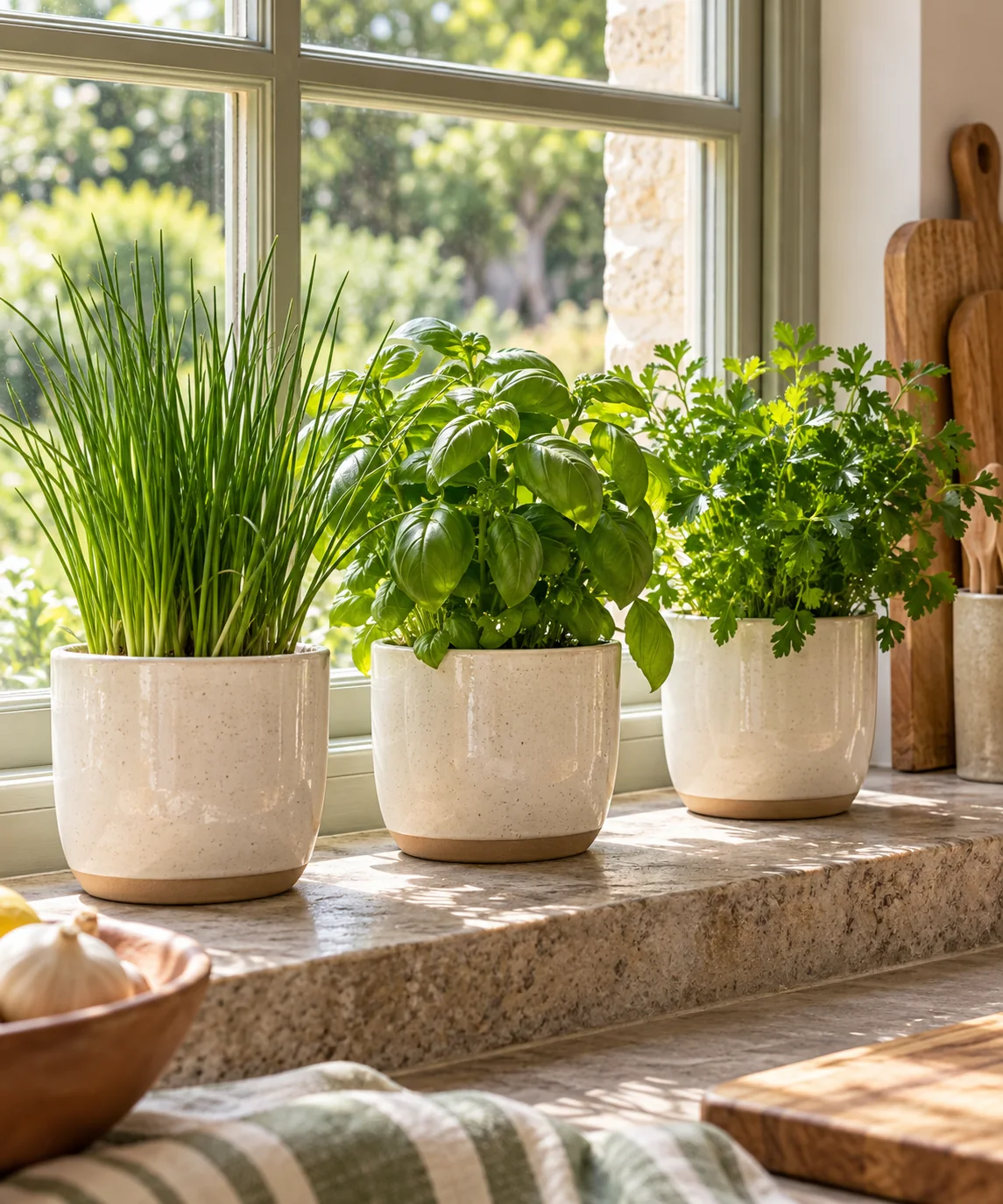
Glazed Ceramic Material Benefits
Glazed stoneware restricts evaporative loss through the sides of the vessel, keeping growing media damp longer than porous unglazed clay. This characteristic benefits moisture-demanding plants like flat-leaf parsley and common chives, which wilt rapidly when root balls dry out completely. Because non-porous containers retain water efficiently, indoor gardeners must ensure every container includes functional bottom drainage holes. Paired with watertight, separate glazed saucers, these vessels protect wood or stone sills from moisture damage while establishing a stable environment for root hydration without creating waterlogged substrate.
Evaluating Windowsill Depth and Exposure
Before arranging your trio, measure the usable depth of the sill to maintain stable placement and unhindered window operation. Containers must rest completely on the solid sill surface without overhang, positioned far enough from window cranks, latches, and sliding sash tracks to avoid accidental tipping. Most culinary herbs demand strong, direct sun for several hours daily to prevent weak, spindly growth. A south- or west-facing window without exterior tree shading provides strong natural light. During cold winter periods, keep container foliage slightly away from chilling contact with exterior glass panes.
Herb Selection and Root Space Allocation
Dedicate one container to each crop to prevent aggressive root competition and uneven moisture demand. Chives thrive with consistent moisture and frequent harvesting, spreading gradually via small subterranean bulbs. Sweet basil requires warmth, generous light, and regular tip pinching to stimulate dense lateral branching. Flat-leaf parsley develops a deep taproot that benefits from container depth rather than wide surface spread. Using matching eight-inch deep pots gives each plant sufficient volume for root establishment, preventing the rapid soil exhaustion and nutrient depletion typical of shallow novelty planters.
Potting Media and Moisture Management
Fill the stoneware containers with a light, peat- or coco-coir-based indoor potting mix amended with perlite for aeration. Avoid adding gravel or shards to the bottom of the pot, as coarse layers raise the perched water table and can saturate lower roots. Water thoroughly until liquid exits into the saucer, then discard accumulated standing runoff after drainage ceases to prevent root asphyxiation. Check moisture levels manually by inserting a finger an inch or two into the substrate before watering again, rather than following a rigid calendar schedule that ignores household humidity changes.
Reversible Maintenance and Seasonal Adjustments
Indoor window conditions change across seasons, requiring simple operational adjustments. Wipe foliage gently with a soft, clean cloth or gentle water spray to clear household dust and maximize light absorption. Rotate each glazed vessel a quarter turn periodically to encourage even, vertical stem growth toward the window. During intense summer afternoons, unshaded window glass can elevate localized temperatures, increasing soil drying rates. If natural daylight proves insufficient during winter months, relocate the trio to an adjacent work surface beneath a freestanding grow light without altering sill trim or window architecture.
YOUR STARTING POINT
A little checklist.
Original editorial guidance. Images are AI-generated concepts, not photographs of completed projects. Our sources and approach.
Questions to consider
Can culinary herbs grow successfully in a north-facing window?
Culinary herbs require strong, direct sunlight to produce healthy foliage and essential oils. North-facing windows rarely provide sufficient light, leading to weak, elongated stems. Place herbs in south- or west-facing exposures or supply supplemental full-spectrum lighting.
Why avoid gravel in the bottom of glazed pots?
Adding gravel does not improve drainage; instead, it raises the saturated zone closer to plant roots. Porous, uniform potting soil extending to the container base ensures proper water flow and gives roots the maximum usable volume.
How often should indoor potted chives and parsley be watered?
Water whenever the top inch of soil feels dry to the touch. Because glazed stoneware prevents side evaporation, intervals vary based on indoor temperature, household humidity, and seasonal sun intensity rather than a rigid calendar.