Rental-Friendly Decor · THE GUIDE
Group Corner Houseplants on a Multi-Tier Wire Floor Stand
Arranging potted greenery near balcony doors often results in a cluttered floor that obstructs footpaths and complicates vacuuming. A multi-tier wire floor stand solves this spatial challenge by consolidating separate pots onto vertical levels within an unused room corner. Wire construction allows natural light to filter through lower shelves while preventing moisture from trapping against finished floorboards. By aligning plant foliage heights with ambient light angles, you can maintain healthy container plants in a clean, compact footprint that leaves doorways unobstructed and rental surfaces completely intact.
Jump to the checklist ↓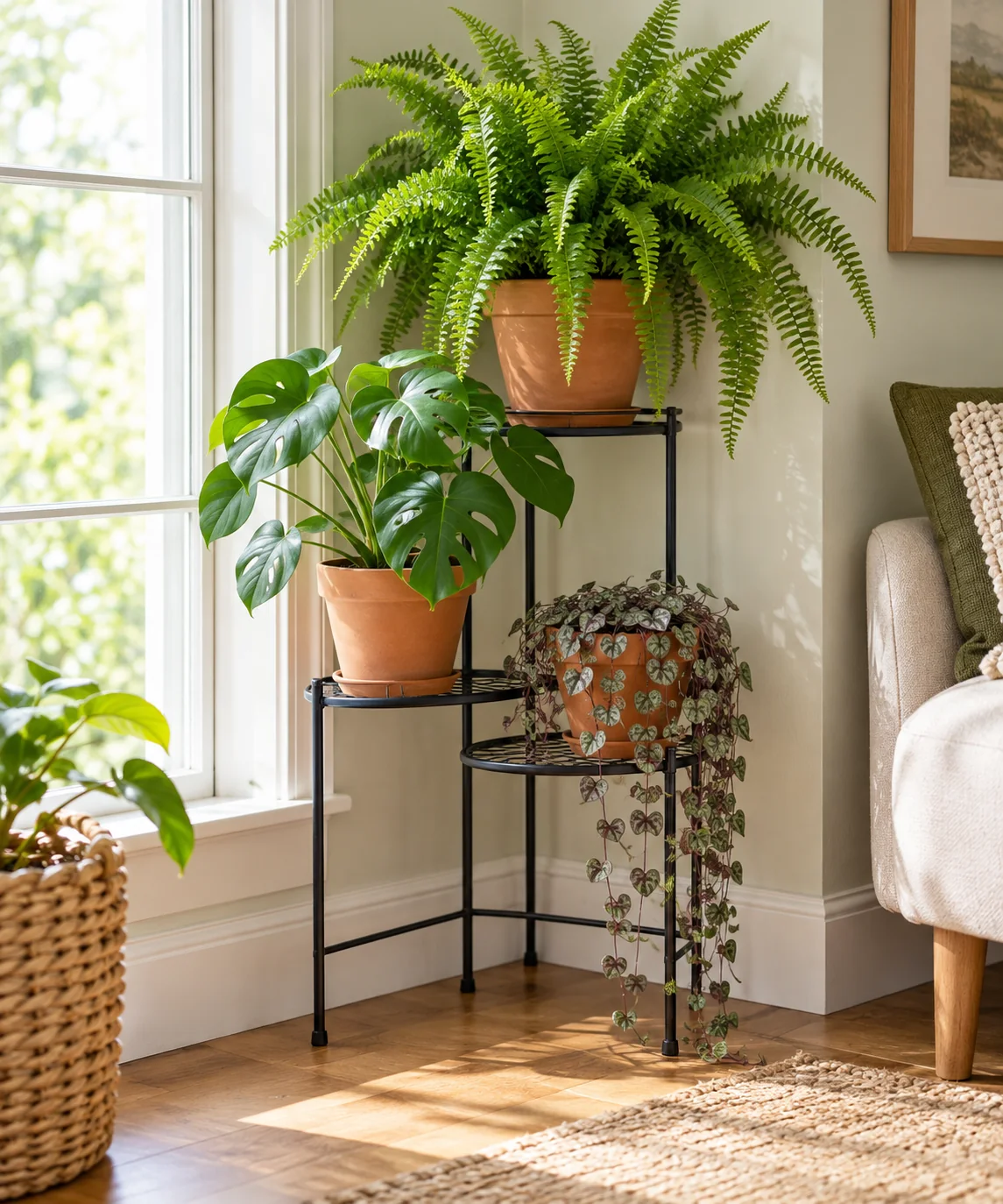
Evaluating Footprint and Doorway Clearances
Before placing a vertical plant stand near an entrance, open the adjacent door completely through its full arc to verify the path of travel. Select a corner stand design whose widest base shelf sits completely clear of the door swing, threshold, and projecting hardware. Quarter-round or stepped triangular wire units fit neatly into standard room corners, transforming underutilized alcoves into functional plant displays. Confirm that broad or trailing leaves will not extend into walkways, brush against opening doors, or catch in hinges as people move past.
Allocating Plants by Light and Tier Height
Sunlight exposure near exterior doors and windows shifts noticeably between the floor and upper elevations. Reserve top tiers for compact sun-tolerant houseplants that benefit from direct overhead light. Middle shelves accommodate broad-leaved specimens that thrive in bright indirect light, while lower shelves host varieties tolerant of filtered illumination from upper plant foliage and wire grids. Maintain adequate vertical clearance between each pot rim and the shelf above so emerging stems have room to expand and air circulates freely around each container.
Selecting Pots and Weight Distribution
A stable plant stand relies on placing the heaviest containers on the lowest levels to maintain a low center of gravity. Position heavier terracotta, ceramic, or stone planters on the bottom shelf, reserving lightweight plastic nursery pots inside decorative cachepots for the elevated tiers. Because wire shelves have open mesh bottoms, always place a dedicated waterproof saucer beneath every container. This catches drainage overflow and protects lower foliage, metal shelves, and finished floor surfaces from accidental moisture exposure.
Managing Floor Protection and Balance
The narrow feet of wire plant stands concentrate downward weight onto small floor areas, which can indent softer hardwoods, mar vinyl, or compress carpet fibers. Place wide silicone furniture cups, rubber caps, or dense felt pads under each foot to spread the load across a larger contact area. Before placing plants, test the stand's stability by gently pressing the upper shelf from multiple angles. Use built-in adjustable leveling feet or reposition the unit until all contact points sit squarely and firmly against the floor without rocking.
Long-Term Maintenance and Plant Care Routine
To prevent water from splashing onto metal joints, baseboards, or walls, remove individual pots from the wire rack when watering. Allow containers to drain completely in a sink or basin before returning them to their tiers. Periodically wipe down the powder-coated wire frame using a soft, damp cloth to remove accumulated dust, loose soil, and water spotting. Regularly inspect the drip saucers after watering and empty any standing water to protect plant roots from oversaturation and prevent prolonged moisture contact with wire welds.
YOUR STARTING POINT
A little checklist.
Original editorial guidance. Images are AI-generated concepts, not photographs of completed projects. Our sources and approach.
Questions to consider
How do I stop runoff water from dripping onto lower tiers?
Fit every container with an individual waterproof saucer that comfortably exceeds the pot's base diameter. For best results, lift potted plants off the stand to water them at a sink, allowing all excess water to drain out before replacing them.
Will a wire plant stand leave dents in wood flooring?
Narrow metal legs concentrate load weight into tiny contact areas, which can mark softer floorboards. To prevent pressure marks, slip broad rubber cups, silicone floor protectors, or heavy felt pads beneath each foot to distribute the downward force evenly.
Can I place trailing plants on the lower shelves?
Trailing stems on lower shelves tend to spread onto the floorboards, where they can be crushed or create tripping hazards. Place trailing varieties on higher tiers or trim long runners so stems remain safely within the perimeter of the stand.