Indoor Plant Styling · THE GUIDE
Group Diverse Foliage Textures on a Mid-Century Sideboard
Mid-century sideboards provide expansive horizontal surfaces that can appear flat or rigid against a dining room wall. Curating an intentional cluster of houseplants featuring contrasting leaf textures introduces biological variety without disrupting the clean, geometric lines of retro cabinetry. By combining ruffled edges, smooth vertical blades, and fine fronds within uniform neutral containers, the vignette remains cohesive rather than messy. This styling method relies on contrasting botanical forms to draw the eye, offering dynamic visual weight that complements rich wood veneers while maintaining practical clearance for dining room serving needs.
Jump to the checklist ↓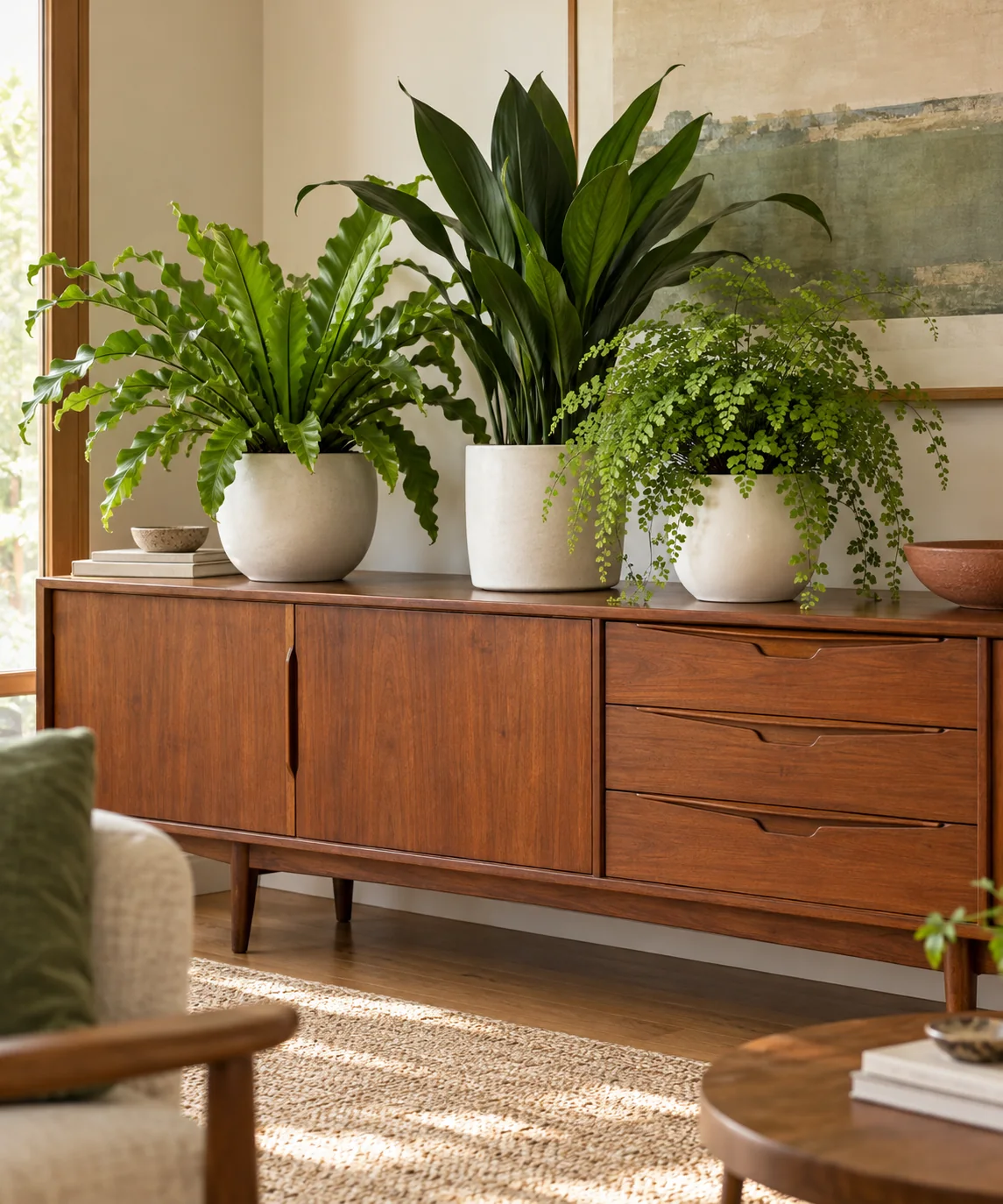
Balancing Botanical Shapes and Silhouettes
Create visual balance by selecting three distinct foliage architectures: one upright architectural stem, one broad textural leaf, and one soft or trailing accent. An upright cast iron plant delivers height and structural discipline. A bird's nest fern provides wavy, ruffled margins that break up angular cabinetry lines. Finally, a maidenhair fern or button fern introduces delicate, airy movement. This triadic contrast ensures each plant highlights the characteristics of its neighbor while preventing the sideboard display from looking like a uniform, monotonous hedge.
Selecting Neutral Containers for Visual Uniformity
When plant textures are varied and dramatic, containers should remain quiet and disciplined. Choose matching or closely coordinated pots in matte white, sand, or warm grey ceramic. Uniform vessel finishes establish an anchor that ties disparate leaf forms into a single curated collection. Avoid highly decorative, multi-colored pots that compete with the organic variations of the foliage. Straight-sided cylinder pots or softly tapered conical planters pair naturally with the minimalist legs and hardware typical of mid-century case goods.
Protecting Furniture Finishes with Surface Trays
Vintage wood veneers and lacquer finishes are vulnerable to water rings and trapped humidity. Never place ceramic containers directly on bare wood, even with attached saucers, as ceramic can sweat. Anchor the entire botanical trio on a low-profile tray made of powder-coated metal, sealed stone, or composite material lined with felt pads underneath. This tray unifies the grouping into a defined visual zone while creating an impervious barrier against accidental spills, potting soil crumbs, and seasonal moisture transfer.
Creating Staggered Depths and Sightlines
Avoid lining up pots in a straight, military row along the credenza back edge. Instead, position the tallest plant slightly off-center toward the back, place the broad ruffled specimen forward and to one side, and tuck the delicate fronds into the remaining corner. This triangular arrangement creates depth, drawing the viewer's eye through multiple planes. Keep the entire cluster confined to one third of the sideboard surface so the remaining area stays functional for everyday dining needs.
Establishing Consistent Light and Care Routines
Houseplants sharing a sideboard display often share the same ambient light environment, so pick species with compatible indoor requirements. Moderate, indirect light from an adjacent window supports cast iron plants and ferns comfortably. Monitor soil moisture individually, as delicate ferns consume water faster than thick-leaved architectural plants. Maintain a consistent weekly inspection schedule, rotating pots a quarter-turn each month to encourage even foliage development on all sides without displacing the overall arrangement on the credenza.
YOUR STARTING POINT
A little checklist.
Original editorial guidance. Images are AI-generated concepts, not photographs of completed projects. Our sources and approach.
Questions to consider
How do I choose the right pot sizes for a credenza display?
Select container diameters that occupy less than half the sideboard's depth, typically between five and seven inches. This maintains stable proportions, prevents accidental tipping, and preserves open surface space along the front edge.
Will grouping plants together help maintain humidity on wood furniture?
Clustering plants creates a mild localized microclimate that benefits thin-leaf ferns. However, ensure adequate airflow between containers so trapped humidity does not settle onto the underlying furniture finish or cause fungal spotting on leaves.
Can I use artificial plants alongside live foliage in this arrangement?
Yes, high-quality botanical replicas can substitute for finicky varieties like maidenhair ferns. Mix them with live structural plants in identical pots to maintain realism while simplifying ongoing moisture management near delicate wood finishes.