Pantry Organization · THE GUIDE
Group Japanese, Mediterranean, and Latin Specialties into Cuisine Baskets
Stocking international ingredients often leads to a disorganized pantry where dried chiles, specialty soy sauces, and Mediterranean pulses get scattered across random shelves. Grouping ingredients into dedicated, cuisine-specific pantry baskets creates an efficient mise en place system that streamlines dinner preparation. Instead of hunting through multiple shelves for mirin, dashi granules, and nori sheets, you simply pull down one Japanese cuisine basket to your prep counter. This containerized method keeps tall bottles, fragile dried goods, and regional starches clustered logically, preventing half-used packets from hiding in dark pantry corners and expiring unnoticed.
Jump to the checklist ↓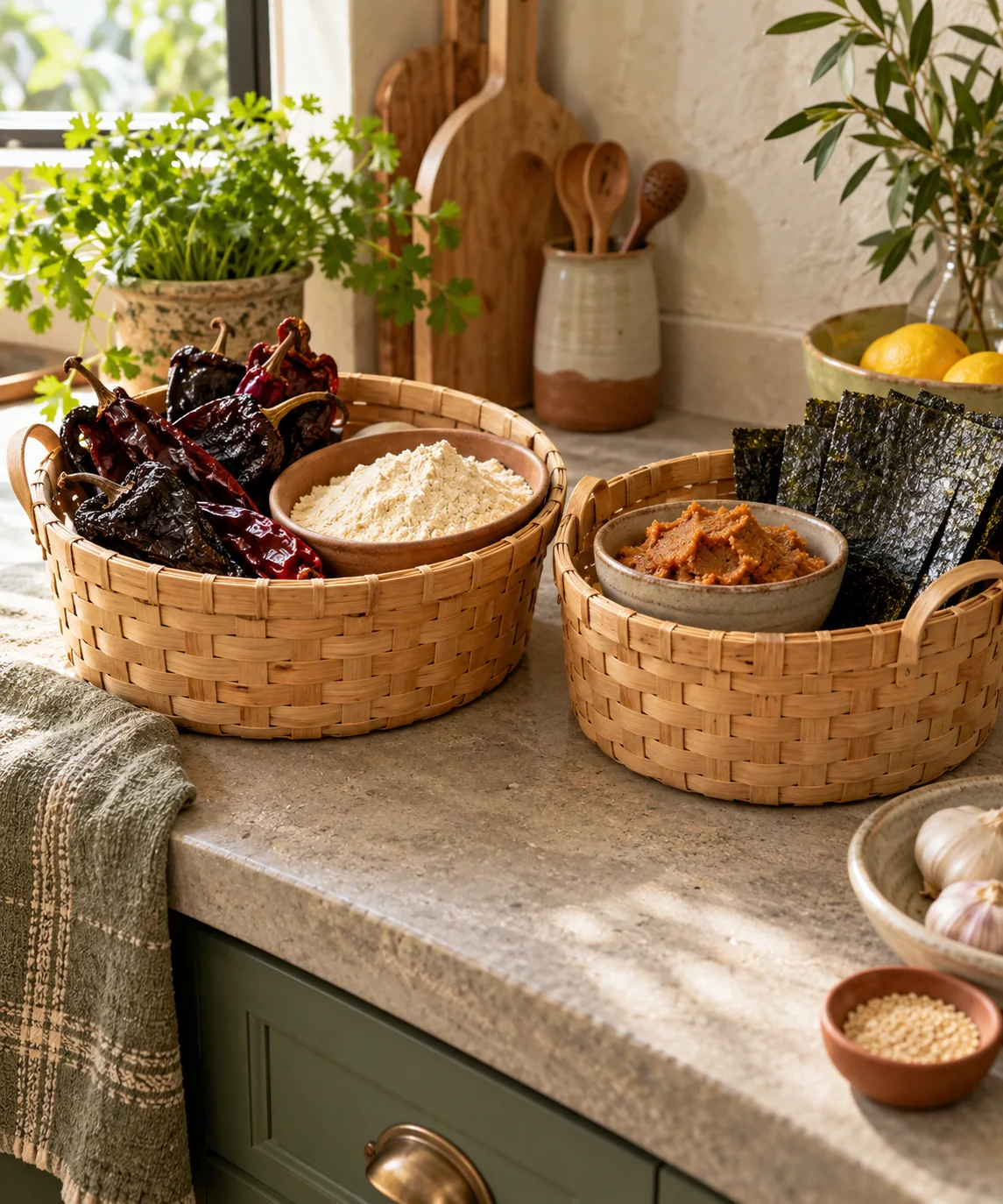
Establish Cuisine-Specific Categories
Identify the international culinary styles you cook most frequently throughout the month. Common functional categories include Japanese, Mediterranean, and Latin American. Restrict your baskets to your actual cooking habits rather than aspirational cuisines so the bins stay populated with active stock. Give each culinary tradition its own designated basket rather than combining divergent ingredients into a catch-all container. Keeping items in separate regional bins keeps packaging organized, though delicate items like dried seaweed still require airtight packaging to prevent absorbing aromas from pungent spices like Mexican oregano or smoked paprika.
Select Sturdy and Wipeable Bin Materials
Specialty ingredients frequently involve sticky sauces, oily brines, or powdery grains that can spill. Choose bins made of smooth wood, coated wire, or high-density polypropylene featuring solid bases or washable liners. Basket walls that stand roughly five to six inches high help keep tall vinegar or soy sauce bottles from tipping over during transport. Integrated cutout handles make it easy to slide loaded baskets off pantry shelves and carry them directly to your main cooking surface.
Organize the Japanese Cuisine Basket
Arrange items by container height and durability within your Japanese basket. Stand tall bottles of mirin, tamari, and rice vinegar along the back rim. Place vacuum-sealed pouches of dashi powder, dried wakame, and kombu upright in the center using small bin dividers or organizer inserts. Reserve the front zone for square nori packs, panko breadcrumbs, and soba noodles laid flat or held vertically. Keep unopened miso paste tubs stable in a front corner until refrigeration is required after breaking the seal.
Assemble Mediterranean and Latin Bins
Dedicate one bin to Mediterranean staples like canned sardines, tahini, pine nuts, couscous, and dried oregano. In the Latin bin, group bags of masa harina, achiote paste, canned chipotles, and dried peppers such as ancho and guajillo. Store dried chiles in sealed zipper-top pouches to keep their brittle skins intact and prevent loose pepper seeds from scattering across the bin base. Stand canned goods along the edges where their weight stabilizes the basket during lifting.
Streamline Meal Prep and Weekly Restocking
When preparing a regional meal, lift the entire cuisine basket onto your counter beside your prep station. Retrieve the exact spices, pastes, and dried goods needed, then return every component directly into the bin after measuring. Carrying one consolidated container eliminates repeated trips across the kitchen and keeps work surfaces orderly. Before returning the bin to the pantry, inspect fill levels on staple items like soy sauce or masa to note needed grocery replacements on your weekly shopping list.
YOUR STARTING POINT
A little checklist.
Original editorial guidance. Images are AI-generated concepts, not photographs of completed projects. Our sources and approach.
Questions to consider
How do I store ingredients that require refrigeration after opening?
Store unopened jars and paste tubs in the pantry cuisine bin. Once opened, move the container to a matching themed bin or dedicated door shelf in your refrigerator, keeping pantry baskets reserved for shelf-stable components.
Can I combine small cuisine categories into a single basket?
Yes, using an adjustable internal divider allows two smaller regional collections to share one bin neatly. Physical dividers keep small sauce bottles upright and separated, though aromatic spices and dried goods still need airtight packaging to prevent scent transfer.
What basket size works best on standard twelve-inch pantry shelves?
Choose baskets measuring ten to eleven inches deep, eight to ten inches wide, and six inches high. This size utilizes shelf depth efficiently while leaving enough clearance to slide bins past door frames without snagging.