Pantry Organization · THE GUIDE
Group Loose Specialty Teas and Coffee Beans in Opaque Metal Tins
Loose-leaf teas and whole coffee beans contain delicate aromatic compounds and volatile oils that degrade rapidly when exposed to ambient light, air, and moisture. Clear glass jars may look appealing on open shelving, but UV light accelerates oxidation, resulting in flat flavors and stale brews. Transitioning your specialty beverages into opaque metal tins creates an effective protective barrier while establishing a calm, cohesive aesthetic on your pantry shelves. With thoughtful sizing, clear labeling, and dedicated row layouts, you can preserve peak flavor notes while keeping your daily morning routine uncluttered and remarkably efficient.
Jump to the checklist ↓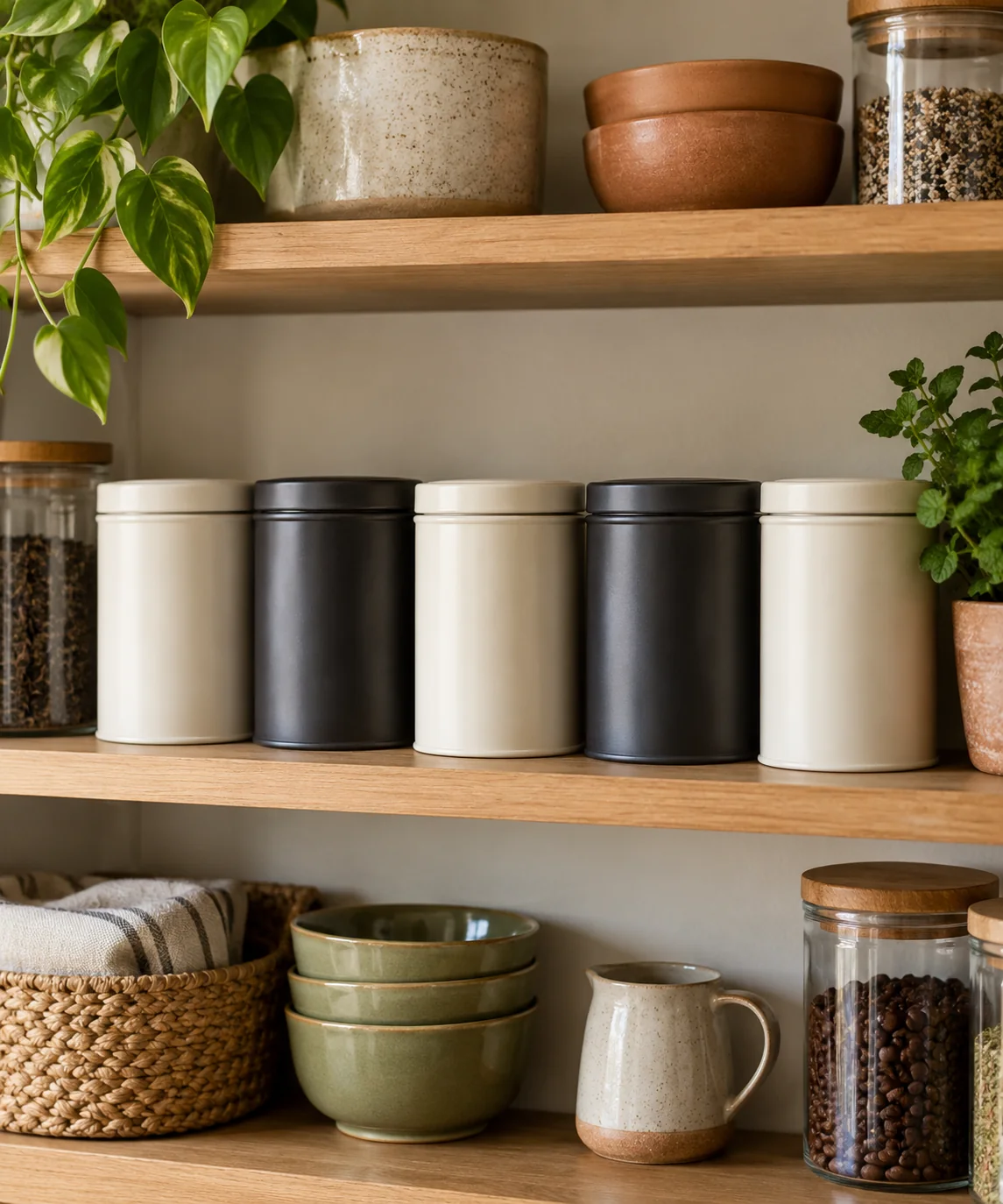
Light Barrier and Material Selection
Specialty loose teas and whole coffee beans contain volatile aromatic oils that gradually break down when exposed to ambient light and air. Opaque containers made from food-grade tinplate or stainless steel block incoming light, helping maintain flavor stability and aroma far better than clear glass jars. Select tins with smooth, food-safe interior linings to protect the contents from direct contact with raw metal seams. A durable matte or powder-coated exterior also resists smudges and wipes clean easily during routine kitchen maintenance.
Airtight Seals and Degassing Considerations
Loose tea leaves benefit from tight, airtight seals that prevent ambient humidity from degrading subtle flavor notes and aromas. Choose tins with snug inner slip lids or silicone gasket closures to restrict air exchange. For whole roasted coffee beans, containers equipped with a one-way degassing valve allow naturally released carbon dioxide to escape without letting outside air in. This pressure equalization prevents container lids from lifting while keeping oxygen away from the beans during storage.
Sizing Tins to Purchase Cycles
Excess empty space inside a storage container leaves ambient air in contact with the contents, accelerating flavor loss over time. Select canister sizes that closely match your usual purchase quantities rather than using oversized tins for small batches. A standard 12-ounce coffee bag fits comfortably in an average one-liter canister, while smaller quantities of delicate loose tea fit best in compact tins. Keeping container volume proportionate helps minimize the volume of trapped air resting above your tea leaves or beans.
Shelf Layout and Classification
Organize canisters on accessible pantry shelves where labels and lid styles can be quickly identified. Group containers logically by beverage type, dedicating specific shelf zones to whole bean coffees and others to loose-leaf teas. Within each category, arrange tins by roast style, caffeine level, or tea type. Provide practical spacing between containers so each tin can be lifted cleanly without tipping neighboring jars, keeping your morning brewing routine orderly and efficient.
Tracking Roast and Harvest Dates
Because transferring beans and leaves out of their original bags removes commercial packaging details, establish a clear labeling method on the container. Write the roast date, origin, and suggested brewing parameters on removable tape or write-on labels placed on the base or side of the tin. Before refilling canisters with a new batch, wash them with warm water and mild, unscented detergent, drying them completely to remove residual coffee oils or tea dust that could taint fresh supplies.
YOUR STARTING POINT
A little checklist.
Original editorial guidance. Images are AI-generated concepts, not photographs of completed projects. Our sources and approach.
Questions to consider
Why are clear glass jars unsuitable for whole coffee beans and tea?
Clear glass allows light to reach the contents, which accelerates the degradation of delicate aromatic oils and flavor compounds. Fully opaque containers block ambient light, helping whole beans and tea leaves retain their distinct aroma and freshness longer.
How often should coffee and tea tins be thoroughly washed?
Wash tins between batch refills to eliminate accumulated oils and fine dust. Coffee beans leave behind surface oils that can oxidize over time, so washing with warm water and mild unscented soap, followed by complete drying, ensures fresh batches remain uncontaminated.
Can ground coffee be stored in the same style of tin?
Yes, though ground coffee loses its aromatic qualities more rapidly than whole beans due to increased surface area. Store ground coffee in a compact, airtight tin with an interior seal, keep headspace minimal, and consume it promptly for optimal flavor.