Laundry Space Organization · THE GUIDE
Group Mending Supplies in a Shallow Stackable Tin
Garments frequently emerge from the wash with popped buttons, loose hems, or snagged seams that need quick repair before putting them away. Keeping a full-scale sewing basket tucked away in a distant closet often results in damaged clothes sitting in laundry purgatory for weeks. A shallow, stackable metal tin kept on a utility shelf provides an accessible home for essential mending items. By housing only the most common threads, needles, and spare fasteners in one single-layer container, you can resolve minor clothing repairs immediately upon folding.
Jump to the checklist ↓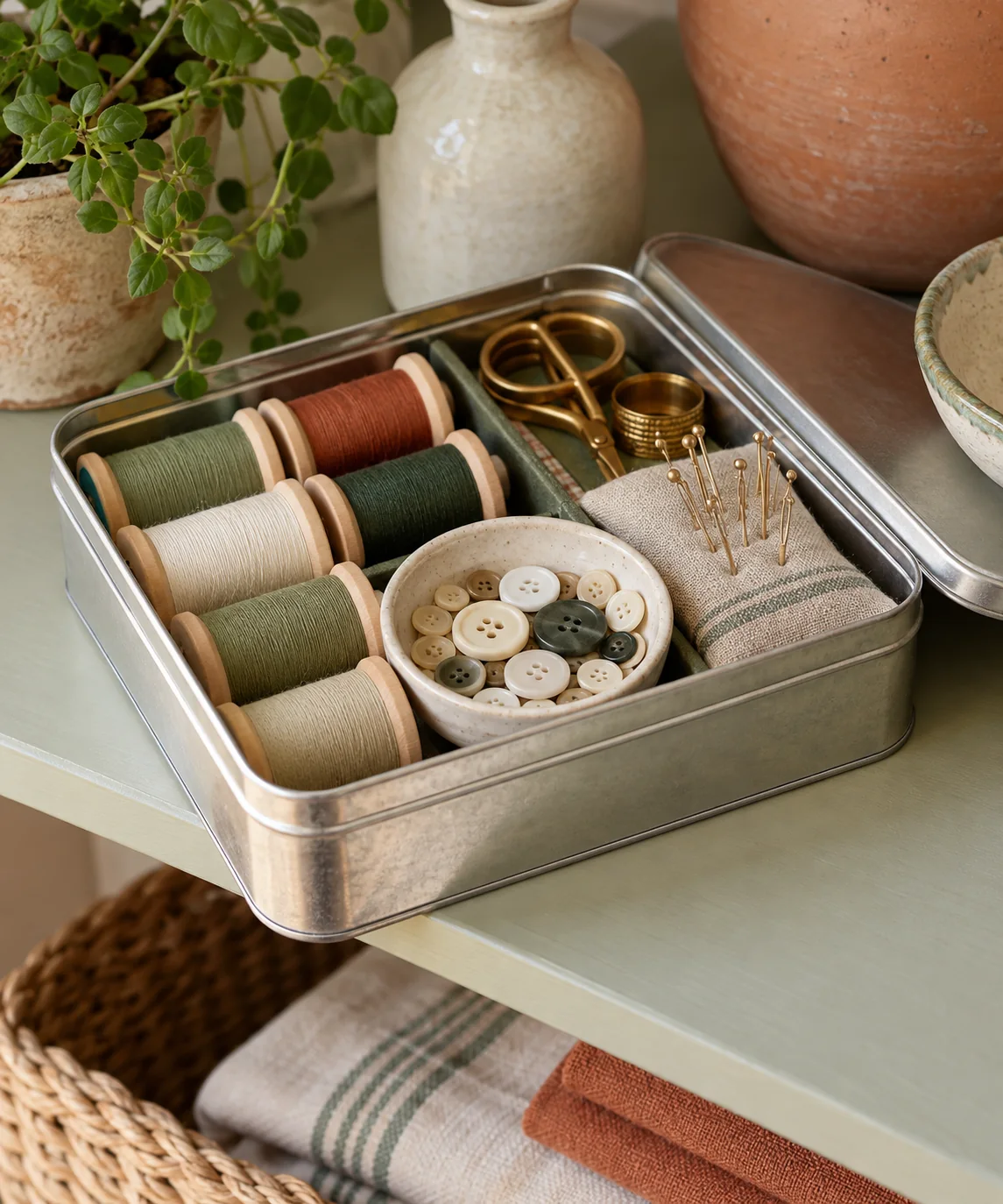
Tin Dimensions and Visibility
Choose a rectangular or square metal tin measuring roughly eight by ten inches with a depth no greater than two to three inches. Deep sewing boxes encourage clutter, forcing you to rummage blindly through tangled threads to find a needle. A shallow vessel keeps every tool visible at a single glance. Metal biscuit tins or modular desk organizer tins work well on utility shelving, offering rigid edges and flat lids that can sit beneath light caddies or stack alongside laundry baskets.
Curating Quick-Fix Supplies
Limit the contents to emergency repair basics rather than comprehensive craft supplies. Include small spools of all-purpose polyester thread in neutral shades: white, black, navy, charcoal, and soft beige. Add a compact needle booklet containing assorted sharp hand-sewing needles, a small needle threader, miniature thread snips, and a selection of safety pins. Stash a small compartmented pillbox inside to hold extra four-hole shirt buttons, clear replacement buttons, and hook-and-eye clasps.
Protecting Contents from Laundry Humidity
Washrooms and utility closets experience humidity shifts from dryer exhaust and damp laundry sorting. Standard metal tins do not provide an airtight seal, and ambient moisture can condense inside closed containers, accelerating rust on steel needles and degrading thread. Keep the tin positioned away from steam paths, sinks, and washer vents. Adding a clean silica gel desiccant packet helps absorb residual interior moisture, and damp measuring tapes or wet cleaning wipes should never be enclosed with metal sewing tools.
Establishing an Inspection and Mending Habit
Inspect garments as you lift them from the folding table. If you spot an unraveled cuff or dangling button, address it immediately instead of stacking the item into the laundry basket. Sit at the clean counter, open the shallow tin, and complete the three-minute repair on the spot. If a complex repair requires extensive tailoring, attach a safety pin from the tin to mark the damaged area before moving the piece to a dedicated alterations bag.
Maintaining Order and Restocking
Because laundry area storage must remain uncluttered, enforce strict limits on what enters the tin. Discard loose thread cut-offs, bent pins, and empty spools right away. Every few months, check thread levels and replenish common neutral spools. Keep needles secured in a dry wool felt strip or magnetic needle card rather than loose along the bottom of the tin, ensuring safe, prick-free retrieval without introducing mineral oils that could transfer onto clothing.
YOUR STARTING POINT
A little checklist.
Original editorial guidance. Images are AI-generated concepts, not photographs of completed projects. Our sources and approach.
Questions to consider
Why use a shallow tin instead of a standard sewing box?
Shallow tins keep tools arranged on a single level so items do not get buried. A depth of two to three inches ensures every spool, button, and needle case remains immediately visible, allowing rapid minor repairs without sorting through multiple tiered trays.
How do I prevent sewing needles from rusting in the laundry room?
Store the tin on an open utility shelf away from direct dryer exhaust and plumbing vents. Place a fresh silica gel packet inside to capture ambient humidity, and keep needles secured in a dry felt strip or paper wrapper rather than using oils that could transfer to fabrics.
What are the most useful button types to keep on hand?
Keep four-hole flat buttons in standard shirt sizes (roughly eleven to fifteen millimeters) in pearl white, clear, and navy. These basic styles replace the vast majority of lost fastenings on dress shirts and trousers.