Warm Neutral Living Rooms · THE GUIDE
Group Mismatched Small Succulents on a Tiered Wooden Plant Pedestal
Scattered small plant pots across windowsills, side tables, and shelving can quickly create an untidy, fragmented look in a living room. Consolidating these individual succulents onto a single multi-tier wooden pedestal gathers them into one cohesive vertical statement. A compact stand minimizes surface footprint while organizing disparate plant species into an intentional botanical display. Warm natural timber shelves soften the geometry of ceramic and terracotta containers, integrating greenery seamlessly into a neutral aesthetic. This arrangement streamlines plant maintenance, improves lighting access, and restores clear, usable tabletop surfaces throughout your living space.
Jump to the checklist ↓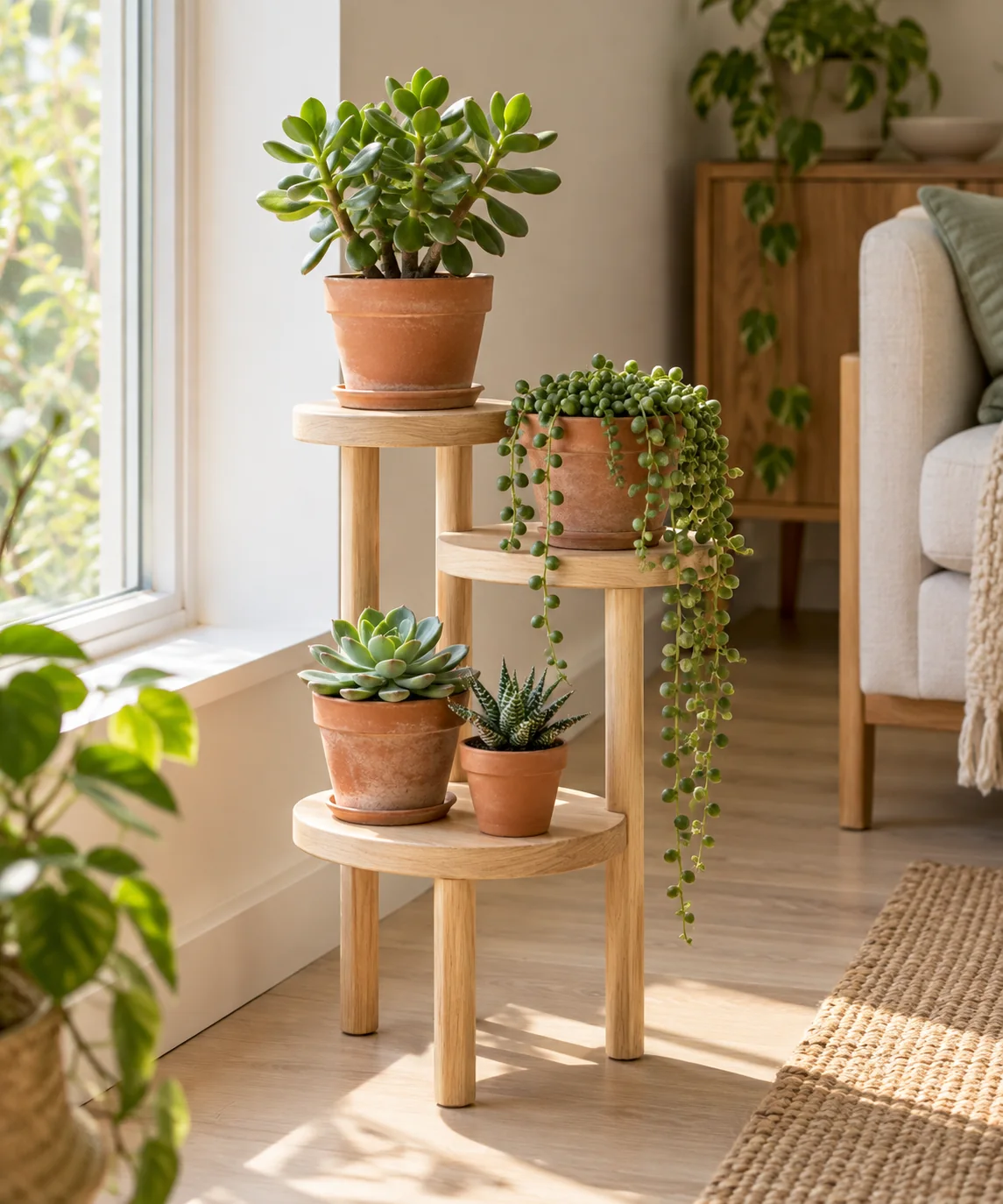
Positioning the Pedestal for Proper Sunlight
Succulents generally thrive in bright, well-lit spaces where they receive ample natural illumination to prevent etiolation, pale foliage, and weak stem growth. Position your plant pedestal near an unobstructed window that receives consistent daylight throughout the day. Avoid placing the stand in dark interior corners or shaded hallway passages where ambient light falls below the plant's needs. If your window provides intense, concentrated afternoon sun that risks scorching delicate leaves through unshaded glass, move the stand slightly back or introduce sheer filtering to maintain bright exposure without excessive heat buildup.
Arranging Plants by Growth Habit and Tier
Distribute your succulents across the pedestal levels based on their natural growth habits and silhouettes. Place trailing or cascading specimens, such as string-of-pearls (Senecio rowleyanus) or burro's tail (Sedum morganianum), on the highest tier so their stems can drape freely without resting on lower surfaces. Reserve middle and lower tiers for upright, structural varieties like jade plants (Crassula ovata), haworthias, or compact echeveria rosettes. This staggered arrangement allows lower plants to receive overhead light without being shaded out by denser specimens above.
Unifying Mismatched Pots with Neutral Materials
Even when individual pots differ in size or shape, visual harmony can be achieved through compatible textures and finishes. Porous terracotta, unglazed stoneware, and matte earth-toned ceramics complement natural plant foliage and the wood grain of the stand. Selecting containers with similar muted tones helps prevent visual clutter while allowing plant variety to remain the focal point. Verify that each container base sits flat and fits securely within the perimeter of its designated shelf tier to prevent accidental tipping or wobbling.
Protecting Wood Surfaces from Water Runoff
Direct contact with standing water or damp soil can lead to water rings, warping, and finish degradation on wooden furniture. Ensure every succulent container features adequate drainage and rests in a waterproof saucer or tray with a protective base. To minimize spills, lift pots off the pedestal and water them over a sink or catchment basin, allowing all excess moisture to drain out completely before returning them to the timber tiers. Regularly check beneath saucers to confirm no condensation or residual moisture remains trapped against the wood.
Managing Seasonal Rotation and Dusting
Indoor succulents naturally grow toward the primary source of illumination, which can result in asymmetrical or leaning stems over several weeks. Rotate individual pots a quarter turn every couple of weeks to encourage balanced, upright development. While turning the containers, clear shed leaves or loose potting mix from the shelves using a dry cloth. Use a soft, clean artist brush to gently remove accumulated household dust from delicate rosettes without disturbing protective leaf coatings like farina.
YOUR STARTING POINT
A little checklist.
Original editorial guidance. Images are AI-generated concepts, not photographs of completed projects. Our sources and approach.
Questions to consider
Can succulents stay healthy on a central living room table?
Succulents require substantial natural light to maintain compact, healthy growth. Unless a table sits directly within reach of a bright, sunlit window or supplementary grow lighting is used, plants kept in interior room centers often stretch and weaken over time.
How can I prevent water damage on a wooden display stand?
Take plants off the stand to water them over a sink, allowing all water to drain thoroughly before returning them to their tiers. Use waterproof, non-porous saucers with cork or felt bottoms to prevent moisture and condensation from reaching the wood finish.
What should I look for when choosing pot sizes for tiered shelves?
Ensure each pot's base fits entirely within the shelf surface with a slight safety margin around the rim. Avoid top-heavy or oversized planters that overhang edges or compromise the pedestal's physical balance.