Small Balcony Layouts · THE GUIDE
Group Self-Watering Planters Along the Drainage Slope
Sub-irrigated planter boxes offer an efficient watering method for small balconies, but excess overflow can create persistent puddles that discolor decking or concrete pavers. Modern balconies are engineered with a subtle gradient designed to guide rainfall toward dedicated scuppers or drainage channels along the perimeter. Aligning your self-watering troughs directly parallel to this built-in slope creates a coherent, orderly footprint that directs accidental reservoir overflows straight into the drainage zone. This intentional placement keeps walking paths dry, prevents mineral staining beneath containers, and simplifies routine balcony hygiene while maintaining easy access to fill ports.
Jump to the checklist ↓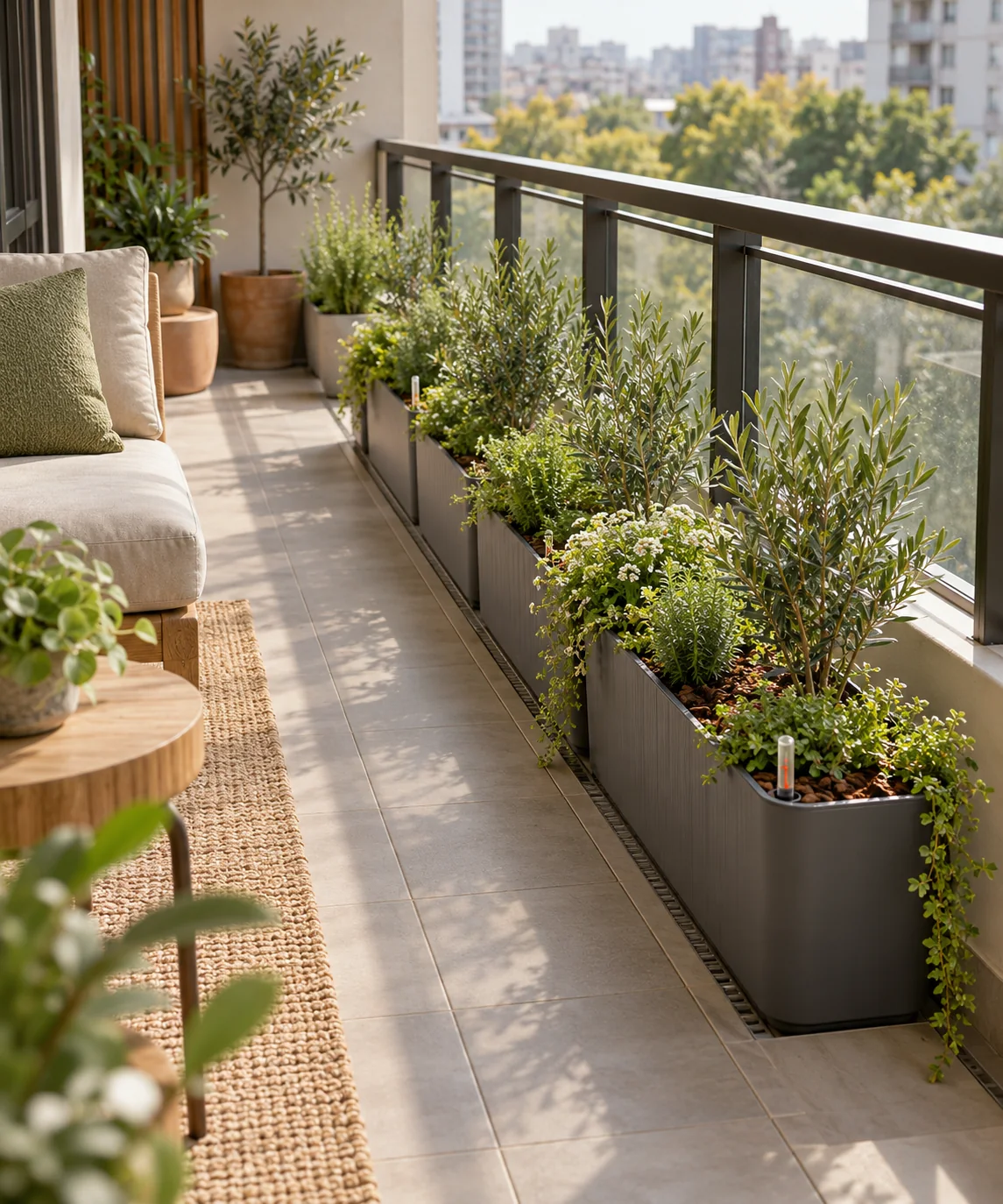
Identifying the Balcony Runoff Gradient
Before positioning planting troughs, map your balcony floor pitch by observing how water moves across the surface during rainfall or after rinsing with a bucket. Many balcony surfaces incorporate a gentle intentional slope designed to guide water away from the building envelope toward perimeter scuppers, curb channels, or specific floor drains. Because drain designs and slope directions vary widely between properties, identifying the exact runoff pattern helps prevent missteps. Arranging container troughs so their anticipated overflow path aligns with the natural flow keeps walkways clear and prevents wastewater from crossing primary walking zones.
Configuring Overflow Ports for Controlled Discharge
Sub-irrigated planter boxes feature overflow ports designed to release standing water when rain saturates the soil, preventing waterlogged roots. Before setting containers in place, identify the exact location of each release hole. Rotate each trough so its overflow port faces directly toward the low edge of the floor gradient or the drainage channel, rather than toward exterior walls or adjacent boxes. Directing discharge straight toward the drainage track prevents excess water from pooling under neighboring planters and minimizes standing mineral residue along the floor.
Maintaining Air Circulation and Surface Clearances
Even when troughs follow the balcony drainage gradient, resting flat-bottomed containers flush against the floor can trap water and encourage mildew or algae. Elevate boxes slightly using manufacturer-compatible container risers or low-profile rubber pads. Creating a modest clearance beneath the base permits continuous airflow and lets routine wash water travel freely to floor scuppers without obstruction. This separation protects decking finishes, reduces damp spots beneath containers, and makes it easier to inspect the underlying surface during routine cleaning.
Balcony Load Limits and Spacing Considerations
Grouped sub-irrigated troughs carry substantial weight once potting mix, internal reservoirs, and foliage reach maximum saturation. Never assume a balcony edge, corner, or railing zone is inherently strong enough to support heavy container arrangements based on visual appearance. Cantilevered slabs and lightweight decking assemblies have strict load boundaries, and mass placed toward outer edges can create significant structural leverage. Review your building regulations and consult property management or a qualified structural engineer to confirm allowable loads before setting up multiple large troughs. Spacing containers apart rather than creating continuous dense groupings also preserves accessible maintenance routes.
Managing Reservoir Flushing and Seasonal Sediment
Fine soil particles, dissolved fertilizers, and mineral salts gradually accumulate in sub-irrigation water chambers over time. Placing boxes near the established drainage line makes seasonal maintenance straightforward. Periodically drain the reservoirs into the floor drainage channel during dry weather by removing the cleanout plugs. Rinse through with fresh water to dislodge settled silt, allow the chamber to drain completely, and reinstall the plugs securely. Directing flush water straight toward the drainage outlet keeps surrounding balcony surfaces tidy and prevents sediment from spreading across walking paths.
YOUR STARTING POINT
A little checklist.
Original editorial guidance. Images are AI-generated concepts, not photographs of completed projects. Our sources and approach.
Questions to consider
Will water overflow from self-watering boxes stain timber decking?
Overflow water contains dissolved tannins and potting soil minerals that can discolour untreated wood. Elevating containers on rubber feet and aiming overflow ports directly toward drainage channels prevents liquid from pooling underneath timber planks.
How do I know if an overflow port is functioning correctly?
Add water to the fill pipe until water emerges from the overflow hole. If water surfaces above the soil without exiting the lower port, clear the internal drain hole using a flexible plastic rod or pipe cleaner.
Can self-watering planters freeze and crack along the drainage line?
Yes, standing water expands when freezing. Before winter temperatures arrive, pull the drainage plugs to empty the internal water reservoirs completely, allowing seasonal rain to flow straight through the soil and out the balcony drain.