Warm Neutral Living Rooms · THE GUIDE
Group Three Clay Plant Pots on a Low Rolling Plant Caddy
Grouping indoor plants brings organic texture into warm neutral living spaces, but clusters of terracotta pots can complicate regular floor cleaning and room rearranging. Unglazed clay containers carry substantial weight once filled with potting soil and plants. Placing three varied clay pots together on a low rolling caddy creates an adaptable grouping while keeping floors accessible. Fitted with smooth-rolling swivel casters, this arrangement can be shifted aside for vacuuming or adjusting living room circulation, supporting both plant care and floor maintenance.
Jump to the checklist ↓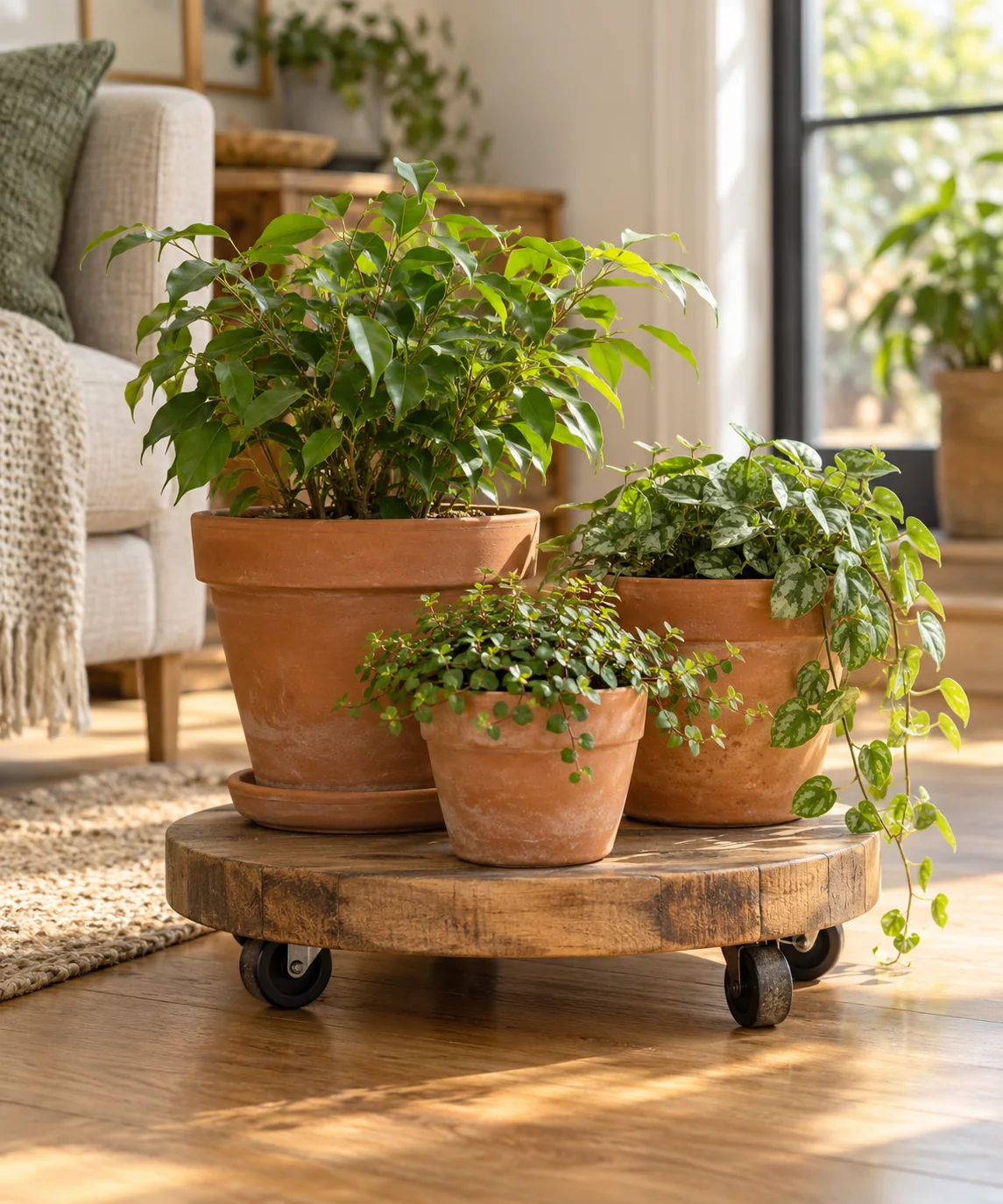
Selecting Caddy Capacity and Base Dimensions
Before grouping multiple containers on a rolling platform, verify the manufacturer's maximum load rating. Three potted plants with moist soil can quickly add up in weight, so choose a caddy built to support substantial loads safely. Measure the base diameters of all three pots to ensure they sit completely flat within the platform surface without overhang. Keeping container bases fully supported prevents unstable balance and accidental tipping during movement.
Arranging Pots for Stability and Airflow
When arranging three pots on a single platform, place the largest and heaviest container near the center to maintain a balanced center of gravity. Stagger the remaining two smaller containers to distribute weight evenly across the caster wheels. Leave a practical gap between container rims so the terracotta edges do not collide, chip, or abrade one another when rolling the platform across room transitions or floor joints.
Moisture Protection for Caddy Platforms
Unglazed terracotta is naturally porous and allows moisture to seep through container walls and drainage holes. To prevent moisture from damaging wooden caddies or corroding metal caster hardware, place a non-porous, waterproof saucer under each individual pot. Ensure saucers are wide and deep enough to catch drainage completely, and empty standing water after watering to avoid prolonged dampness against the platform.
Floor Clearances and Caster Selection
Position the rolling plant caddy out of direct walking paths, sofa access areas, and door swing arcs to prevent tripping hazards. Because rolling platforms sit low to the ground, deliberate placement keeps room circulation safe and open. Choose casters fitted with soft rubber or polyurethane wheels that roll smoothly over finished wood without scuffing, and select models with manual wheel locks to keep the platform stationary.
Routine Movement and Plant Care
A mobile plant caddy simplifies routine housekeeping and indoor plant care. Rolling the platform away from walls allows easy sweeping and mopping of dust that accumulates beneath container groupings. Rotating the caddy a quarter turn every couple of weeks helps provide balanced natural light exposure to all three plants, encouraging even growth. Always guide the caddy by the base platform rather than pulling on pot rims or foliage.
YOUR STARTING POINT
A little checklist.
Original editorial guidance. Images are AI-generated concepts, not photographs of completed projects. Our sources and approach.
Questions to consider
What type of casters should be used on finished wood floors?
Casters with soft rubber or polyurethane treads are best for finished wood floors, as they roll smoothly without scratching, marring, or indenting floor surfaces under heavy container weight.
How do you protect a wooden plant caddy from water damage?
Place waterproof, glazed saucers beneath every clay pot and discard drained water shortly after watering so moisture does not transfer onto the caddy surface or seep into caster hardware.
Why is pot arrangement important on a rolling platform?
Placing the heaviest pot near the center keeps the platform's center of gravity stable, preventing tipping when rolling over rug edges, threshold transitions, or uneven floorboards.