Container Vegetable Gardens · THE GUIDE
Half-Barrel Container with Bush Cucumbers and Dill
Growing compact cucumbers alongside culinary dill in a single half-barrel container provides a productive small-footprint arrangement for sunny outdoor areas. Half-barrels offer generous soil volume, which shields root systems from rapid temperature swings and retains steady moisture better than shallow pots. By pairing a low, spreading bush cucumber with slender, upright dill, gardeners maximize available surface area without introducing severe competition for sunlight. Success depends on arranging plants so their natural growth habits complement each other, maintaining consistent hydration across a deep root zone, and confirming that the container receives sustained, unobstructed daily sunlight.
Jump to the checklist ↓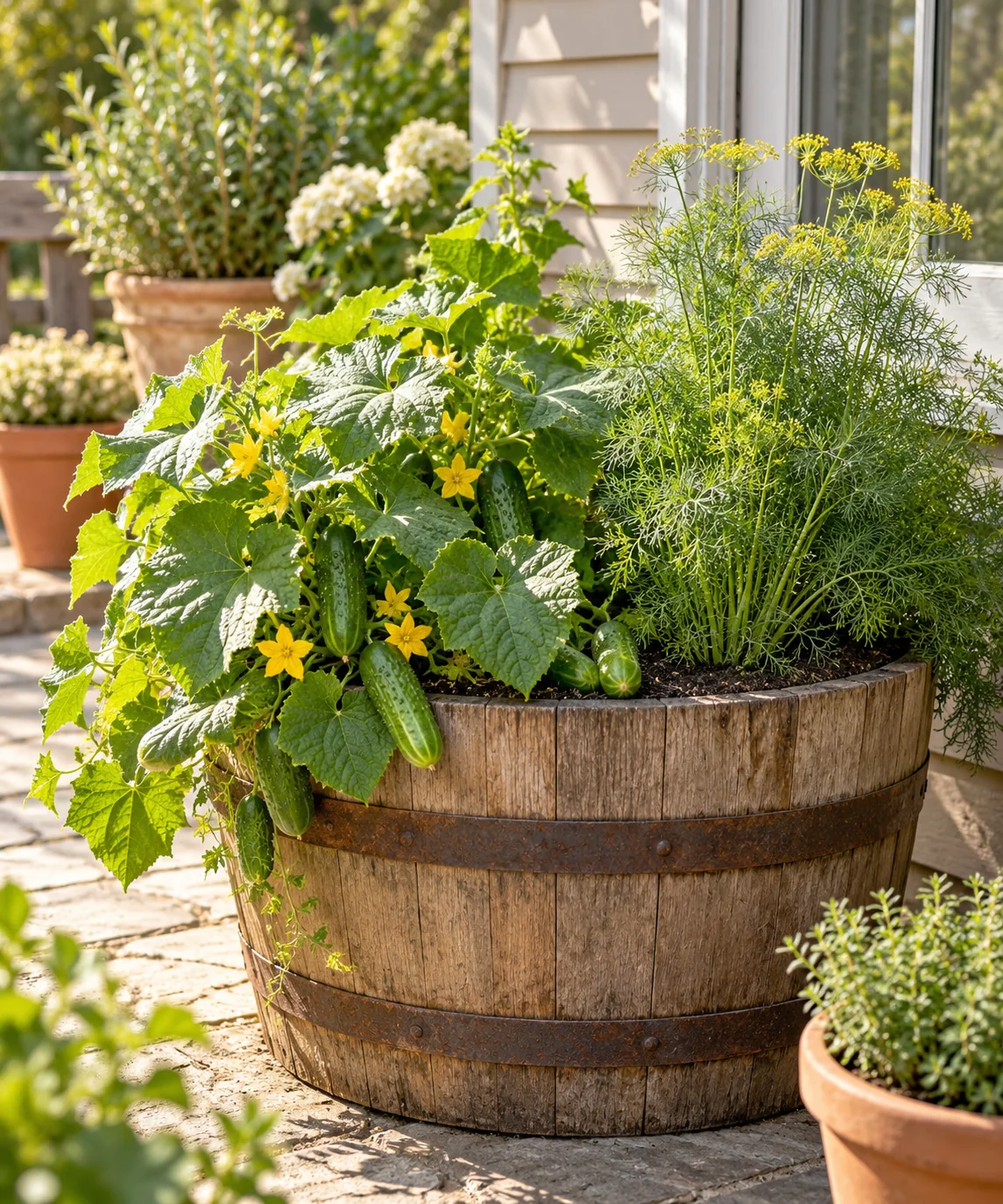
Volume and Drainage Foundations
A standard half-barrel holds roughly twenty to twenty-five gallons of potting mix, providing root depth suited to both bush cucumbers and dill. Unobstructed drainage is essential, so verify that your barrel includes functional pre-formed drainage outlets along the bottom. Avoid adding gravel or rubble to the bottom of the tub, as contrasting layers disrupt capillary moisture movement through container soils. If resting on solid ground or paving, elevate the tub slightly using manufacturer-approved exterior pot feet to keep base openings clear and prevent moisture accumulation beneath the base.
Spatial Arrangement and Light Access
Position the container where it receives consistent direct sunlight according to seed packet guidelines, generally six to eight hours daily. Place the upright dill toward the back or center of the tub, oriented so it does not shade adjacent cucumber foliage. Position one or two compact bush cucumber plants near the front perimeter. This placement encourages lateral cucumber stems to grow outward over the rim, keeping the central potting surface accessible for companion herb foliage.
Soil Medium and Moisture Consistency
Fill the barrel with a high-porosity commercial potting blend amended with perlite and finished compost, balancing moisture retention with dependable drainage. Avoid dense native garden topsoil, which compacts inside large planters and impedes root respiration. Cucumbers require steady hydration to avoid bitter fruit, while established dill handles slightly drier surface conditions. Monitor moisture a few inches down, watering evenly across the entire surface when the upper layer feels dry rather than pouring water only around main stems.
Air Circulation and Foliage Balance
Dense foliage in a large tub can restrict air exchange, creating conditions favorable to powdery mildew on cucumber foliage. Maintain spacing by limiting the planting to one or two bush cucumber starts and two small clusters of dill. As cucumber stems lengthen, gently direct growth tips toward the container perimeter rather than letting them crowd the middle. Periodically harvest dill fronds throughout the season to preserve natural airflow across the center of the planting.
Seasonal Maintenance and Cleanout
Dill grows rapidly and forms umbrella-like seed clusters as warm summer temperatures build. Clip developing flower buds if continued leaf harvesting is desired, or let flower heads develop while monitoring surrounding airflow. Once cold temperatures end production in autumn, remove spent vines and herb roots cleanly from the potting medium. Protect the barrel from extreme winter wetness using a breathable cover to reduce nutrient leaching until spring replanting.
YOUR STARTING POINT
A little checklist.
Original editorial guidance. Images are AI-generated concepts, not photographs of completed projects. Our sources and approach.
Questions to consider
Can standard vining cucumbers replace bush varieties in this barrel setup?
Standard vining types require tall, heavy trellises that may destabilize a container or completely overwhelm dill. Bush cucumber cultivars remain naturally compact, typically spreading two to three feet, making them far better suited to barrel edges without vertical structures.
How often does a wooden half-barrel require watering in summer?
Watering frequency depends on ambient heat, wind, and plant size rather than a fixed calendar schedule. Inspect the upper two inches of potting mix; apply water thoroughly whenever this layer feels dry, ensuring moisture reaches the bottom roots.
Do mature dill root systems interfere with cucumber development?
Dill forms a slender, vertical taproot that occupies a different soil strata than the broader, fibrous roots of bush cucumbers. When spaced several inches apart, both root systems develop cleanly without competing excessively for identical potting volume.