Laundry Space Organization · THE GUIDE
Hang a Fold-Down Wall Drying Rack Above the Radiator
In compact utility spaces, drying hand-washed garments without taking up floor space requires thoughtful layout planning. Positioning a wall-mounted fold-down drying rack above a hot-water radiator utilizes rising warm air currents to encourage natural ambient evaporation for damp textiles. However, successful placement requires checking appliance clearances, verifying wall construction, and managing indoor humidity levels. By respecting heating manufacturer safety guidelines and maintaining proper airflow, you can create a practical, space-saving drying station suited for cooler months.
Jump to the checklist ↓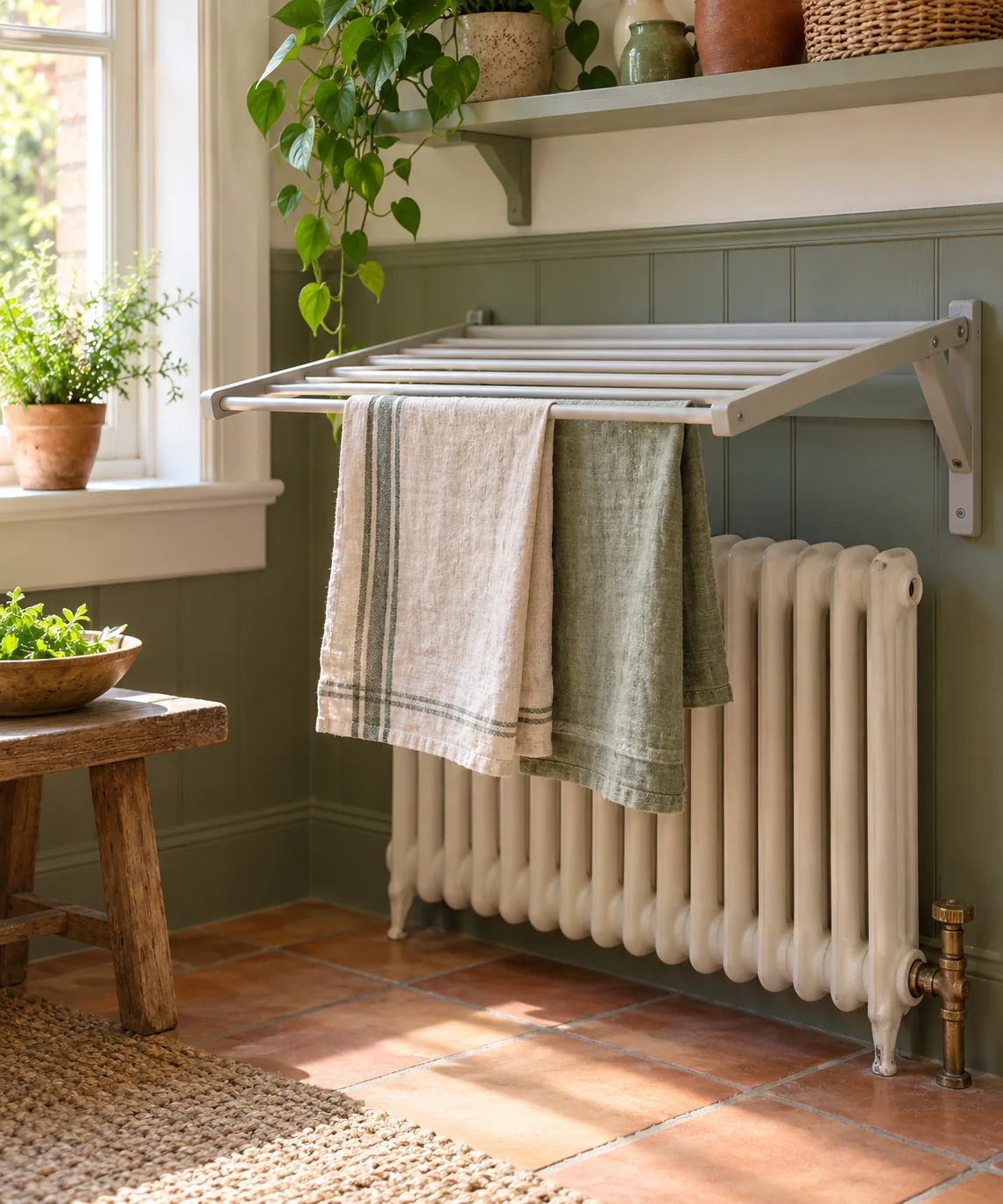
Checking Appliance Guidelines and Wall Conditions
Before selecting a wall location, review the manufacturer instructions for your heating unit. Wall-mounted drying racks should only be planned above hydronic hot-water or steam radiators, never above electric panel heaters, convection units, or storage heaters that prohibit overhead obstructions due to fire and overheating risks. Before fastening mounting brackets into the wall, verify that the area directly above the radiator is free from hidden vertical supply pipes, boiler conduits, and electrical wiring using appropriate pipe and stud detection tools.
Planning Clearances and Airflow Pathways
Efficient drying depends on free convection and continuous air exchange around fabrics. Position the rack at a height that allows warm air to dissipate evenly without trapping intense heat against the lowest rungs or hanging fabric edges. Consult both the radiator documentation and the drying rack manual for recommended clearances rather than relying on arbitrary spacing rules. Ensure that when the rack extends forward into the room, it does not impede doorway swings, access to thermostatic radiator valves, or primary walking paths.
Weight Distribution and Rack Limitations
Wall-mounted fold-down racks feature cantilevered frames and movable hinge joints designed for light to moderate textile loads. Reserve this temporary hanging space for lightweight items such as dish towels, socks, linen napkins, and thin cotton shirts. Waterlogged heavy garments, such as denim jeans or thick bath sheets, exert substantial leverage on wall anchors and hinge pins while impeding the upward flow of ambient air. Distribute wet items evenly across the rungs to balance strain on mounting brackets.
Managing Indoor Moisture and Condensation
Harnessing heat to accelerate fabric drying releases moisture directly into the surrounding room atmosphere. If left unmanaged in closed utility rooms or cold exterior-facing spaces, elevated humidity can condense on cool drywall and window glass, potentially promoting mildew growth. Operate an active ventilation fan, open an adjacent interior doorway, or crack a window during drying cycles to facilitate air turnover. Regularly observe surrounding walls and paint finishes for signs of condensation or heat stress.
Seasonal Operation and Mechanism Care
When the central heating system is dormant during warmer months, the fold-down rack remains functional for standard ambient air drying near open windows. Keep the drying slats clean by periodically wiping down wooden dowels or powder-coated metal rods with a dry cloth to remove laundry detergent residue and household dust. Routinely inspect hinge pivot points, wall anchors, and support brackets to ensure moving parts latch securely into place and show no signs of loosening from repeated folding.
YOUR STARTING POINT
A little checklist.
Original editorial guidance. Images are AI-generated concepts, not photographs of completed projects. Our sources and approach.
Questions to consider
Can a fold-down drying rack be installed above any type of heater?
No. Drying racks must never be mounted above electric resistance heaters, convection units, or storage heaters that forbid overhead placement due to fire and sensor hazards. They are generally only suitable above traditional hot-water or steam radiators, provided manufacturer clearance guidelines are observed.
How can I prevent mold or condensation on walls behind a radiator drying rack?
Evaporating water raises room humidity, which can settle on cold plaster or drywall. Maintain active air circulation by running an exhaust fan, keeping nearby doors open, and avoiding overloading the rack with dripping or bulky wet textiles.
What textiles are best suited for an over-radiator fold-down rack?
Lightweight, breathable items like linen cloths, cotton socks, pocket squares, and lightweight shirts dry effectively without blocking heat currents. Heavy garments like saturated denim, large bath sheets, or heavy woolens place excessive mechanical stress on wall anchors and dry unevenly.