Small Balcony Layouts · THE GUIDE
Hang a Modular Bamboo Screen for Rented Balcony Privacy
Balcony railings often leave outdoor seating areas visible to neighbors, prompting residents to consider temporary privacy screens. Rolled natural bamboo is a popular material choice due to its light weight and organic appearance, but attaching any screening to a balustrade introduces real structural and regulatory factors. Adding material to an open railing alters how wind interacts with the barrier, increasing lateral forces on railings and anchor points. Responsible planning involves reviewing lease contracts, understanding local wind risks, and focusing on reversible, non-invasive solutions approved by building management.
Jump to the checklist ↓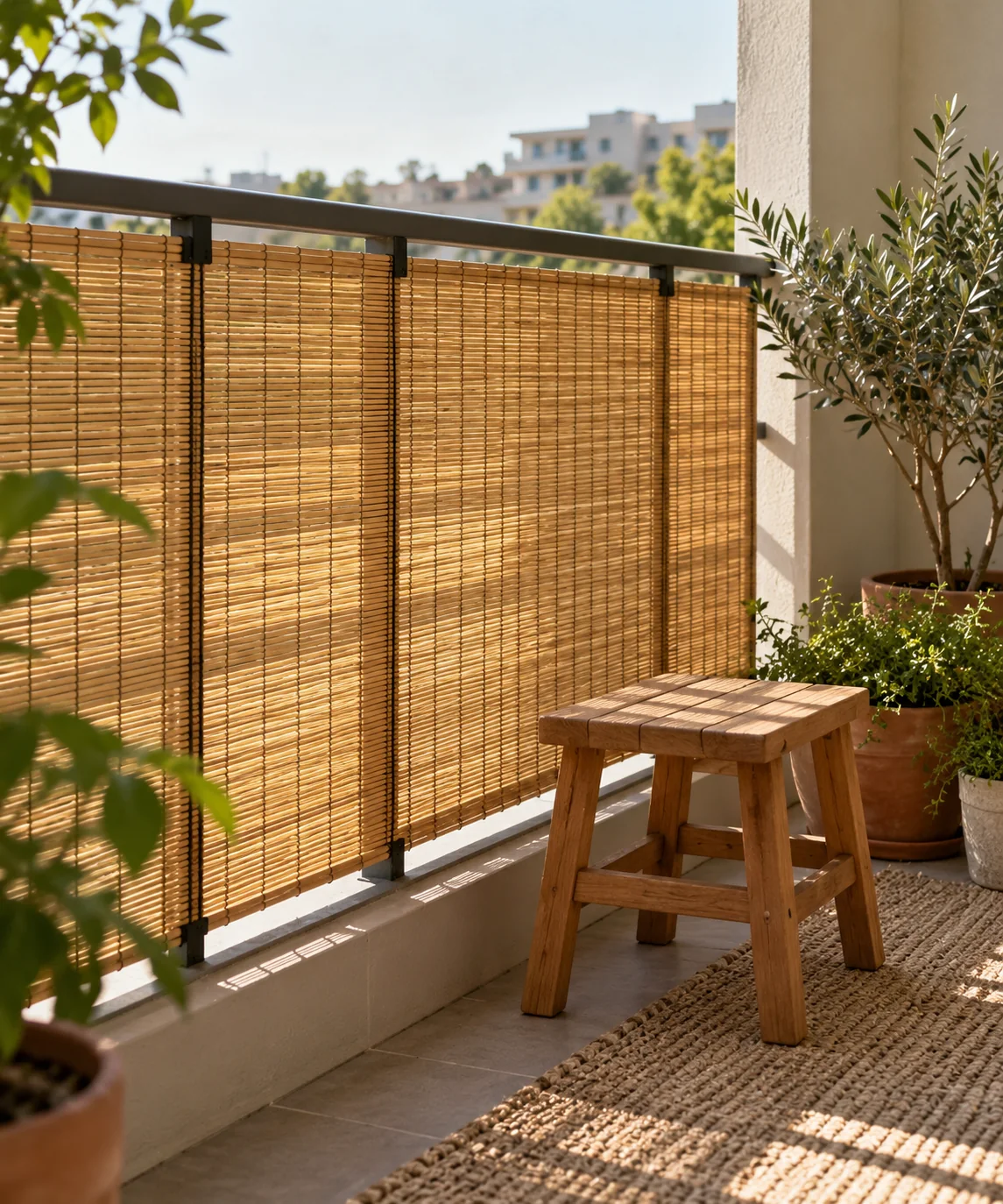
Consult Building Rules and Exterior Policies
Before purchasing screening, examine your lease agreement, property rules, and municipal codes. Many rental buildings and multi-family communities enforce strict architectural bylaws prohibiting attachments to exterior balustrades or altering facade appearances. Check whether non-permanent screens are allowed, and obtain written property management confirmation if necessary. Inquiring first avoids potential fines, forced removal, or security deposit deductions associated with unauthorized balcony modifications.
Understand Wind Loads on Balustrades
Balustrades are structurally engineered to withstand specific live loads, primarily focusing on fall protection and localized impact. Covering an open railing with dense bamboo, reed, or synthetic rolls increases the surface area exposed to wind forces. Even semi-permeable screening can transfer substantial pressure to railing posts, fixings, and floor anchors during storms. In areas prone to high gusts or on elevated floors, adding screening may exceed intended load profiles, making careful risk assessment essential.
Evaluate Screen Density and Materials
If screening is permitted by your building, select materials with inherent porosity rather than completely solid barriers. Loosely spaced bamboo poles allow some air movement through natural gaps, reducing the resistance experienced compared to continuous fabric or solid plastic sheets. Inspect materials for sturdy, weather-resistant binding wire. Ensure the selected height does not extend above the structural top rail of the existing balustrade, which could create excessive leverage during windy periods.
Plan Reversible, Non-Damaging Fastening
When planning the placement of permissible screening, avoid drilling, screws, or adhesives that can damage paint, powder coatings, or metal surfaces. Fasteners must be fully removable and UV-stabilized to prevent rapid degradation under sun exposure. Place non-abrasive padding, such as exterior-grade rubber shims, between hard surfaces to prevent scratching the balustrade finish. Avoid securing privacy barriers to components not designed to carry load, such as lightweight decorative trims or glass clips.
Establish Inspection and Severe Weather Protocols
Balcony screening requires ongoing observation. Regularly inspect all fastening points, looking for brittleness, slack, or surface wear caused by motion in the breeze. Natural bamboo naturally weathers and shifts color over time with exposure to rain and sunlight. During high-wind advisories or severe seasonal storms, detach temporary screens promptly and store them indoors to protect your railing from unnecessary stress and eliminate the risk of detached materials.
YOUR STARTING POINT
A little checklist.
Original editorial guidance. Images are AI-generated concepts, not photographs of completed projects. Our sources and approach.
Questions to consider
Do landlords generally allow bamboo privacy screens?
Policies vary widely. While bamboo is non-permanent, many properties restrict anything attached to railings to preserve uniform exterior appearances, prevent facade damage, and maintain engineered wind resistance. Always verify guidelines first.
Does a bamboo screen completely block the view from outside?
Bamboo rolls provide visual softening rather than total blackout privacy. Narrow natural gaps between canes permit ambient light and air movement while obscuring direct lines of sight from neighboring properties.
How can I prevent outdoor screening from damaging railing finishes?
Use non-abrasive rubber or silicone buffer pads between the screen and metal balusters. Fastening must remain snug to prevent friction from movement, using materials that can be cleanly removed without residue or surface abrasion.