Garden Tool Organization · THE GUIDE
Hang a Slotted Wooden Rack for Inverted Hand Tool Storage
Organizing hand tools beneath a potting bench work surface keeps active garden gear accessible while preserving clear table space. An inverted slotted timber rack holds trowels, cultivators, and weeding forks suspended by their shanks, keeping handles oriented downward for convenient access. Storing implements vertically in dedicated slots separates metal blades and helps protect tool edges from dulling against one another in crowded containers. This layout also encourages open air circulation around metal components, helping residual soil moisture evaporate between gardening tasks.
Jump to the checklist ↓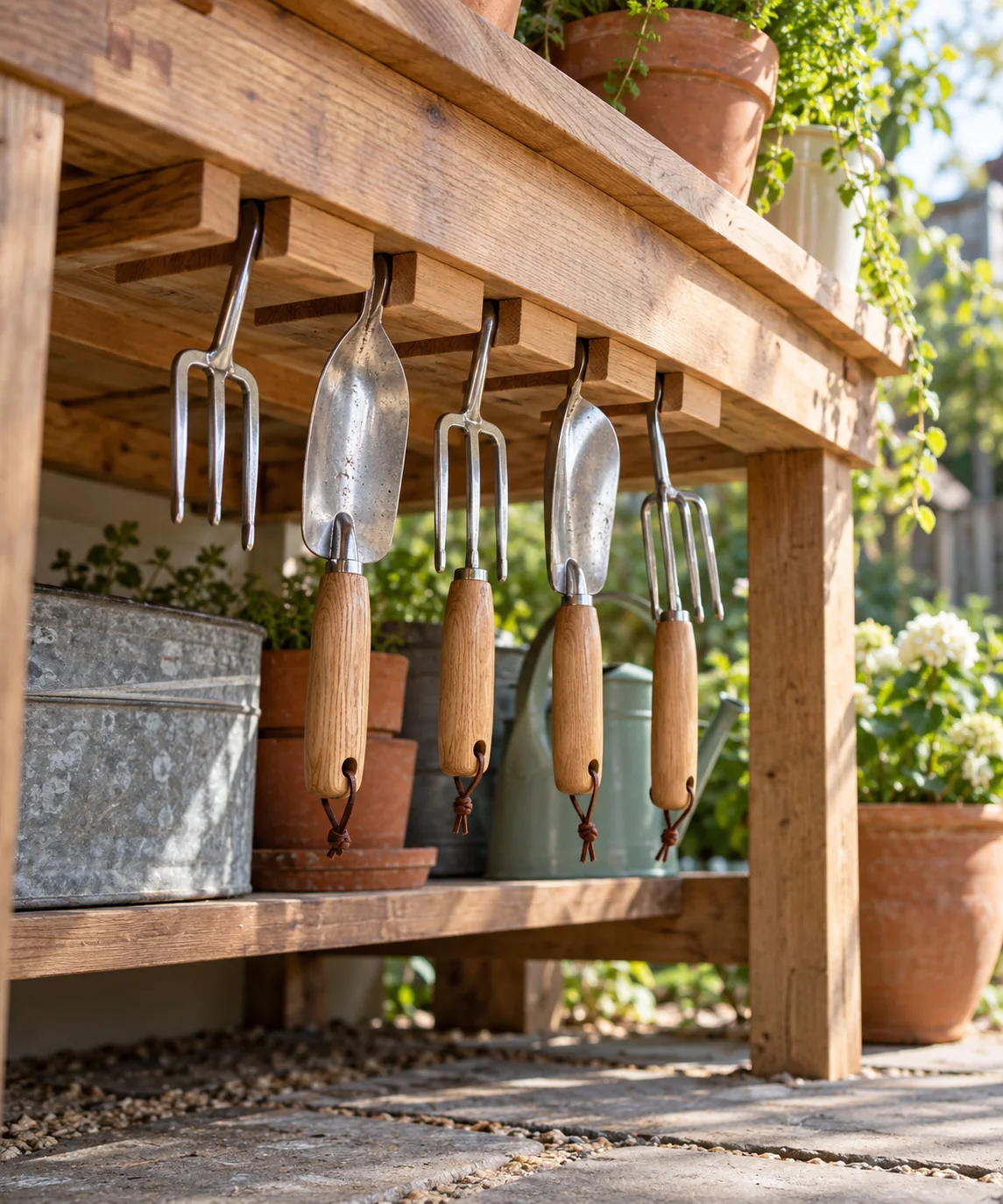
Tool Shank Profiling and Layout Assessment
Before planning a slotted storage layout, assess the dimensions of your specific hand tool collection. Forged trowels, transplanters, and hand cultivators feature varying neck widths, blade flares, and balance points that determine how they sit in a slot. Test individual tools against temporary spacing guides to confirm that adjacent blades do not bump together or crowd one another. Ensuring adequate clearance between tools allows for smooth, one-handed retrieval during potting projects.
Material Suitability and Edge Finishing
Racks intended for garden settings perform best when fabricated from stable hardwoods or moisture-tolerant materials that resist splintering. Rough cutouts and sharp edges can scratch tool protective coatings or snag handle lanyards over time. Ensuring that interior slot edges are smoothly sanded and lightly eased allows tool necks to slide in and out freely without catching. Applying a suitable exterior wood finish helps protect the timber against fluctuating ambient humidity in sheds or covered outdoor areas.
Assessing Under-Bench Clearances
Review vertical and depth clearances beneath the selected bench surface before finalizing tool placement. Inverted hand tools hang down by their handles, so confirm that the suspended tools will not interfere with lower storage bins, soil totes, or seated legroom. Additionally, check that blade shoulders and tips remain recessed back from the bench front edge so loose clothing, aprons, or passing garden carts do not snag on projecting metal edges.
Load Distribution and Bench Compatibility
A collection of solid steel garden implements introduces focused static weight beneath a potting surface. Evaluate the construction of your potting bench or storage table, verifying that existing support members can accommodate the additional suspended load without sagging. Rather than modifying or fastening into lightweight panel materials that could pull loose, align storage additions with manufacturer guidelines or sturdy, dedicated framing designed to carry utility fixtures.
Tool Cleaning and Soil Management
To keep an under-bench storage rack clean and functional, establish a consistent cleaning routine before hanging tools. Brush heavy garden soil and debris from tool shanks and blades using a stiff dry brush so dried dirt does not accumulate inside the slots or drop into lower storage areas. Periodically applying a light wipe of plant-safe mineral oil to clean metal surfaces helps inhibit surface oxidation where metal contacts wood in humid environments.
YOUR STARTING POINT
A little checklist.
Original editorial guidance. Images are AI-generated concepts, not photographs of completed projects. Our sources and approach.
Questions to consider
Why store hand tools inverted rather than by their lanyards?
Inverted storage supports tools by their solid metal necks rather than placing continuous tension on leather or synthetic lanyards. It also keeps handles aligned at an even height, making individual tools easier to identify and grasp quickly.
Can seasonal humidity affect how tools fit in a wooden rack?
Yes, wood naturally expands and contracts with changes in ambient humidity, which can tighten tolerances in unsealed racks. Using stable timber, allowing slight ease beyond the tool neck diameter, and applying a moisture-resistant finish helps prevent binding.
Is this inverted slotted layout suitable for large garden tools?
No, long-handled spades, shovels, and heavy garden forks carry substantial weight and leverage that require heavy-duty wall mounts or floor stands. Slotted under-bench racks should be reserved for compact, handheld gardening implements.