Laundry Space Organization · THE GUIDE
Hang an Accordion Wooden Airer on a Hallway Laundry Door
When a laundry station is confined to a shallow hallway closet, dedicated floor space for air-drying delicates is virtually non-existent. Mounting an accordion-style wooden drying rack to the interior utility door creates versatile drying capacity that folds completely flat against the door panel when not in use. This project requires careful assessment of door swing clearances, non-invasive mounting hardware that avoids hinge strain, and mindful load balancing. By planning for hallway airflow and respecting door structure, you can dry woolens and delicate synthetics safely within a minimal architectural footprint.
Jump to the checklist ↓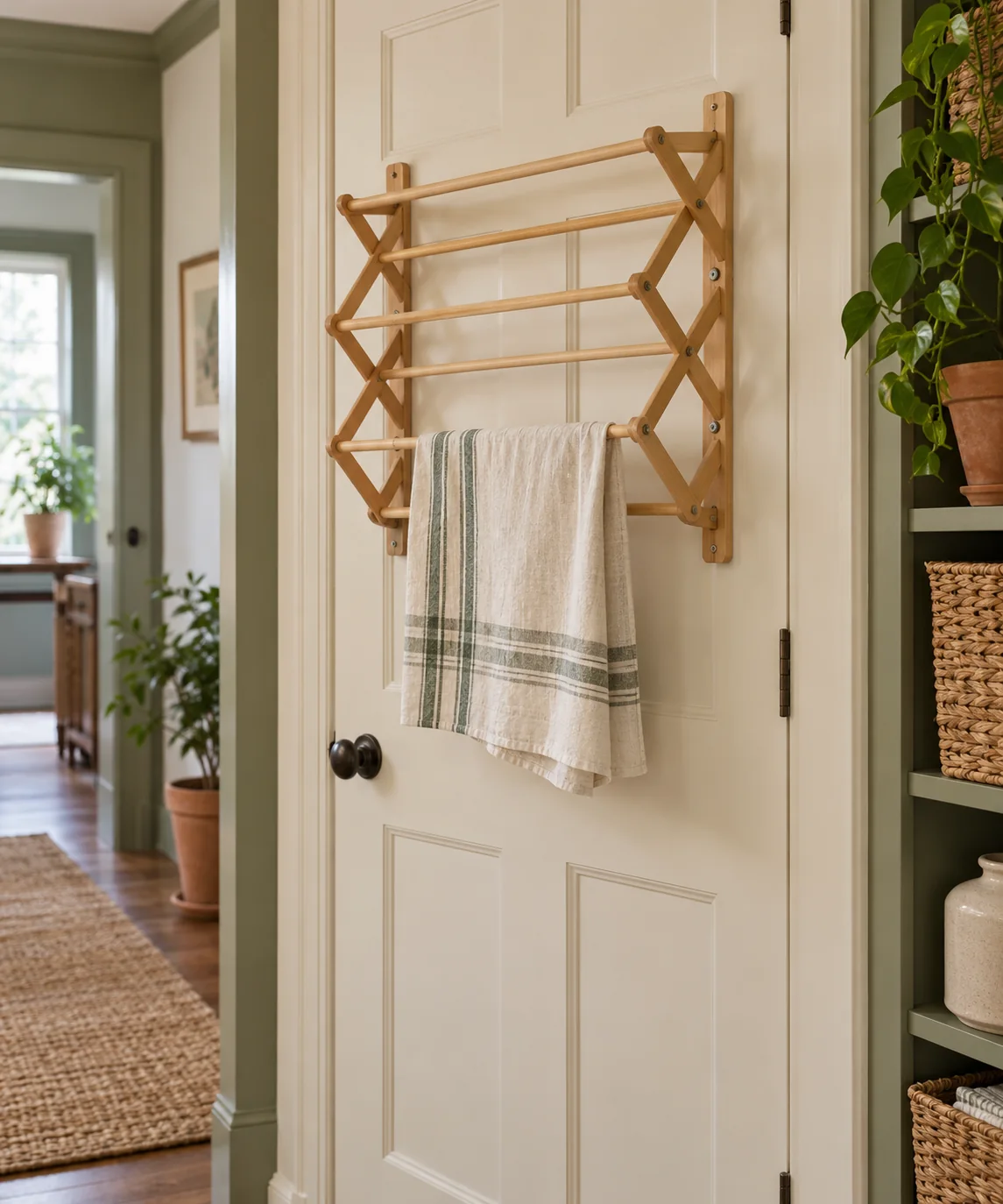
Assessing Hallway Clearances and Door Swing
Accordion drying racks extend outward into the room when fully opened. Measure the total clearance of the hallway corridor with the utility door closed, and examine the swing radius when the door moves through its normal arc. The rack must extend fully without striking opposing corridor walls, trim, or intersecting room doors. Verify that family members can still safely navigate the hallway without ducking or squeezing past wet laundry, and confirm that the rack folds flat enough to allow the door to latch cleanly without pressing against laundry machines or shelving.
Evaluating Door Construction and Hinge Capacity
Interior laundry and closet doors are frequently hollow-core wood panels or molded composite. These lightweight designs lack interior solid blocking across the center field, making direct surface screws prone to tearing out under dynamic load. Instead of driving fasteners directly into thin veneer, consider wide, non-invasive over-the-door brackets that hang across the top rail. Inspect the existing door hinges for loose screws, frame settling, or rub marks along the frame. If the door already sticks, sags, or drags, address frame alignment before introducing additional weight.
Checking Jamb Tolerances for Hanging Hardware
Before purchasing or hanging over-the-door brackets, test the gap between the top edge of the door and the head jamb using a coin or folded card. Many modern pre-hung interior doors feature narrow tolerances of less than an eighth of an inch, meaning thick metal brackets can scrape paint, gouge wood framing, or prevent the door from latching. Select thin, low-profile brackets and line their underside with adhesive craft felt or thin silicone tape. This cushions contact points, protects factory finishes, and prevents shifting during routine door movement.
Promoting Airflow in Confined Corridors
Enclosed hallways and utility closets can trap ambient humidity, especially when wet textiles are drying in close quarters. Drying fabrics in stagnant air prolongs drying times and encourages mildew or musty odors. When the rack is in use, leave the utility door open or propped slightly ajar to support cross-ventilation with adjacent living areas. If the hallway lacks natural airflow or windows, running a nearby ceiling fan or positioning an oscillating floor fan on a low setting helps keep air circulating gently across the drying rungs.
Balancing Load Weight and Garment Selection
Accordion drying dowels are best reserved for lightweight garments, such as wool knits, athletic apparel, baby clothes, and everyday delicates. They are not intended for heavy, water-saturated items like bath sheets, thick denim, or winter coats. Distribute wet items symmetrically across both sides and multiple rungs to prevent uneven torque on the folding linkage. Squeeze excess water from garments before hanging so excess moisture does not drip onto hallway floorboards or saturate the wooden dowels.
YOUR STARTING POINT
A little checklist.
Original editorial guidance. Images are AI-generated concepts, not photographs of completed projects. Our sources and approach.
Questions to consider
Can I mount an accordion rack directly to a hollow-core door?
Direct mounting with standard wood screws is generally unreliable because hollow-core door skins are typically only one-eighth of an inch thick. Without internal blocking, anchors can pull free under garment weight. Non-invasive over-the-door brackets or mounting to an adjacent solid wall stud offer far more reliable support.
How do I stop the airer from banging against the door when moved?
Place self-adhesive silicone cabinet bumpers or small removable hook-and-loop pads between the bottom crossbar of the rack and the door face. This cushions contact, keeps the airer stable during door swings, and removes cleanly without stripping the door finish.
Can wet laundry warp or damage the wooden rack dowels over time?
Most manufactured wooden airers feature sealed birch, beech, or bamboo dowels designed to handle damp fabrics. However, prolonged exposure to dripping-wet laundry can degrade finishes or stain wood. Always spin laundry thoroughly before hanging, and wipe down dowels with a dry cloth periodically.