Laundry Space Organization · THE GUIDE
Hang an Over-the-Appliance Clothes Hanging Rail from Upper Cabinets
Small laundry areas often have limited floor space for drying racks, prompting interest in utilizing the vertical space between wall-mounted cabinets and washing appliances. Installing a clothes hanging rail beneath upper cabinetry requires careful evaluation of cabinet mounting, structural weight ratings, and appliance clearance. Rather than driving fasteners into cabinet carcasses or overloading joinery, selecting manufacturer-approved brackets or freestanding alternatives maintains safety. By consulting cabinet documentation, respecting manufacturer weight limits, and planning around appliance heat and humidity, you can introduce practical temporary staging for garments without compromising your cabinetry.
Jump to the checklist ↓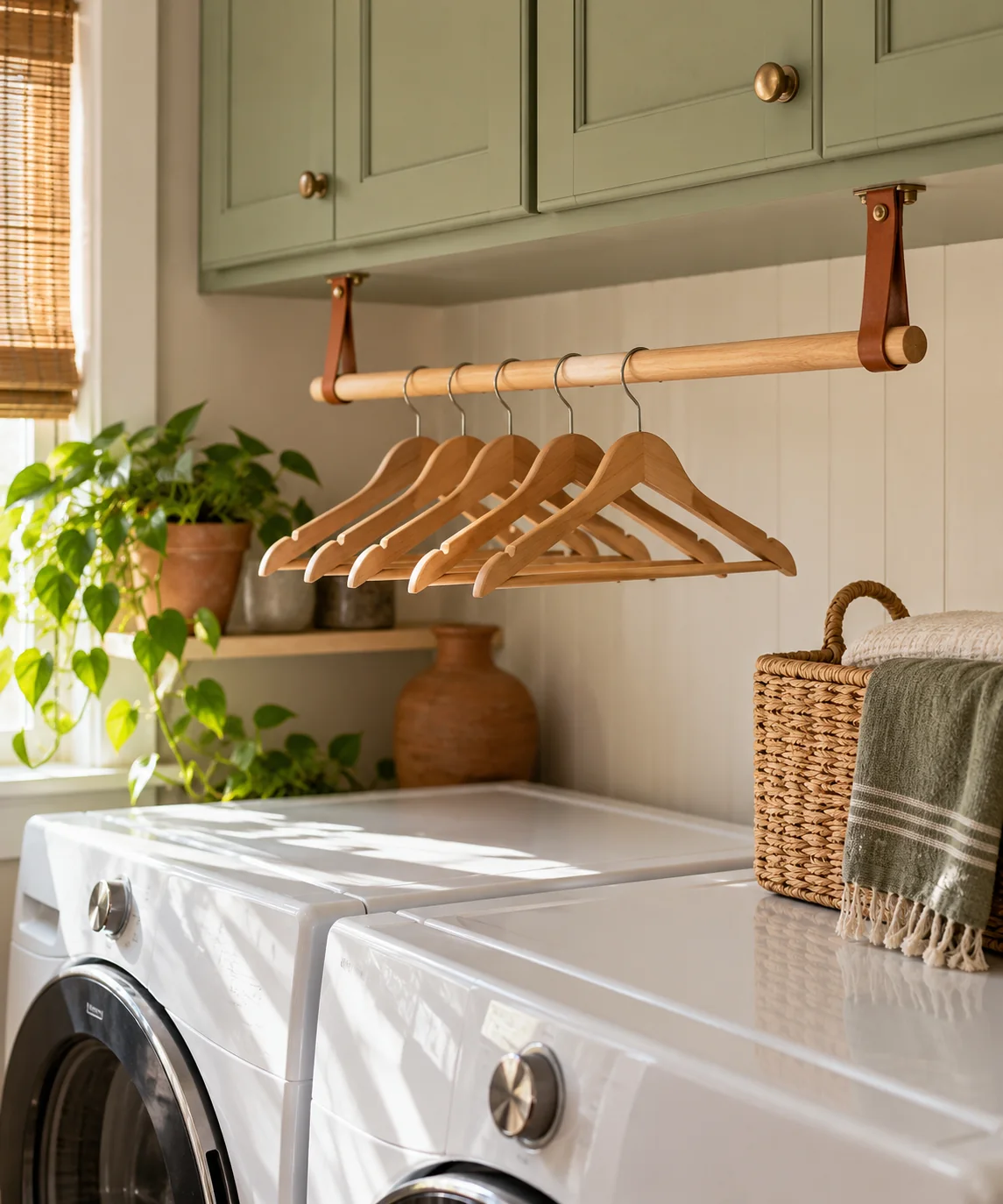
Checking Cabinet Installation and Structural Capacity
Before considering any under-cabinet storage addition, consult the manufacturer documentation or a qualified installer to determine the weight rating of your upper cabinetry. Cabinets are primarily engineered to bear vertical loads inside the cabinet box, and their lower panels or light rails are often made of thin composite board not rated for downward tension or suspended dynamic weight. Never assume a cabinet can support extra hanging weight simply because it appears sturdy. Property renters and homeowners should verify how the cabinets are anchored to wall studs, confirming that mounting rails, brackets, and wall fasteners are rated for additional utility loads before attaching any hardware.
Evaluating Reversible and Non-Invasive Hardware
Avoid driving screws directly into the bottom panels of cabinets, which can split composite cores, pierce interior shelf space, or pull out under load. Instead, look for purpose-built under-shelf clamp brackets or hardware systems approved by the cabinet manufacturer. Clamping brackets that distribute weight across an existing structural shelf or dedicated utility track systems minimize localized stress on cabinet joinery. If non-invasive systems are not rated for damp laundry, consider wall-mounted folding drying racks anchored directly to wall studs, or tension-mounted rods installed between solid side walls rather than hanging directly from cabinet bases.
Clearance Around Washers and Dryers
Appliances require adequate space for safe operation, ventilation, and access. Measure the open swing path of top-loading washer lids, front-loading doors, and adjacent cabinet doors to ensure a suspended rail does not obstruct normal movement. Leave sufficient vertical clearance between hanging garments and appliance surfaces so clothing does not drape over control panels, lint traps, or appliance vents. Furthermore, ensure the rail is positioned comfortably above head height so users do not collide with the rod or hanging hardware when leaning over machines to load and unload laundry.
Managing Load Limits and Garment Selection
A suspended under-cabinet rail should be restricted to lightweight staging, such as empty hangers, delicate synthetics, or light cotton shirts. Wet laundry, particularly heavy fabrics like denim, fleece, or terry cloth towels, retains significant water weight that can rapidly overload overhead joinery. Distribute items evenly along the rod rather than clustering garments in the center, which concentrates bending stress. Always adhere to the lowest rated load limit among your components, including the rail, brackets, and cabinet specifications, and never treat suspended cabinetry rails as permanent heavy-wardrobe storage.
Addressing Humidity, Airflow, and Cabinet Care
Drying damp textiles directly beneath cabinetry introduces localized moisture that can soften cabinet finishes, delaminate edge banding, or encourage mold growth on unfinished undersides. Always operate an exhaust fan or dehumidifier when hanging damp garments to maintain good air circulation throughout the room. Regularly inspect any mounting hardware, straps, or clamp brackets for signs of loosening, displacement, or material fatigue. If condensation forms on the cabinet undersides or framing shows signs of deflection, immediately remove hanging items and transition to a floor or wall-supported drying method.
YOUR STARTING POINT
A little checklist.
Original editorial guidance. Images are AI-generated concepts, not photographs of completed projects. Our sources and approach.
Questions to consider
Can damp clothes cause moisture damage beneath upper utility cabinets?
Yes, hanging damp textiles in confined areas without adequate airflow can cause moisture to collect on cabinet undersides, potentially damaging finishes and composite materials. Operate a laundry exhaust fan or dehumidifier to keep air circulating, and avoid hanging dripping wet items beneath cabinetry.
Is it safe to suspend a drying rail if I have a top-loading washer?
A suspended rail is only suitable above a top-loading machine if the appliance lid can fully open without striking the rod, hangers, or staged clothing. Measure the complete arc of the lid before planning placement to avoid operational interference or damage to appliance hinges.
How much weight can an under-cabinet hanging rail safely support?
Weight capacity depends entirely on the cabinet construction, wall anchoring, and the specific mounting hardware used. Many upper cabinet bottom panels are not rated for suspended tension loads. Consult the cabinet manufacturer or an installer for specific weight limits, and restrict hanging use to lightweight items.