Small Bathroom Storage · THE GUIDE
Hang an Over-the-Door Canvas Organizer for Hair Tools
In shared family bathrooms, hair dryers, curling wands, round brushes, and tangled electrical cords routinely overtake vanity countertops, creating clutter and surface wear. Finding dedicated drawer space for these awkwardly shaped appliances can be difficult when storage cabinetry is limited. A heavy-duty canvas over-the-door organizer converts the blank reverse side of an entry or closet door into a centralized styling depot. By separating brushes, combs, and styling tools into segmented vertical pockets, you keep countertops clear, minimize cord tangles, and maintain an orderly morning preparation station without occupying floors or precious cabinet drawers.
Jump to the checklist ↓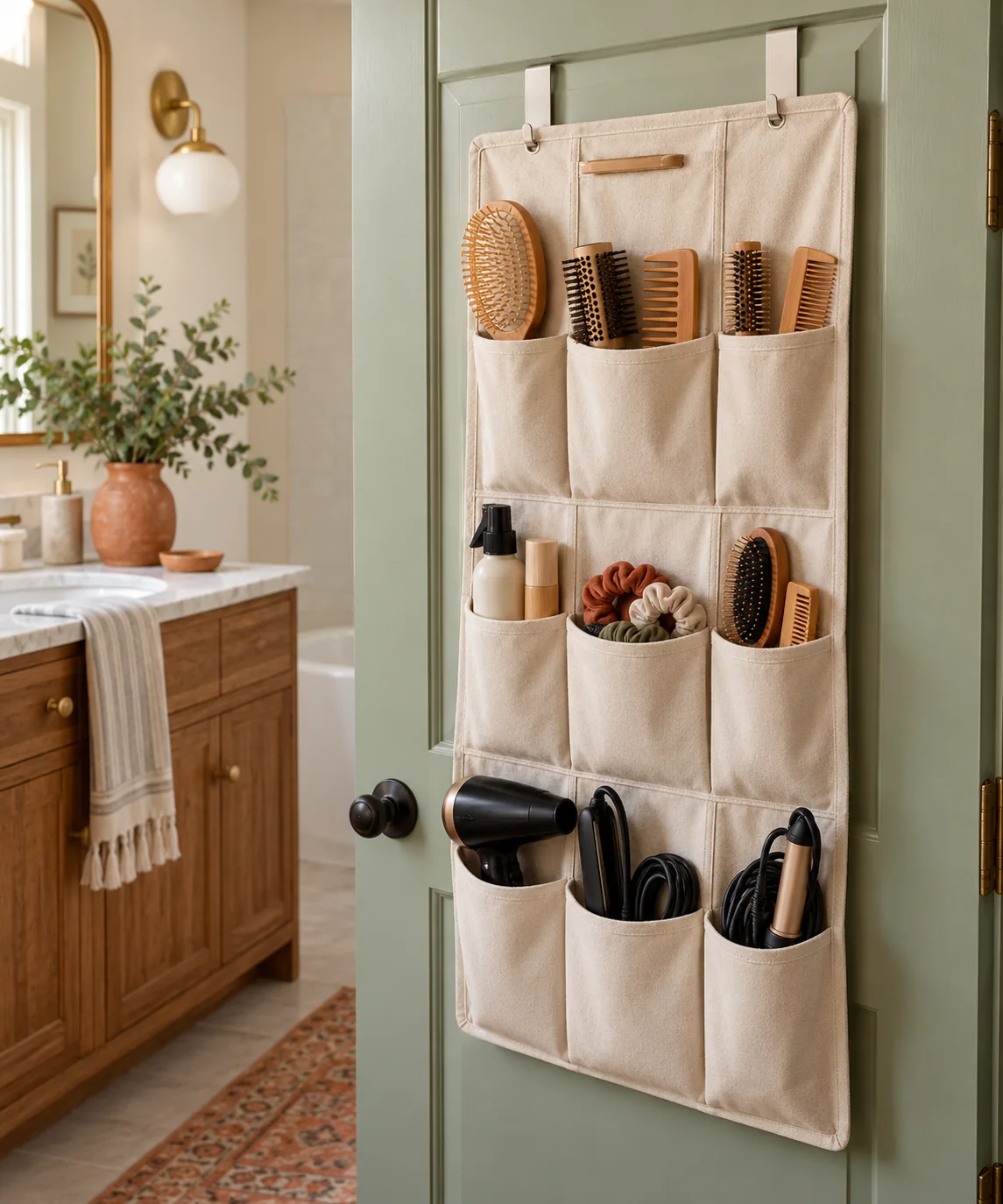
Door Fit and Frame Clearance
Before purchasing or mounting an over-the-door organizer, examine the gap along the top edge of the door and the frame header. Door gaps are rarely uniform across the entire width, and standard metal brackets range in thickness from thin stamped sheet metal to heavier coated steel. Test the bracket itself by placing it over the door and closing it slowly to feel for any friction, resistance, or rubbing against the jamb. If the door sticks, scrapes the paint, or fails to latch naturally, avoid forcing it, as this can misalign hinges or damage the frame casing. Check that the suspended organizer will clear adjacent baseboards, wall-mounted towel bars, or medicine cabinets when the door swings fully open.
Heat Dissipation and Safe Cooling
Canvas and fabric organizers are combustible materials and should not be treated as heat shields. High-temperature styling tools such as ceramic flat irons, curling wands, and high-wattage hair dryers retain extreme heat long after being switched off and unplugged. Always allow appliances to cool completely on a heat-resistant surface, such as a designated silicone mat on a countertop, before sliding them into fabric pockets. Even when using insulated silicone travel guards or sleeves, residual heat can slowly transfer through thin barriers in enclosed pockets. Establishing a firm habit of letting tools reach room temperature before storage protects canvas fibers from scorch marks and prevents trapped heat from damaging adjacent tool bodies.
Weight Distribution and Door Operation
Hanging heavy objects on an interior door alters how the door panel swings and places subtle continuous loads on the hinge screws. Arrange items deliberately by placing the heaviest appliances, such as full-size blow dryers, in the lower central pockets where their center of gravity is lower and less likely to sway the fabric. Distribute accessories evenly across left and right pockets to avoid pulling the fabric off-center. Reserve higher compartments for lightweight personal care items such as combs, vented styling brushes, hair sectioning clips, and lightweight styling aids. Overloading upper pockets makes the organizer top-heavy, increasing momentum and noise whenever the door is opened or closed.
Managing Power Cords and Plugs
Cords that are crammed haphazardly into pockets create bulky, unbalanced clusters and put unnecessary stress on internal copper conductors. After unplugging each tool, let the cord cool along with the heating element, then gather it into a loose, elongated loop or gentle figure-eight pattern. Secure each bundle with a soft hook-and-loop strap or reusable elastic band rather than winding the cord tightly around the tool handle, which can sever internal wiring at stress points. Dedicate separate adjacent pockets for wrapped cords when possible, or nest the gathered cord beside the tool handle so hard metal plug prongs do not scratch painted finishes, ceramic coatings, or plastic housings.
Maintenance and Moisture Considerations
Bathrooms experience frequent humidity spikes, steam, and airborne residues from hairsprays and personal care products. Canvas organizers placed on the back of an entry or closet door can collect airborne dust and moisture, creating conditions where grime accumulates. Check manufacturer care tags before washing; many canvas organizers have rigid cardboard or plastic base inserts that cannot be submerged in water. For daily upkeep, shake out loose hair and dust over a trash can, and spot clean outer pockets using a damp microfiber cloth with a small amount of gentle soap. Ensure the fabric dries fully with good ventilation before restocking appliances to avoid trapping moisture against the door panel.
YOUR STARTING POINT
A little checklist.
Original editorial guidance. Images are AI-generated concepts, not photographs of completed projects. Our sources and approach.
Questions to consider
Can I store a warm flat iron in a canvas organizer if it has a silicone sleeve?
While heat-resistant silicone sleeves provide a protective barrier, it is safer to let hot tools cool completely on an open countertop or heat-safe mat first. Trapping residual heat inside an enclosed fabric pocket can still degrade canvas fibers over time or heat up neighboring items.
Will an over-the-door organizer cause long-term damage to my door frame?
Damage typically occurs if the bracket is too thick for the door gap, causing the door to force against the frame jamb or rub off paint. Inspect the clearance before loading the organizer, and adhere thin felt or rubber pads underneath the metal brackets to absorb friction and vibration.
How can I prevent the organizer from swinging when opening the door?
If the organizer sways when moving the door, check whether the manufacturer included lower anchoring eyelets or ties. If using removable hook-and-loop strips or adhesive pads at the bottom corners, first test them on an inconspicuous area of the door finish to ensure removal will not lift paint or leave permanent residue.