Warm Neutral Living Rooms · THE GUIDE
Hang an Unframed Wool Tapestry to Reduce Living Room Echo
Hard surfaces in minimalist living rooms, such as smooth drywall, large glass panes, and bare floorboards, reflect sound waves freely. This common dynamic can create subtle room reverberation that makes conversation and media listening feel less comfortable. Introducing an unframed wool tapestry offers a reversible way to add soft texture to untreated walls while complementing a warm neutral aesthetic. Handwoven wool textiles introduce irregular dimensional pile and surface depth. Positioned along bare wall expanses, a sizable hanging softens the starkness of bare vertical planes and adds tactile warmth to everyday living spaces.
Jump to the checklist ↓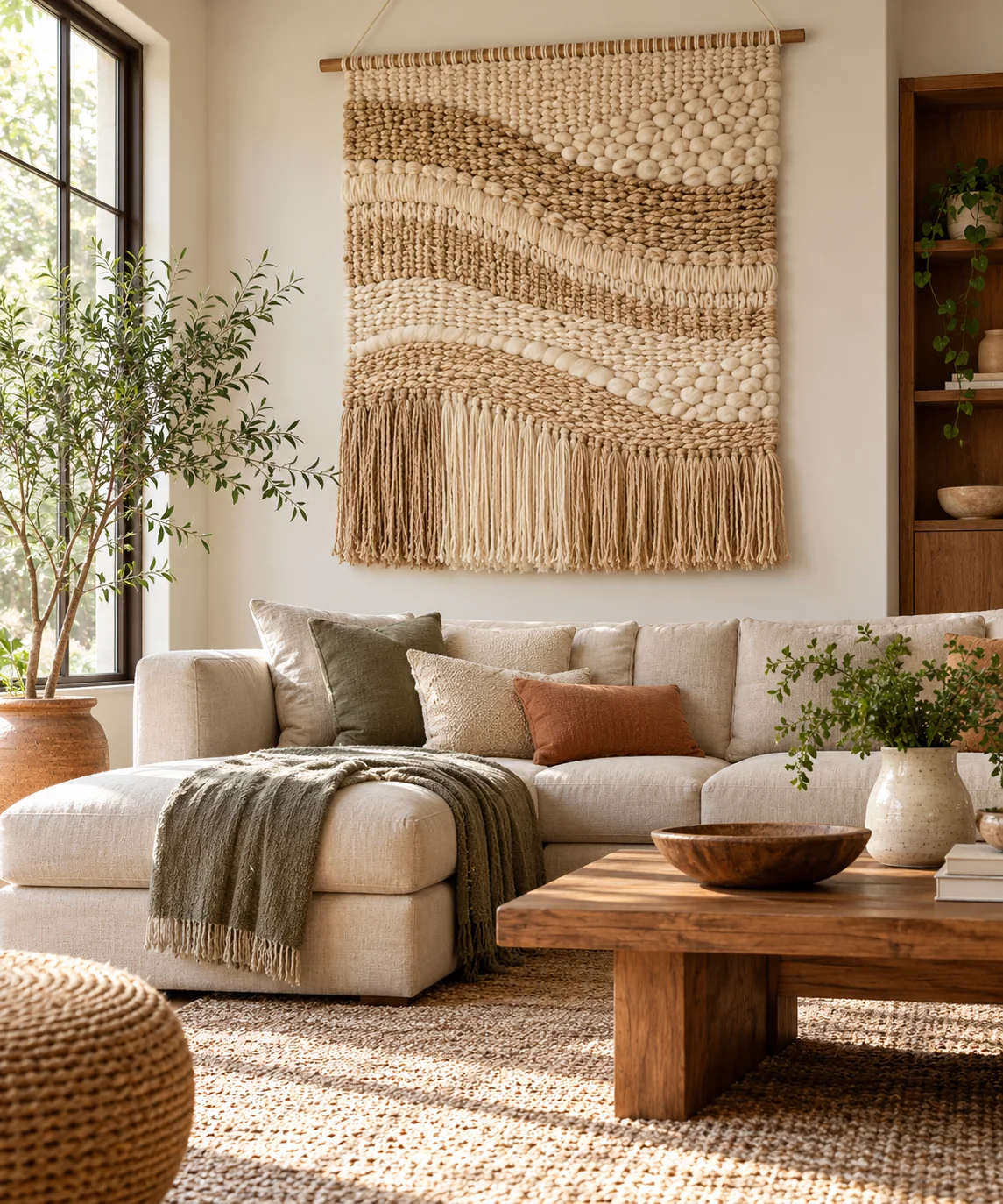
Softening Hard Wall Reflections
Rooms dominated by parallel, unadorned drywall surfaces often exhibit noticeable room reverberation. Introducing large textiles helps break up wide, reflective wall areas that amplify everyday conversation and ambient sounds. Choosing an unframed textile allows the natural, pliable qualities of the material to soften the visual and acoustic feel of the room without the hard, reflective boundary created by glass framing.
Textile Density and Weave Characteristics
When selecting a wall hanging for its room-softening qualities, textile thickness and weave construction play an important role. Lightweight, flat fabrics provide minimal textural contrast on hard walls. In contrast, heavier handwoven textiles featuring looped yarns, chunky roving, or multi-dimensional weaves introduce physical depth and softness. Choosing unbleached wool, cream fleece, or oatmeal tones keeps the piece aligned with warm neutral decor while maximizing surface texture.
Evaluating Wall Location and Lighting
Before installing a wall hanging, evaluate the surrounding wall conditions and room exposure. Select a wall location that balances visual proportion without crowding door frames, windows, or tall storage units. Avoid mounting natural fiber textiles in locations exposed to intense, direct daily sunlight, which can dry out natural wool fibers and cause uneven color fading over time. Position the piece where it can be appreciated without being brushed by foot traffic.
Hanging Clearances and Wall Support
Safe textile mounting requires thoughtful hardware selection and proper clearance from household heat sources. Maintain generous clearance from active baseboard heaters, radiators, and fireplaces to prevent heat damage or fire risks. Use a continuous hanging rod or sturdy wooden dowel that supports the full width of the textile evenly. Verify that wall brackets and fasteners are rated for the combined weight of the hanging and rod, anchoring properly into wall studs or appropriate drywall anchors.
Routine Care and Fiber Preservation
Natural fiber wall hangings require gentle, non-invasive maintenance to stay clean and well-preserved. Avoid aggressive vacuuming, which can pull delicate fibers or loosen handwoven knots. Instead, dust the surface periodically using a soft-bristled clothes brush with downward strokes, or take the textile outside occasionally for a gentle airing. Keep indoor humidity levels moderate, as damp environments can encourage fabric pests or mold growth in untreated natural fibers.
YOUR STARTING POINT
A little checklist.
Original editorial guidance. Images are AI-generated concepts, not photographs of completed projects. Our sources and approach.
Questions to consider
Can an unframed wool tapestry help reduce room echo?
Yes. A thick, textured textile absorbs and scatters sound more effectively than bare drywall or glass-framed art, helping to soften ambient echo when placed across large, untreated wall expanses.
How should an unframed textile be supported on the wall?
Slide a sturdy wooden dowel or metal rod through a sewn top sleeve or attached loops, then rest the rod on securely anchored wall brackets to prevent sagging or uneven fabric strain.
How do you clean an undyed wool wall hanging without damaging it?
Gently brush the surface with a soft garment brush to remove dust, or take the textile outside for a brief shake in dry weather. Avoid damp wiping or laundering, which can shrink or misshape the weave.