Garden Tool Organization · THE GUIDE
Hang Bulky Loppers and Shears on Sturdy Rubber-Coated Wall Hooks
Long-handled garden tools like branch loppers and hedge shears are notoriously difficult to store safely. Leaning them in corners leads to clattering falls, while small hardware pegs rarely support their heavy, asymmetrical leverage. Hanging these bulky tools horizontally or vertically on wide, rubber-coated steel hooks provides a stable, slip-free solution. The rubberized layer grips tubular steel, fiberglass, or wooden handles securely, preventing tools from sliding off when accidentally brushed past. This setup preserves blade alignments, keeps cutting edges visible, and maintains clear, unobstructed floor space along shed walkways and garage perimeters.
Jump to the checklist ↓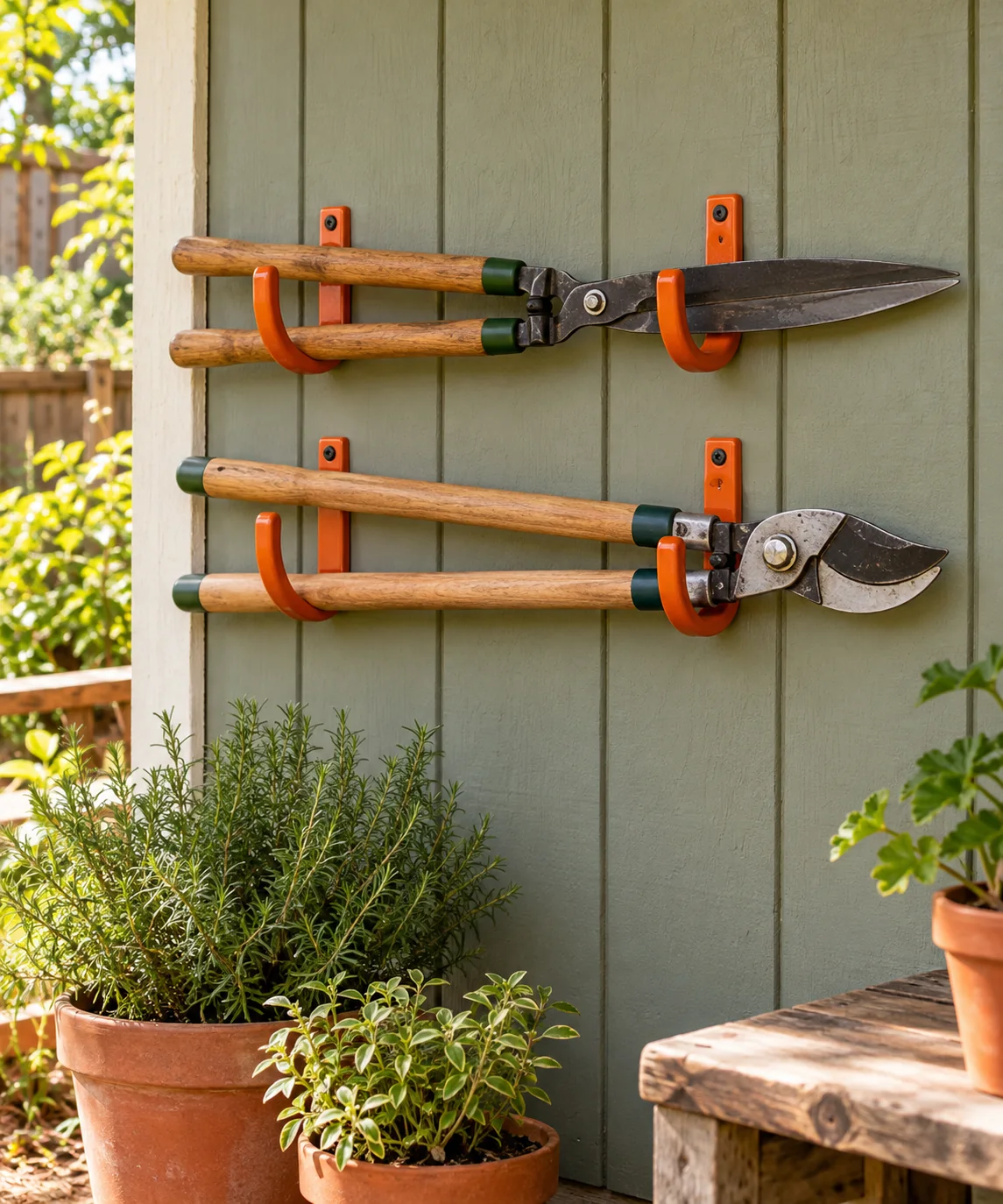
Selecting Suitable Hook Profiles
Choose heavy-gauge steel hooks featuring a durable dip-molded rubber or vinyl coating. Wide U-shaped utility hooks or dual-prong ladder hooks measuring at least six to eight inches in depth offer the best support for bulky cutters. The rubberized exterior serves two functions: it prevents metal-on-metal abrasion that strips protective paint from tool handles, and it provides essential friction that stops smooth wooden or polished fiberglass shafts from rolling sideways or sliding off the hook under uneven weight distributions.
Determining Wall Placement and Clearance
Position hooks at chest height to allow comfortable two-handed lifting without overreaching or stooping. Large loppers often measure 28 to 32 inches in length, requiring adequate vertical and horizontal clearance from adjacent shelving, door frames, and light fixtures. Ensure the hanging zone allows tool arms to rest completely flat against the wall plane. Never hang heavy cutters directly above high-traffic entry doorways or above lower storage benches where an accidental brush could create an overhead hazard.
Orientation and Balance Strategies
Hedge shears and bypass loppers can be hung either horizontally across two parallel hooks or vertically by their handles or head assembly. When hanging vertically, orienting the cutting head downward is safest, supported by hooks cradling the spread handles just beneath the grips. If hanging horizontally across twin hooks, space the brackets approximately 12 to 16 inches apart to distribute the weight evenly between the heavy cutting mechanism and the lighter extended levers, preventing rotational tipping.
Protecting Cutting Blades in Storage
Before hanging cutting tools on wall hooks, close the blades completely and engage any integrated safety catches. Leaving blades open invites accidental cuts when reaching for neighboring tools and exposes sharp ground edges to ambient moisture. Periodically check that hanging tools do not knock blades against masonry or exposed framing timber. Consider fitting heavy leather or canvas blade guards over shears and loppers while stored to keep cutting surfaces protected from incidental bumps and airborne moisture.
Weight Limits and Long-Term Maintenance
Inspect rubber coatings annually to ensure friction material has not split, worn through, or degraded from seasonal temperature swings. When bare steel beneath the coating becomes exposed, replace the hook to prevent scraping handle materials. Be mindful of total load: professional tree loppers with telescopic steel handles can exceed five pounds, so verify that the hook hardware feels completely rigid without downward flex when loaded, adjusting your layout to avoid overloading single mounting points.
YOUR STARTING POINT
A little checklist.
Original editorial guidance. Images are AI-generated concepts, not photographs of completed projects. Our sources and approach.
Questions to consider
Can I hang shears by their rubber handle grips?
Yes, provided the hooks are spaced wide enough to support the handles evenly. However, hanging cutters by their metal neck just below the blades often provides superior stability and prevents handle grips from stretching or loosening over time.
Why use rubber-coated hooks instead of plain metal pegs?
Plain metal pegs allow smooth tool handles to slide easily when bumped, creating fall hazards. Rubber coating adds substantial surface grip, dampens rattling, and protects painted, varnished, or wooden tool handles from gouges and scratches.
How far apart should I space hooks for horizontal storage?
Space hooks 12 to 16 inches apart for standard 28-inch loppers. This spacing safely supports the central balance point while preventing the heavier blade head from tipping downward or slipping between the brackets during storage.