Laundry Space Organization · THE GUIDE
Hang Canvas Wall Pockets for Laundry Care Instruction Cards
Laundering modern wardrobes involves decoding complex textile symbols, preserving specialty manufacturer tags, and tracking active dry-cleaning slips. When these reference items scatter across counters or slide behind appliances, delicate garments face heightened risks of shrinkage and fabric damage. A multi-tiered canvas wall pocket system creates a central, upright repository that occupies zero counter space. By dedicating specific compartments to care manuals, symbol charts, and garment tickets, you can protect these essential paper records from laundry humidity, establish a seamless tracking hub, and streamline your routine sorting process without executing permanent wall alterations.
Jump to the checklist ↓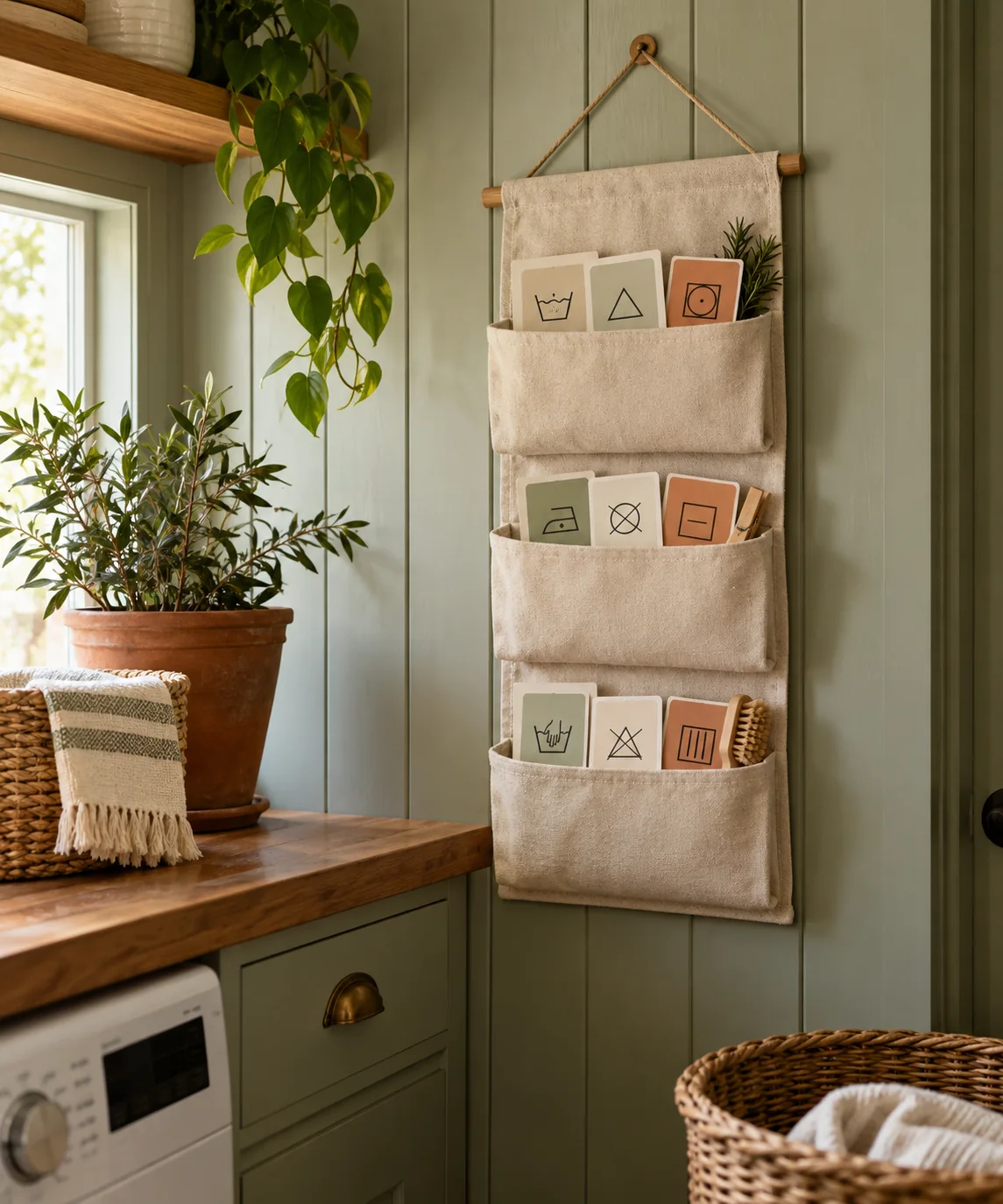
Selecting Suitable Canvas Dimensions and Weight
Choose an organizer constructed from unbleached, heavy-weight natural cotton canvas. The dense weave provides structural rigidity, helping individual tiers remain open for easy filing rather than collapsing forward. A vertical layout measuring roughly ten to twelve inches wide and twenty-four inches long fits comfortably along narrow utility walls, behind doors, or beside cabinet ends. Reinforced stitching along pocket dividers and seams helps the organizer retain its shape when holding small booklets, care tags, and cardstock charts.
Planning Reversible Wall and Door Placement
Plan the organizer's location around convenient daily line of sight, avoiding permanent wall penetrations. Existing wall pegs, utility rail hooks, or over-door brackets provide reversible hanging options in rented spaces or small laundry areas. Choose a position clear of splashing water from utility sinks and away from direct dryer vent exhaust, which can degrade paper contents over time. Check that nearby cabinet doors and room walkways operate without brushing against the organizer.
Categorizing Your Three-Tier Storage Layout
Organize the pockets logically to minimize search time during active washing. Dedicate the top tier to urgent, transient paperwork like dry-cleaning claim tickets and drop-off slips. Reserve the middle pocket for printed international laundry care symbol keys and appliance manuals for quick reference. Use the deepest lower pocket to collect manufacturer spare buttons, specialty yarn strands, and unique garment care booklets, keeping small sewing notions and fabric references united in a single dry compartment.
Shielding Reference Papers from High Room Humidity
Laundry environments generate periodic ambient vapor that can curl paper, dissolve water-soluble ink, and stick damp cardstock together. Insert your primary laundry decoding charts and appliance cheat sheets into simple clear polypropylene sheet protectors before filing them. For delicate paper dry-clean receipts or original paper swing tags, small resealable envelopes offer extra protection against airborne moisture, ensuring serial numbers, fabric composition percentages, and specific washing instructions remain completely legible across seasons of heavy room use.
Maintaining Clutter Control and Pocket Cleanliness
Wall pockets invite clutter if left unmonitored. Establish a seasonal review to purge fulfilled dry-cleaning stubs and discard instructions for garments you no longer own. Keep pocket capacity strictly limited to flat paper items and minor fabric accessories to avoid pulling the organizer away from the wall. Every six months, empty the contents, shake loose laundry lint outdoors, and spot clean the canvas with a damp cloth and mild soap, drying it thoroughly before refilling.
YOUR STARTING POINT
A little checklist.
Original editorial guidance. Images are AI-generated concepts, not photographs of completed projects. Our sources and approach.
Questions to consider
Will laundry room steam damage stored paper items?
Steam softens untreated paper and fades thermal receipts over time. Place critical reference guides into clear plastic sleeves or laminated folders before slipping them into canvas pockets. Never locate the organizer directly over an open, steaming wash basin.
How should I clean the canvas organizer if it collects lint?
Lint brushes or tape rollers remove surface dust quickly. For deeper cleaning, empty all pockets, hand-wipe spots with cool water and a drop of gentle soap, and hang dry. Avoid machine washing, which can shrink or misshape the canvas.
Can small repair supplies like spare buttons fit in these pockets?
Yes, but store loose buttons and threads in small labeled envelopes or zip pouches first. Dropping loose items into deep canvas pockets leads to settling at the bottom, making retrieval frustrating and risking fabric snags when pulling papers.