Small Balcony Layouts · THE GUIDE
Hang Heavy-Duty Wall Pegboards for Gardening Hand Tools
Balcony gardening often leads to cluttered surfaces when hand trowels, shears, and plant ties occupy scarce table and floor space. Utilizing vertical storage helps organize essential equipment, but exterior balcony walls require careful handling. In most apartments and multi-family residences, drilling into exterior facades, stucco, or siding is strictly prohibited because it damages waterproofing membranes and violates lease or HOA agreements. By exploring property-approved mounting methods, freestanding vertical panels, and durable outdoor materials, you can create an organized garden workstation that keeps implements within easy reach while safeguarding the building envelope.
Jump to the checklist ↓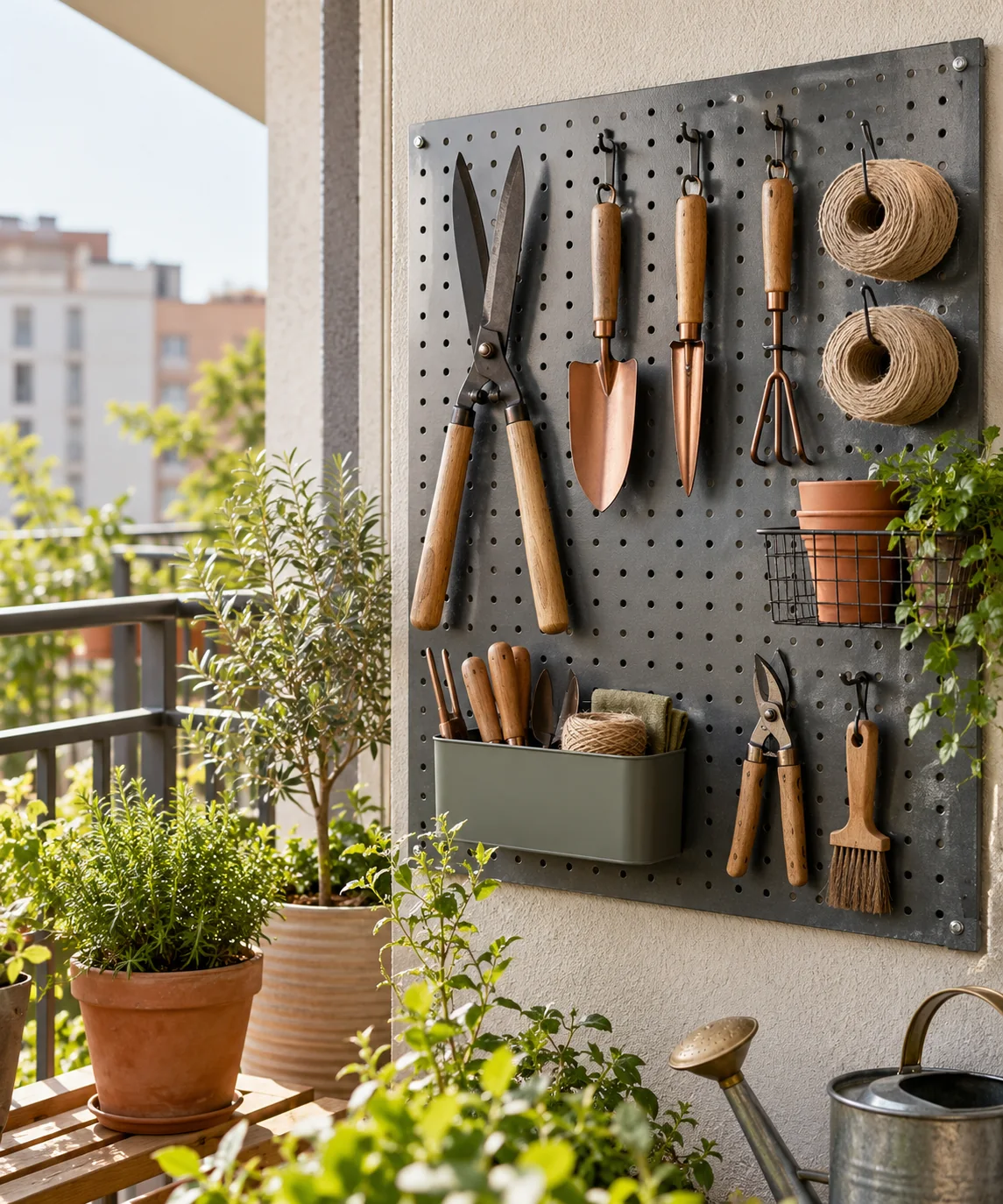
Understanding Exterior Wall Restrictions
Before planning any vertical wall storage on a balcony, check your tenancy agreement, HOA bylaws, or property management rules. Exterior walls form part of the building's continuous weather barrier, and penetrations from screws or masonry anchors can introduce water leaks, compromise insulation, or crack masonry. In almost all rented or managed properties, permanent drilling into exterior cladding is forbidden. Instead, focus on reversible, non-damaging solutions such as freestanding storage screens, modular ladder racks, or pegboard panels supported by weighted vertical uprights.
Selecting Durable Outdoor-Rated Materials
Standard fiberboard or unsealed wood pegboards quickly absorb moisture, sag, and develop mildew when exposed to outdoor humidity and temperature swings. For balcony environments, opt for corrosion-resistant materials such as powder-coated aluminum, galvanized steel, or heavy-duty exterior-grade composite panels. These materials tolerate ambient moisture, resist ultraviolet degradation, and support gardening tools without bending. Ensure any hooks, brackets, or clips are similarly finished with rust-resistant coatings to prevent staining adjacent surfaces.
Ergonomic Layout and Pathway Clearances
Position your vertical storage system where it remains easy to access without impeding daily balcony movement. Ensure the panel does not obstruct door swings, window openings, or pathways needed for safe exit. Mount or position the board so frequently used hand tools sit comfortably between waist and shoulder level, reducing awkward reaching or bending. Leave adequate clearance above adjacent planters or utility carts so plant foliage does not become tangled in hanging tools or tool clips.
Wind Resistance and Secure Hook Retention
Balconies are subject to erratic breezes that can lift unsecured tools off standard loose wire hooks. Use locking pegboard hooks, screw-tightened brackets, or clips with rubber retaining tabs that hold accessories firmly against the panel face. Arrange heavier implements, such as cast-metal trowels and cultivators, toward the lower central area of the panel to maintain stability. Group lighter items, such as twine spools and plant tags, along upper rows, and always latch pruners and shears shut before hanging them.
Moisture Management and Tool Care
Storing tools outdoors exposes them to ambient humidity, coastal salt air, and airborne dust. Place vertical panels in a sheltered corner that offers protection from driving rain while maintaining gentle air circulation to dry damp equipment. Clean soil and plant sap from tools before hanging them, and wipe steel blades periodically with a drop of multi-purpose oil to discourage oxidation. Periodically inspect freestanding frames or panel supports for stability, tightening hardware as needed across changing seasons.
YOUR STARTING POINT
A little checklist.
Original editorial guidance. Images are AI-generated concepts, not photographs of completed projects. Our sources and approach.
Questions to consider
Can I drill into my apartment balcony wall to hang a tool board?
Generally, no. Drilling into exterior walls typically breaches the building's moisture barrier and violates HOA or lease rules. Freestanding racks, tension-pole frames, or weighted storage panels offer non-penetrating alternatives.
Why should fiberboard pegboards be avoided on outdoor balconies?
Standard fiberboard pegboards are designed for climate-controlled interiors. Outdoor humidity, condensation, and rain cause pressed fibers to swell, delaminate, and weaken, creating a collapse risk.
How do I keep hanging garden tools from rattling or falling in high winds?
Install heavy-duty locking hooks that fasten directly to the board, store cutting blades in fitted sheaths or enclosed cradles, and avoid hanging lightweight unsecured items loosely on open prongs.