Warm Neutral Living Rooms · THE GUIDE
Hang Heavy Linen Sheers on French Return Curtain Rods
Standard curtain poles with decorative finials often leave noticeable light gaps along window sides, disrupting the quiet cohesion of neutral living rooms. A French return curtain rod eliminates these perimeter gaps by curving ninety degrees directly into the wall plate. Pairing this architectural hardware with heavy linen sheers creates a continuous textile envelope around the window frame. Heavy-weight linen filters glaring sunlight into a soft, ambient glow while offering daytime privacy. This tailored installation introduces refined structure, clean horizontal lines, and gentle textural drapery that softens the room corners effortlessly.
Jump to the checklist ↓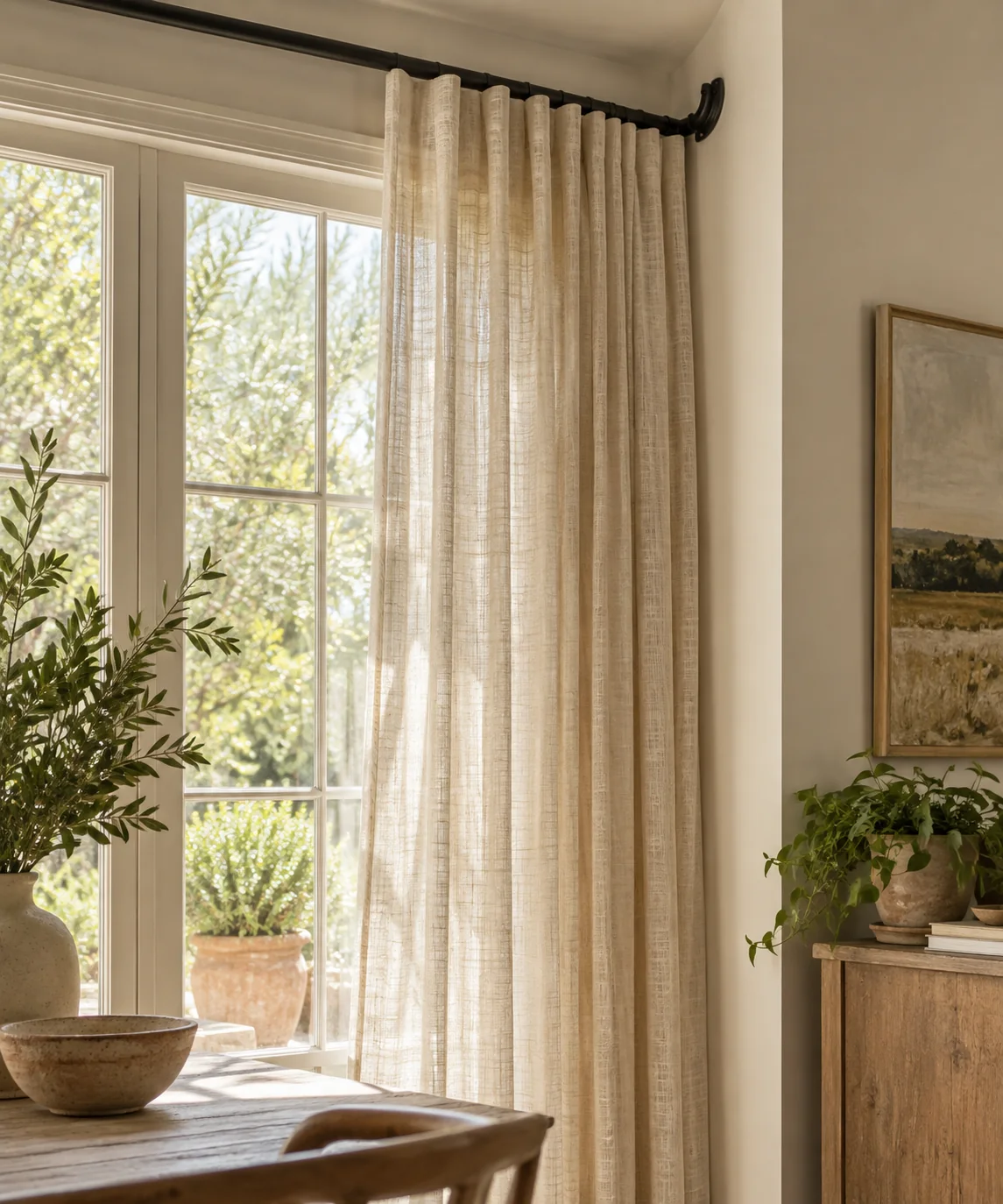
Understanding the French Return Mechanism
A French return rod, also known as a wrap-around rod, consists of a metal pole that bends at right angles directly toward the wall surface. This design eliminates protruding end caps or bulky finials, yielding an understated, architectural silhouette. By guiding the drapery fabric completely back to the wall, it covers side clearances where sunlight typically leaks. This continuous line is particularly effective in warm neutral living spaces, where uncluttered geometric simplicity allows woven fabrics to take visual precedence.
Selecting the Ideal Linen Fabric Weight
Choose an open-weave linen with substantial thread density, often categorized between 180 and 260 grams per square meter. Standard sheer curtains made from polyester can appear stiff or unnaturally shiny, whereas heavy unbleached linen offers a relaxed drape with subtle organic slubs. The substantial weight allows the panels to hang vertically without excessive ballooning, creating soft, uniform folds that temper harsh afternoon sun into a warm, creamy illumination without completely blocking the outdoor view.
Calculating Rod Placement and Stack-Back Space
Mount the rod brackets four to six inches above the window frame or near the ceiling line to draw the eye upward. Extend the outer curve of the rod six to ten inches past the window casing on either side. This clearance, known as stack-back space, ensures that when the drapery panels are drawn open, the gathered fabric rests flat against the wall rather than obscuring natural light passing through the glass panes.
Determining Proper Hem Length and Break
For a tailored warm neutral interior, linen drapery should either hover one-quarter inch above the floor or rest with a slight break of one-half inch. Avoid excessive pooling of several inches, which attracts dust and can look untidy over time. Because pure linen expands or contracts slightly in response to indoor humidity fluctuations, a slight clearance prevents the bottom hem from dragging on rugs or catching under footwear during regular foot traffic.
Routine Fabric Care and Steam Maintenance
After installation, relax shipping creases and packaging folds using an upright garment steamer held a few inches from the hanging linen. Routine maintenance requires only gentle shaking during weekly tidying and an occasional low-suction vacuuming with a soft brush attachment. Avoid washing heavy unlined linen panels in home appliances, as water saturation and tumbling can cause uneven shrinkage along hems; professional dry cleaning preserves the original dimensions.
YOUR STARTING POINT
A little checklist.
Original editorial guidance. Images are AI-generated concepts, not photographs of completed projects. Our sources and approach.
Questions to consider
What is the advantage of a French return over standard rods?
French return rods curve directly back to the wall, eliminating side light gaps and omitting bulky finials. This provides a sleek, minimalist silhouette that allows drapery fabric to sit flush against the wall surface.
How do you measure the correct rod width for a window?
Measure the window frame width and add twelve to twenty inches overall. Extending the rod six to ten inches beyond each side of the casing provides adequate stack-back space so open curtains do not obstruct incoming light.
Can heavy linen sheers be washed in a machine?
Machine washing is not recommended for tailored linen drapes, as untreated natural fibers often shrink unpredictably. Light vacuuming with a soft brush, periodic steaming, and professional dry cleaning best protect the hem length and weave integrity.