Dining Nooks · THE GUIDE
Hang Leather-Strapped Wall Bolsters to Save Backrest Depth
In compact dining spaces, traditional dining benches with integrated angled backrests occupy significant room depth, occasionally encroaching on primary walkways. Wall-positioned bolster cushions offer an alternative method for adding back support behind a backless bench. By suspending cushions from durable straps supported by a securely anchored wall rod, back support is positioned against the wall rather than relying on a thick furniture frame. However, because seated adults exert continuous lateral and downward pressure against the wall, this arrangement requires careful evaluation of wall construction, structural backing, and hardware load capacity before installation. When planned with proper structural support, it provides functional dining comfort while keeping the floor perimeter open.
Jump to the checklist ↓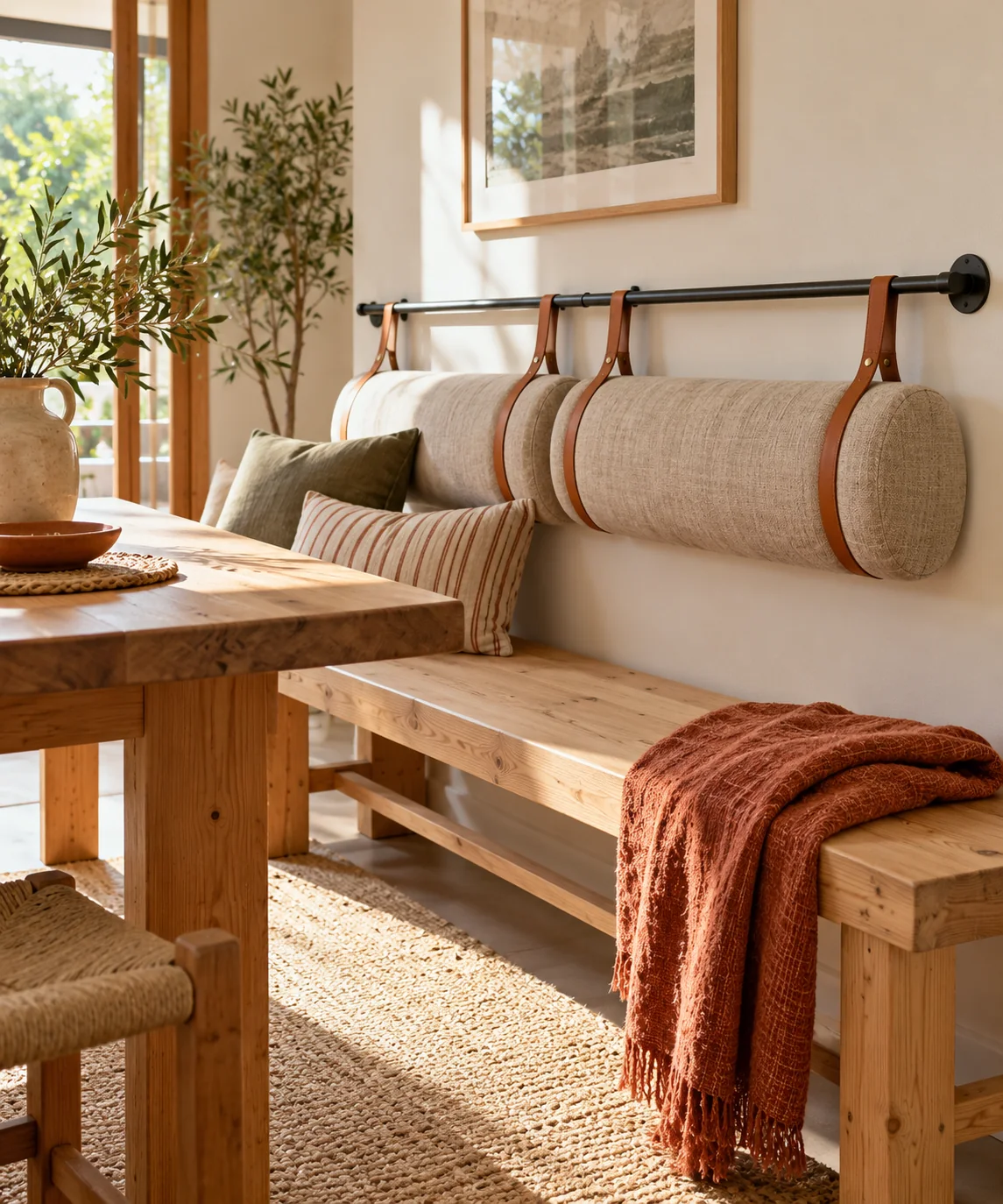
Assessing Wall Substrates and Structural Fastening
Suspending a backrest from a wall rod introduces ongoing pulling and shear forces every time a seated person leans back. Standard hollow drywall anchors are generally unsuitable for sustaining this dynamic live load and risk pulling free over time. Fasteners should penetrate solid wall framing studs, blocking, or structural masonry. If your dining nook wall lacks studs in the desired rod bracket locations, consult a qualified carpenter or builder to evaluate whether horizontal structural mounting boards or specialized heavy-duty toggle systems are appropriate. Renters should verify building policies regarding wall modifications before drilling.
Determining Ergonomic Height and Placement
Back support requirements vary depending on table height, bench design, and user stature. Rather than adhering to rigid measurements, evaluate positioning empirically. Have members of the household sit on the bench and hold a bolster or test cushion against the lower-to-mid thoracic region. Note the vertical range where support feels natural without pushing the pelvis forward or forcing an unnatural spinal curve. Mark rod placement relative to strap length only after confirming that the cushion settles at a comfortable height above the seat surface.
Evaluating Cushion Core Density and Resilience
The interior insert of the bolster must resist compression under leaning weight. Soft down, feathers, or loose polyester fiberfill tend to flatten quickly, leaving diners leaning against the hard wall substrate. High-resilience polyurethane foam cores wrapped in a thin batting layer maintain their cylindrical or rectangular profile under sustained use. Check manufacturer foam density ratings; firmer cores provide consistent spinal support and prevent the cover material from shifting or bunching around the hanging straps during mealtime use.
Selecting Durable Strap and Upholstery Materials
Dining nook seating is subject to routine friction, food spills, and ambient moisture. Performance textiles, tight-weave cotton canvas, or commercial-grade coated vinyl resist abrasion and clean easily. Hanging straps should consist of thick, vegetable-tanned leather, heavy nylon webbing, or reinforced synthetic strapping capable of bearing sustained tension. Fasteners securing the strap loops, such as solid metal rivets or heavy-duty industrial stitching, must be rated to handle dynamic weight. Removable covers with concealed zippers simplify laundering according to manufacturer care instructions.
Reversible Planning and Clearance Verification
Before committing to wall-mounted hardware, test how the bench and table align with the bolster depth. A cushion thickness of three to four inches generally provides adequate lumbar support without crowding diners off the bench seat. Ensure the bench remains stable and does not tilt if diners shift against the wall. Routinely inspect the rod brackets, mounting screws, and strap loops for any signs of loosening, metal fatigue, or wall cracking. In rental properties where wall drilling is restricted, consider floor-supported banquette options or freestanding high-back seating as reversible alternatives.
YOUR STARTING POINT
A little checklist.
Original editorial guidance. Images are AI-generated concepts, not photographs of completed projects. Our sources and approach.
Questions to consider
Can drywall anchors support a wall-mounted backrest bolster?
Standard hollow drywall anchors are not designed to withstand the continuous shear and pull-out forces created by adults leaning against a backrest. Fasteners should anchor directly into wall studs, structural blocking, or solid masonry to prevent hardware failure and wall damage.
How do I choose the right cushion thickness for a dining bench?
A bolster depth between three and four inches typically balances lower back support with adequate bench seat depth. Thicker cushions can push diners uncomfortably forward toward the table edge, while thinner pads may not prevent contact with the hard wall surface.
How should leather hanging straps be maintained?
Inspect leather straps periodically for signs of stretching or cracking around hardware contact points. Apply a manufacturer-recommended leather conditioner periodically in dry indoor environments, and avoid hanging bolsters in direct, intense sunlight that could degrade organic leather fibers.