Rental-Friendly Decor · THE GUIDE
Hang Outerwear on a Weighted Modern Timber Coat Stand
Entryways in leased apartments frequently lack built-in storage or sufficient wall space for deep furniture. Lease restrictions often forbid drilling heavy mechanical anchors to mount permanent wall hooks into drywall. When wet jackets, umbrellas, and bags accumulate on living room furniture or floors, entrance areas become cluttered and hard to navigate. A freestanding timber coat stand with a weighted metal base provides functional vertical storage without wall penetrations. By positioning the stand thoughtfully and balancing hanging loads, renters can organize damp outer layers while keeping high-traffic entryways clear and functional.
Jump to the checklist ↓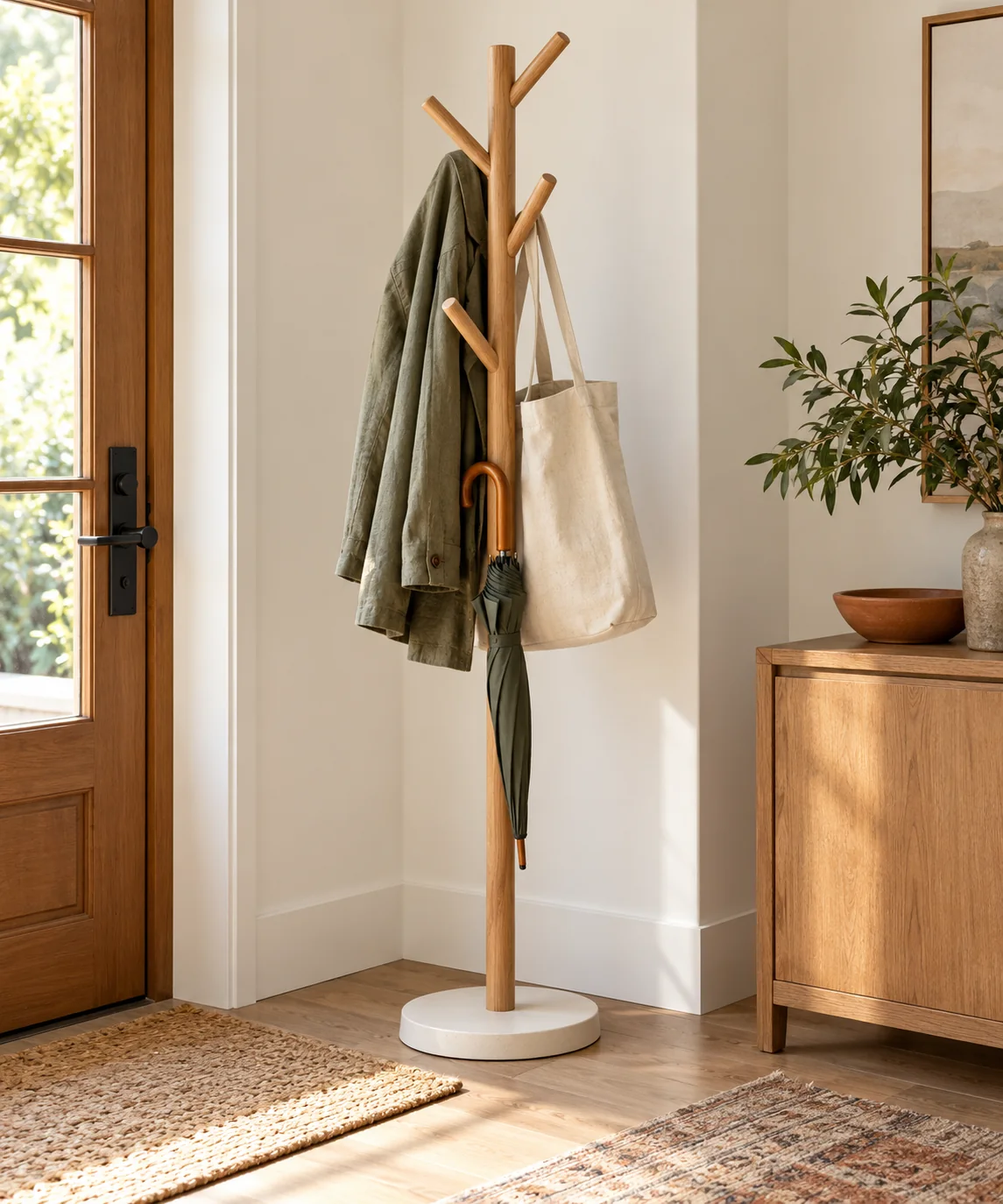
Selecting a Stable and Weighted Base
When selecting a freestanding coat stand, prioritize models engineered with a dense, weighted base plate made of steel, cast iron, or reinforced stone. Lightweight tripod racks with narrow leg spreads often wobble or topple when bearing heavy winter garments or loaded bags. A low, broad base plate lowers the overall center of gravity, resisting tip hazards when garments are lifted quickly. Check manufacturer specifications to ensure the base diameter and counterweight are designed to support the height of the pole under intended household usage.
Planning Placement and Entryway Clearances
Position the coat stand in an underutilized corner or along an entryway wall where it will not interfere with foot traffic or interior doors. Verify the swing arc of your entry door to ensure opening handles, panels, or latches do not strike hung garments or the stand itself. Ensure sufficient walking clearance remains along primary corridors so occupants and guests can pass comfortably without snagging bags or clothing. Avoid placing coat stands immediately adjacent to narrow emergency pathways or tight thresholds.
Balancing Loads Across Branch Pegs
Maintain the physical balance of a freestanding stand by distributing outerwear evenly across opposing pegs. Avoid clustering multiple heavy garments on a single side, which shifts the center of mass away from the base and introduces persistent structural strain on the central pole joints. Place the heaviest winter parkas and damp wool coats on lower pegs closest to the base to keep the center of gravity low, reserving upper branches for lighter items like hats, knit scarves, or empty tote bags.
Managing Moisture and Protecting Floors
Wet outerwear requires adequate ambient airflow to dry naturally without mildewing. Hang damp jackets with enough spacing between layers so air can circulate, and avoid allowing wet fabrics to rest directly against painted drywall where trapped moisture can soften paint or encourage mildew. If the stand lacks an integrated umbrella cup, pair it with a standalone floor saucer to collect water droplets. Affix non-staining felt protectors under the metal base to prevent scratching hard floors or trapping moisture against floor finishes.
Routine Hardware Checks and Upkeep
Freestanding coat stands experience repetitive mechanical leverage as outerwear is repeatedly hung, adjusted, and removed. Inspect the base connection bolt and any intermediate threaded segments every few months, tightening loose hardware with the appropriate hand tool to restore rigidity. Take care not to overtighten fasteners into wood threads to avoid stripping internal fibers. Periodically wipe wooden surfaces with a clean, dry cloth to clear dust and inspect for signs of joint play or finish wear.
YOUR STARTING POINT
A little checklist.
Original editorial guidance. Images are AI-generated concepts, not photographs of completed projects. Our sources and approach.
Questions to consider
How do I fix a freestanding coat stand that develops a wobble?
Inspect the fastener connecting the central upright to the weighted base on the underside of the stand. Tighten any loosened bolts using an appropriate hex key or wrench. If the floor surface is uneven, add adhesive felt pads of varying thicknesses beneath the base to level the stand.
Can hanging wet coats directly on wooden pegs cause damage?
Damp fabrics hung directly from small pegs can stretch collar seams and potentially transfer moisture or finishes between wood and textile. Using broad wooden or plastic coat hangers suspended from the pegs preserves garment structure and allows better air circulation around damp fabrics.
How much weight can a modern coat stand hold safely?
Weight capacity varies significantly based on pole diameter, base mass, and joint construction. Always consult the manufacturer's specified load limits rather than estimating capacity, and distribute items evenly rather than hanging heavy gear on one side.