Warm Neutral Living Rooms · THE GUIDE
Hang Pleated Paper Sconces to Free Up Compact Side Tables
Compact living room side tables quickly become unusable when a standard table lamp base claims half the available surface area. In smaller seating arrangements, every square inch of tabletop is needed for holding everyday items like resting drinks, reading glasses, or current books. Shifting illumination directly to the wall using lightweight, plug-in pleated paper sconces eliminates footprint clutter while delivering diffused, ambient warmth. This reversible design approach preserves small-scale furniture function, introduces soft geometric texture against neutral walls, and creates a balanced reading nook without requiring electrical remodeling or sacrificing essential tabletop utility.
Jump to the checklist ↓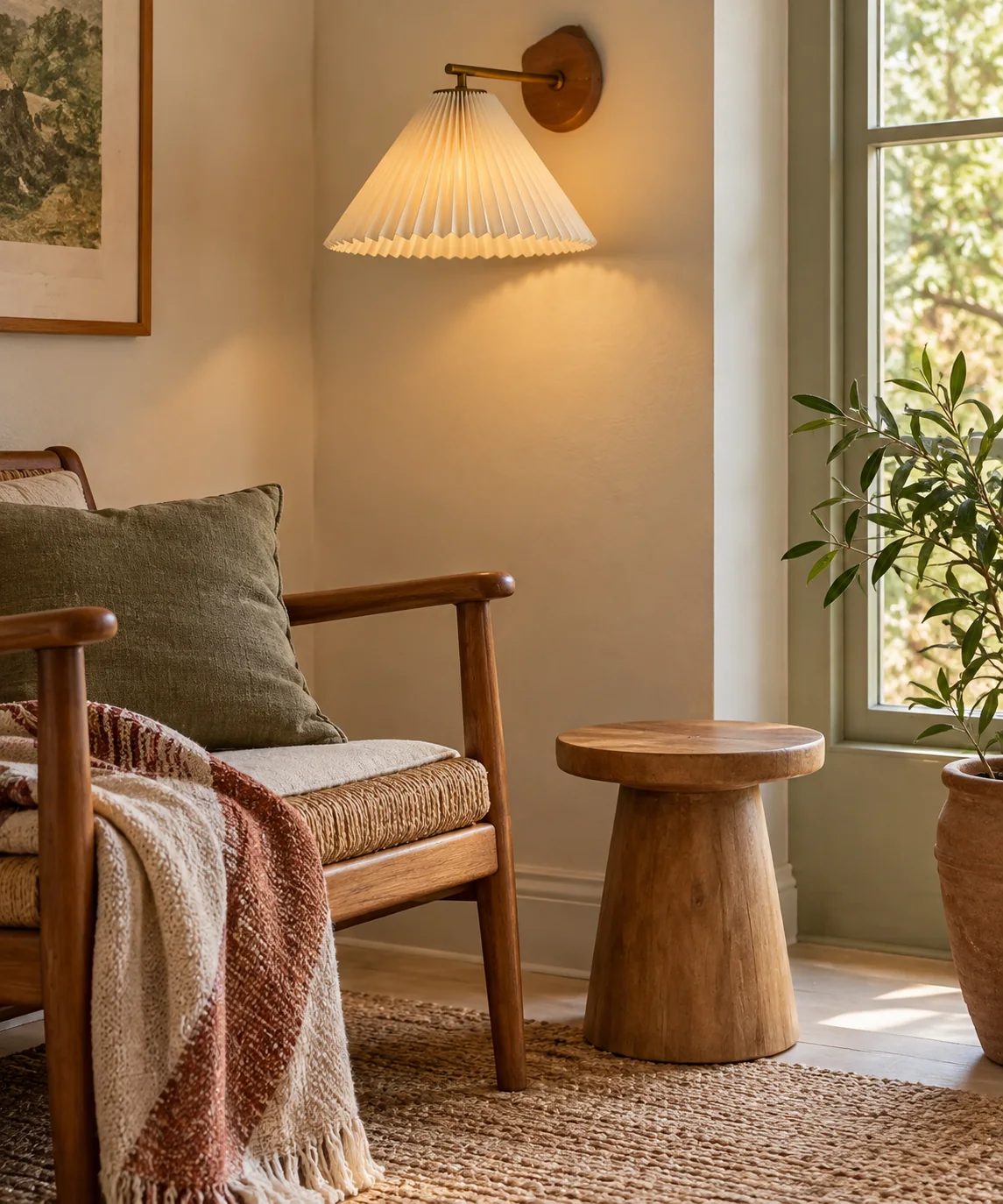
Assessing Tabletop Space and Lighting Needs
Compact living room accent tables often become overcrowded when a traditional table lamp base occupies the center of the surface. In small seating vignettes, tabletop space is valuable for resting reading material, glasses, or a beverage. Transitioning illumination to wall-mounted or plug-in lighting clears the horizontal surface while keeping ambient light near the seating area. Evaluating your everyday use of the table helps determine whether moving the light fixture off the furniture improves overall usability.
Planning Sightlines and Luminaire Positioning
When planning the location of a reading sconce, evaluate the height and angle from your typical seated position. The bottom edge of the paper shade should generally be positioned so the direct light bulb remains shielded from your seated line of sight, reducing harsh glare while illuminating reading material. Testing temporary positions using low-tack painter's tape helps visualize the placement relative to the armchair back and adjacent architectural features before committing to mounting hardware.
Managing Plug-In Cords Safely
Plug-in fixtures require tidy and code-compliant cord management. Run the cord down toward the nearest grounded outlet without stretching it tightly or draping it across walkways. Never use metal staples, nails, or pins to secure electrical cables, as piercing the outer jacket presents a severe fire and electric shock hazard. Instead, use surface-mounted cord covers or manufacturer-approved cable guides that hold the cord flat along baseboards without pinching or puncturing the wire.
Bulb Selection and Paper Shade Protection
Pleated paper shades require careful bulb selection to avoid localized heat buildup and premature discoloration. Choose low-wattage LED bulbs that comply strictly with the fixture manufacturer's maximum wattage rating. LEDs generate minimal operational heat compared to incandescent alternatives, helping to protect delicate paper folds. Ensure the shade assembly holds the bulb centered and clear of the shade walls in accordance with the luminaire's design specifications.
Routine Care and Dry Dusting Protocols
Accordion-pleated paper surfaces collect ambient household dust along their horizontal and angled creases. Regular cleaning should be limited to dry methods. Use a vacuum cleaner equipped with a soft dusting brush on the lowest suction setting, sweeping downward along each fold. Alternatively, gently dust the creases with a dry electrostatic duster. Avoid damp cloths, liquid sprays, and chemical cleaners, as moisture will warp, stain, or weaken uncoated paper.
YOUR STARTING POINT
A little checklist.
Original editorial guidance. Images are AI-generated concepts, not photographs of completed projects. Our sources and approach.
Questions to consider
Can plug-in paper sconces be used in rental apartments?
Yes, plug-in fixtures operate from existing wall outlets without requiring modifications to permanent in-wall electrical wiring. Use mounting fasteners suitable for your wall substrate and fixture weight, and verify that hanging methods align with property lease guidelines.
What light temperature complements neutral paper shades?
LED bulbs in the warm-white range of approximately 2700K to 3000K generally provide a soft, welcoming glow that highlights natural cream, oatmeal, or beige paper tones without producing stark, bluish glare.
How should minor dents in pleated paper shades be corrected?
Support the indented area gently from the reverse side with clean, dry fingers and lightly reform the crease along its original manufactured fold line. Avoid hard creasing or pinching, which can break paper fibers and permanently damage the shade structure.