Pantry Organization · THE GUIDE
Hang Reusable Cotton Mesh Produce Sacks from Under-Shelf Pegs
Vertical spacing between pantry shelves often leaves underutilized clearance above lower goods. Suspending lightweight cotton mesh drawstring sacks from existing under-shelf peg rails, non-damaging slide-on brackets, or manufacturer-approved fittings can provide ventilated, temporary storage for firm, dry aromatics like garlic heads, dry ginger, and citrus. Lifting these items off flat surfaces frees shelf space for boxed goods and jars while promoting ambient air contact. Planning this setup requires evaluating shelving load limits, checking rental and cabinetry restrictions, verifying drop clearance, and understanding the practical storage limits of breathable natural fibers.
Jump to the checklist ↓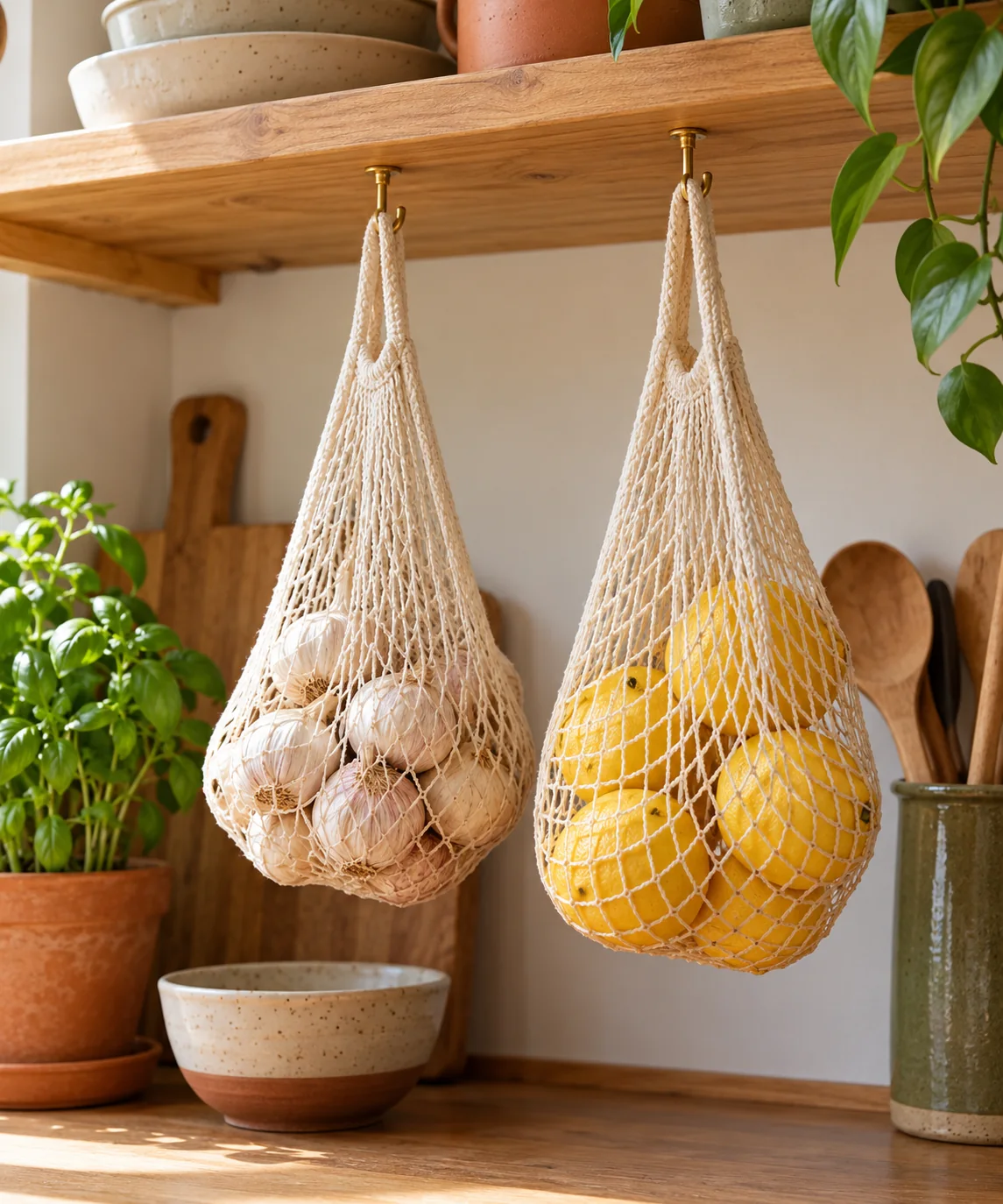
Evaluating Shelf Construction and Reversible Hanging Options
Before introducing hanging storage beneath a shelf, check how the shelf is constructed and supported. Rental cabinetry and particleboard shelving often cannot accommodate invasive screw hooks without risking surface damage or core crumbling. Instead of drilling or driving fasteners into cabinetry boards, look for reversible, non-invasive alternatives such as clamp-on hooks, under-shelf slide-on wire brackets, or existing pantry rail systems. Always verify that adding hanging accessories will not interfere with shelf support pins or exceed the cabinetry manufacturer's stated weight limits.
Selecting Appropriate Produce for Breathable Sacks
Cotton mesh sacks are best suited for dry, thick-skinned produce and aromatics that hold up well at ambient room temperatures. Intact garlic heads, dry shallots, ginger rhizomes, and firm citrus like lemons benefit from airflow while held in breathable containers. Avoid placing damp items, tender greens, or soft-skinned fruits in mesh bags, as contact friction can cause bruising and fabric dampness. Additionally, keep onions and potatoes separated to reduce early sprouting, and use fine-weave mesh for garlic to catch flaking papery skins before they drop onto lower shelves.
Checking Drop Clearance and Fabric Stretch
Natural cotton mesh expands downward when weighted, often dropping several inches lower than when empty. Test the vertical clearance by placing two or three sample produce items in the sack and holding it beneath the shelf. Ensure the bottom of the loaded sack hangs well above any jars, appliances, or food items stored on the shelf below to prevent friction or tipping. If vertical clearance is limited, use shorter sacks or loop the drawstring securely over the peg to raise the resting height.
Establishing Produce Rotation and Cleaning Schedules
Hanging produce should be inspected regularly to monitor freshness and prevent hidden decay. During weekly food preparation or grocery restocking, unhook each bag to check citrus for soft spots and inspect ginger or alliums for moisture buildup or mold growth. Because natural cotton fibers can absorb aromatic oils and trap dry debris, empty and launder the sacks periodically using mild unscented detergent. Ensure bags dry completely before restocking them, as trapped moisture inside an enclosed pantry can accelerate decay.
Recognizing Weight and Environmental Limitations
Under-shelf hanging storage works best as a lightweight, small-batch arrangement rather than bulk warehouse storage. Avoid overloading pegs or brackets with heavy quantities of citrus or root crops, which can strain shelf supports or distort hanging hardware. In warm or humid pantry spaces, citrus and ginger may spoil quickly at room temperature and are better kept in climate-controlled refrigeration. Reserve ambient hanging storage strictly for hardy, dry aromatics like whole garlic bulbs and dried whole chilies.
YOUR STARTING POINT
A little checklist.
Original editorial guidance. Images are AI-generated concepts, not photographs of completed projects. Our sources and approach.
Questions to consider
Can whole onions be stored in hanging under-shelf mesh sacks?
Small quantities of firm, dry yellow or red onions can be hung if the hardware and shelf supports allow. However, avoid storing large quantities in hanging sacks, and keep onions separated from potatoes and ginger to minimize premature sprouting.
How do I prevent produce residue from transferring to shelving?
Choose fine-weave cotton sacks to trap papery onion and garlic skins. Position hanging bags so they do not press against pantry side walls, and inspect items weekly to catch softening produce before juices or oils release.
Are screw-in cup hooks suitable for standard kitchen pantry shelves?
Screw-in hooks should not be driven into particleboard, laminate, or rental cabinetry without manufacturer guidance, as they can weaken the shelf core and leave permanent damage. Reversible slide-on under-shelf brackets or clamp fittings provide a non-invasive alternative.