Indoor Plant Styling · THE GUIDE
Hang Trailing Vines from an Adjustable Window Tension Rod
Renting an apartment often limits options for hanging plants, prompting interest in drill-free window solutions. While an adjustable tension rod placed inside an upper window casing provides an accessible framework, spring-loaded hardware relies entirely on outward friction and involves inherent fall risks. Displaying trailing foliage at window height allows plants to access daylight without occupying windowsill space, but safety requires strictly respecting hardware weight limitations, choosing lightweight shatterproof containers, and verifying that the window jamb can tolerate constant lateral force. Understanding the mechanical limitations of tension bars helps keep both window frames and plants protected from accidental drops.
Jump to the checklist ↓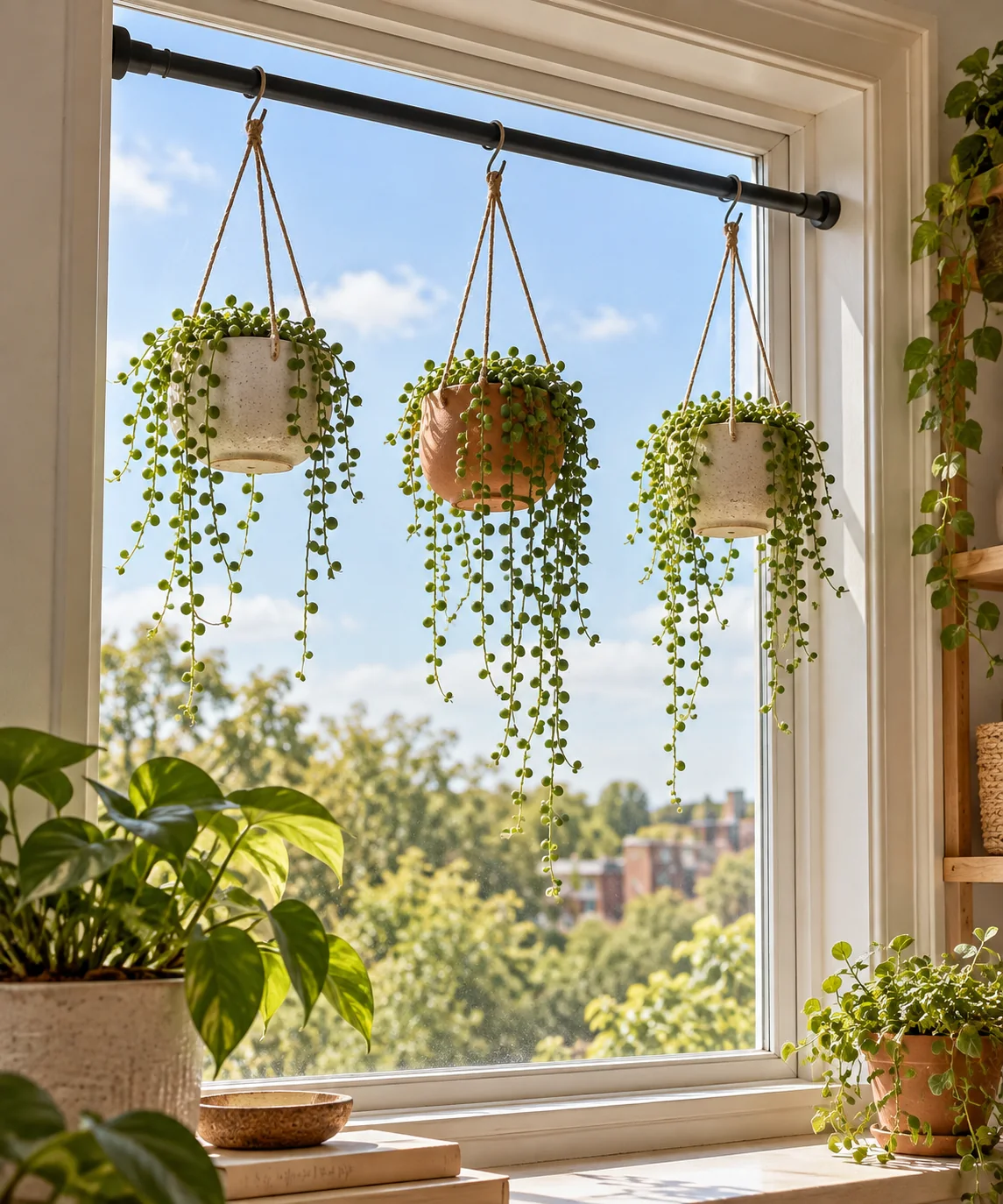
Assessing Window Casing Materials and Rod Limits
Carefully examine the window frame before attempting to place tension hardware. Solid wood jambs typically withstand moderate outward pressure, whereas drywall corners, plaster reveals, and hollow vinyl extrusions can flex, crack, or bow under spring loading. Check the tension rod manufacturer guidelines for rated capacities and recommended surfaces, noting that ratings usually reflect static household curtains rather than dynamic plant loads. Select a rod with broad, non-marring rubber end pads to improve grip and reduce the likelihood of scuffing paint. If the frame flexes when modest tension is applied, reconsider the setup, as insufficient casing rigidity increases the risk of the rod suddenly slipping.
Minimizing Suspended Weight and Load Spacing
Because tension rods depend on friction alone, keeping the total suspended weight as low as possible is critical. Avoid heavy ceramic, stoneware, or terracotta vessels, which add unnecessary dead weight and create hazardous debris if the rod slips. Opt for small, lightweight plastic, resin, or aluminum vessels. Rather than clustering containers in the center where leverage causes the rod to bow, space them evenly to balance the load across the span. Keep in mind that freshly watered potting soil can double container weight, so plan your setup based on thoroughly saturated conditions rather than dry estimates.
Selecting Cords and Non-Breakable Pots
Choose compact containers fitted with durable macrame hangers, woven synthetic cords, or lightweight cables that show no signs of fraying. Open S-hooks should fit closely over the rod diameter so that minor vibrations or ambient room breezes cannot easily shake them loose. Consider staggering hanger lengths to give foliage room to develop without crowding, while verifying that cascading foliage does not obstruct window latches, sliding tracks, or ventilation mechanisms. Inspect cord knots and hook connections regularly to ensure that friction and wear have not compromised their integrity.
Managing Sun Exposure and Temperature Fluctuations
Upper window areas often receive intense direct sunlight and significant daily temperature swings. Trailing varieties such as string-of-hearts (Ceropegia woodii) or heartleaf philodendron (Philodendron hederaceum) can adapt well near window glass, but hot afternoon exposures through clear panes can cause leaf scorching or rapid soil desiccation. In addition, repeated heating and cooling cycles can cause metal tension rods and window casings to expand and contract at different rates, potentially loosening spring tension over time. Monitor leaf condition and periodically verify that the rod remains firmly seated.
Establishing Safe Watering and Maintenance Habits
Never irrigate plants while they hang from a tension rod. Adding water overhead increases physical load unpredictably, risks water spilling onto window woodwork, and introduces sudden downward pull that could dislodge the bar. Always unhook each planter, carry it to a sink or basin, and water it thoroughly. Let all excess moisture drain out completely before returning the container to the rod. At regular intervals, gently test the rod tension by hand to confirm it has not loosened, tightening or resetting the mechanism whenever changes in humidity or temperature alter frame dimensions.
YOUR STARTING POINT
A little checklist.
Original editorial guidance. Images are AI-generated concepts, not photographs of completed projects. Our sources and approach.
Questions to consider
Can a tension rod reliably support ceramic hanging planters?
Ceramic pots are generally too heavy and fragile for spring-loaded tension rods. If a friction-mounted rod slips, ceramic vessels create dangerous shattering hazards. Lightweight plastic, resin, or metal containers are far safer alternatives.
Why do tension rods loosen over time in window frames?
Thermal expansion and seasonal humidity changes cause window casings and metal rods to expand and contract at different rates. This gradual shift reduces outward friction, which is why regular manual checks of rod tension are essential.
How do hanging plants affect window operation and window blinds?
Planters suspended within the frame can block the travel path of horizontal blinds and interfere with operating sashes. Check that suspended containers hang far enough forward or inward to allow necessary window ventilation and shade operation without collision.