Household Reset Routines · THE GUIDE
Herb Planter Pruning and Drainage Saucer Flushing
Container herb gardens thrive on methodical upkeep that balances canopy density with root zone aeration. Most culinary herbs demand abundant direct sunlight and well-aerated potting soil to develop aromatic oils and sturdy branching. When excess irrigation accumulates in catchment saucers, standing water deprives roots of oxygen and invites fungal decay. Concurrently, unpruned stems become tall, woody, and sparse. Establishing a routine to flush stagnant runoff from saucers while selectively pinching back active growing tips creates a self-sustaining cycle. This straightforward maintenance keeps small herb displays tidy, hygienic, and productive in compact residential spaces.
Jump to the checklist ↓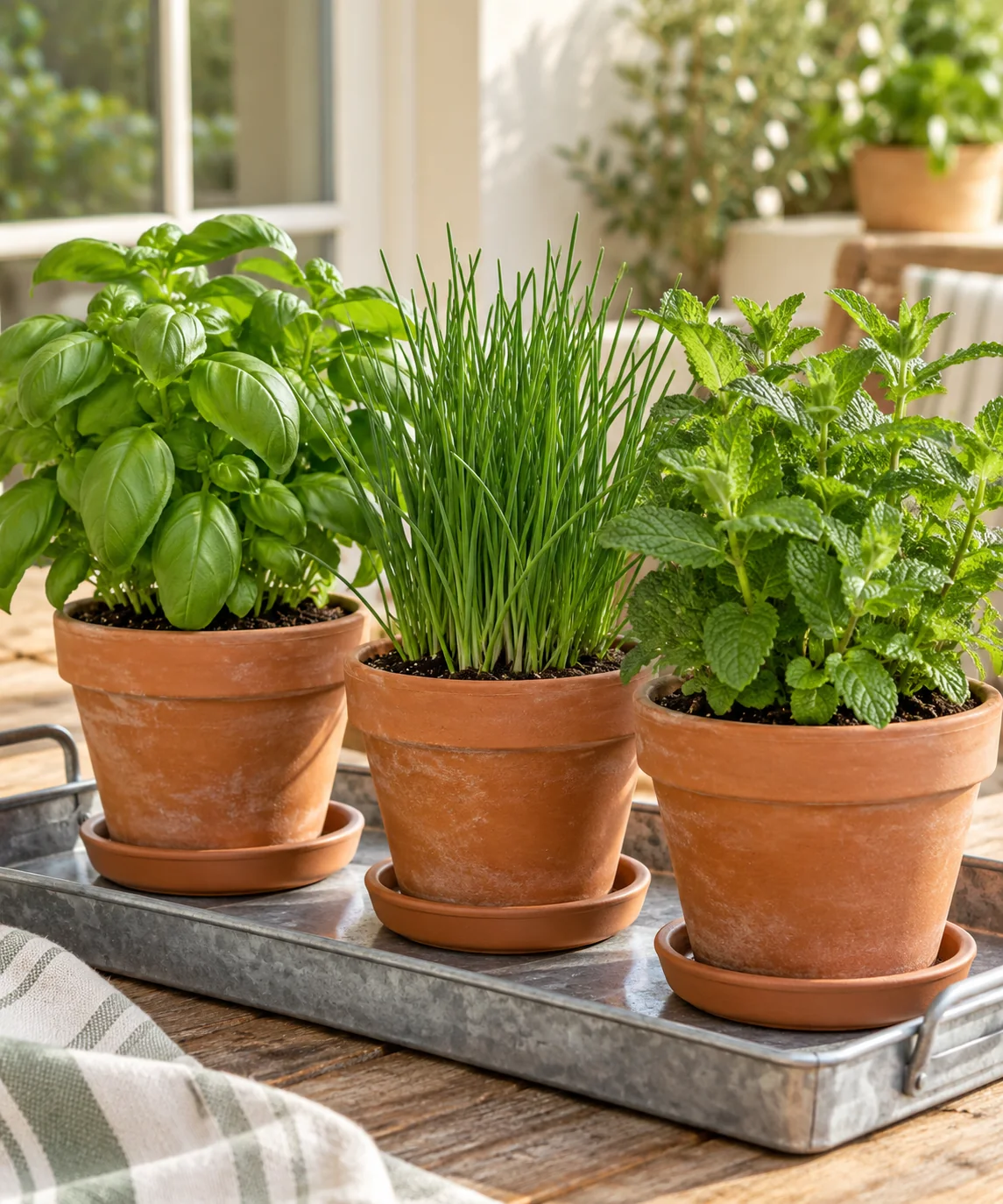
Clearing Drainage Saucers After Watering
Catchment saucers protect interior furniture from irrigation water, but leaving pots submerged causes saturated root conditions. Approximately fifteen to thirty minutes after watering your herbs, lift each pot or tilt it slightly to let surplus moisture collect in the saucer. Carry the saucer to a sink or use a dedicated baster to siphon out the runoff. Never let the pot base sit indefinitely in pooled water, as capillary action draws fluid back into the potting substrate, choking root respiration and leading to yellowing foliage.
Preventing Mineral Crust and Algae Buildup
Standing drainage water often evaporates slowly, leaving behind whitish mineral salts and green algae across the saucer floor. During your weekly container reset, wipe the dry saucers with a damp microfiber cloth to remove crusty fertilizer residues and sediment. If using a shared zinc or ceramic tray beneath multiple terracotta pots, ensure individual saucers remain separated so moisture cannot migrate between containers. Keeping the drainage hardware dry between waterings deters fungus gnats and maintains a clean presentation across your work surfaces.
Pinching Node Cuts for Bushier Growth
Culinary herbs like basil and mint produce bushier foliage when you interrupt vertical growth before flowering starts. Locate a healthy stem node featuring two emerging side shoots, and snip the central stem roughly one-quarter inch directly above those leaves using clean kitchen snips. Removing the apical tip redirects plant energy into the lateral branches, doubling the canopy density. For woody herbs such as rosemary or thyme, trim soft green tip growth while avoiding hard, older wood that struggles to regenerate fresh buds.
Handling Herb Root and Soil Health
Healthy container herbs require soil that drains swiftly after soaking. When trimming top growth, inspect the soil surface for compaction or root girdling. If water pools on top of the soil mix for more than a minute before draining through, gently aerate the outer inch with a blunt wooden skewer, staying clear of primary root crowns. Pair this with proper saucer flushing to maintain the airy porosity herbs need, ensuring the root ball dries down appropriately between thorough watering applications.
Sunlight Thresholds and Growth Limitations
Culinary herbs do not thrive in low light; they demand strong, direct sun to sustain compact leaf nodes and robust growth. Pruning leggy stems without correcting inadequate lighting will only yield pale, fragile replacement shoots. Place herb planters where they receive at least six hours of unobstructed sunlight daily, such as an unshaded south-facing window. If indoor exposure remains weak, understand that frequent pruning cannot compensate for low photosynthetic energy, and plants may require seasonal outdoor rotation to recover vigor.
YOUR STARTING POINT
A little checklist.
Original editorial guidance. Images are AI-generated concepts, not photographs of completed projects. Our sources and approach.
Questions to consider
How long can herbs sit in runoff water before roots suffer?
Herbs should not sit in drainage water for more than thirty minutes. Leaving root balls submerged suffocates oxygen exchange within the soil pores, causing root rot and encouraging fungal pathogens to attack vulnerable lower root structures.
Where is the best spot to cut when pruning herbs for bushiness?
Snip approximately one-quarter inch above a set of healthy leaf nodes. This preserves the node's growth points, triggering the dormant lateral buds to develop into two new, vigorous branches while preventing unsightly dead stem stubs.
Can pruning fix an herb plant that has grown leggy from low light?
Pruning removes weak, elongated growth, but it cannot solve the underlying problem. Herbs require strong direct sunlight; without adequate illumination, fresh shoots will emerge equally thin, pale, and weak despite careful pruning cuts.