Kitchen Herb Gardens · THE GUIDE
Herb Pot Grouping with Integrated Snip Shears Holster
Searching through utensil drawers while balancing hot pans interrupts kitchen flow and often leads to tearing herbs by hand, which bruises delicate foliage. A windowsill organizer that pairs a three-pot tray with an upright holster for trimming shears keeps essential harvesting tools immediately beside live plants. Placing this arrangement on a sunlit kitchen ledge provides culinary greens with the direct light they require while establishing a tidy, contained footprint. Planning this setup involves balancing pot stability, ensuring water containment, choosing durable holster materials, and enforcing safe blade management around everyday food prep zones.
Jump to the checklist ↓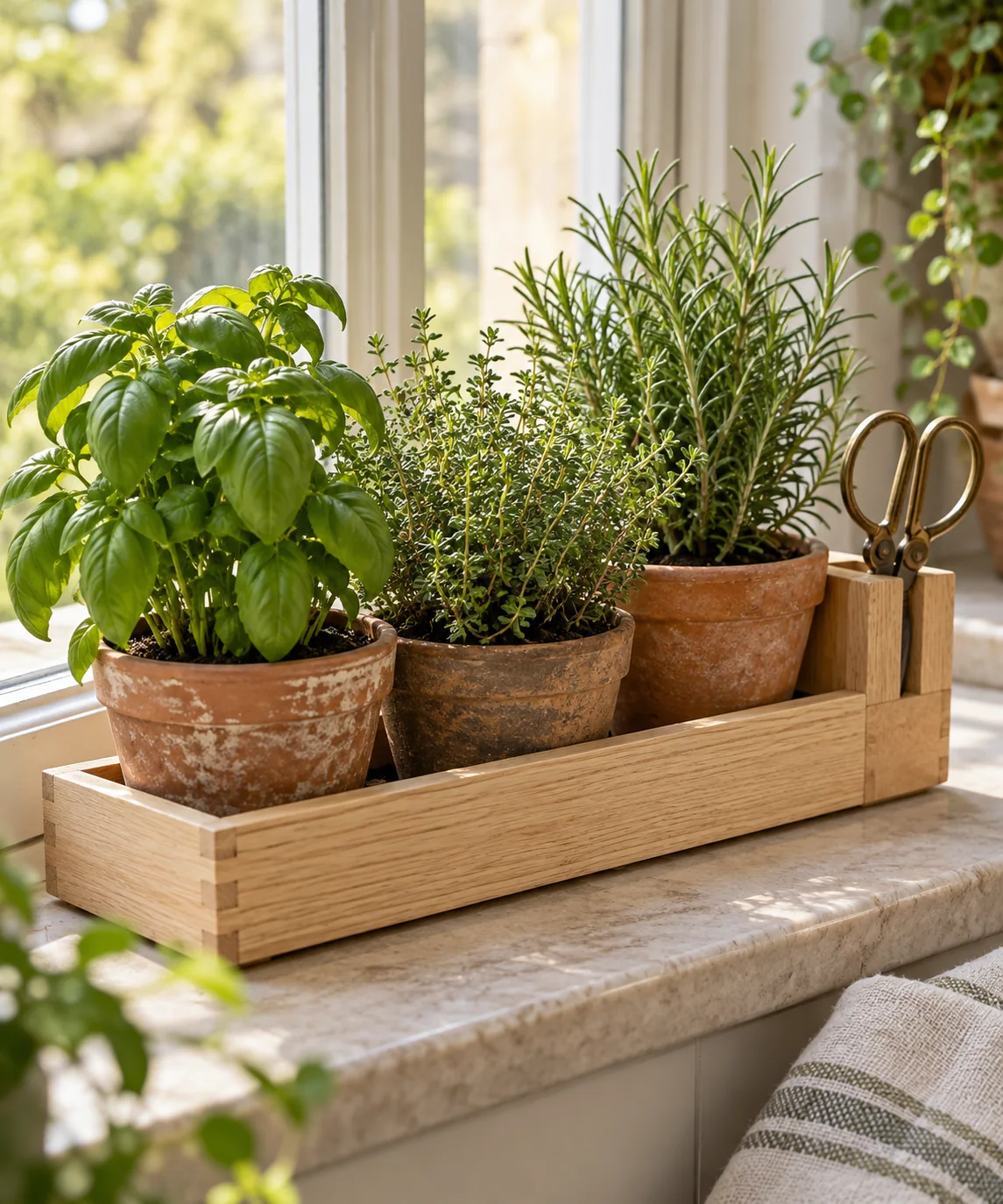
Window Sill Sizing and Stability
Measure sill depth before sourcing or assembling a multi-pot tray. A standard window ledge requires at least five to six inches of usable flat depth to support a three-pot tray without overhang. Test window operation to confirm cranks or sliding sashes do not collide with plant foliage or the holster frame. If condensation collects along the window glass during cold mornings, set the tray two inches back to maintain dry airflow around leaves and wooden elements.
Shears Holster Placement and Safety
The dedicated tool slot should hold herb snips vertically with blades pointed downward and handles clearly exposed for immediate grip. Position the holster on the tray's side farthest from window handles to avoid accidental contact during daily ventilation. Fabricate or select holsters made from sealed hardwood or lined brass rather than raw untreated leather, which absorbs airborne kitchen grease, traps humidity, and can stain sill paint over time.
Tray Drainage and Surface Isolation
Windowsill trays must prevent water seepage from reaching underlying trim work or drywall. Choose solid timber trays lined with removable zinc trays or durable composite inserts that catch incidental drips. Ensure each of the three pots sits in individual saucers within the main tray structure. Affix non-marking silicone feet beneath the tray base to elevate it slightly, allowing air to circulate and preventing trapped moisture from ruining underlying sill finishes.
Pot Selection and Plant Compatibility
Group herbs with complementary light and moisture needs within the three-pot cluster. For sun-drenched southern or western windows, pairing basil, parsley, and cilantro works well if each occupies its own pot. Separate containers prevent vigorous root systems from choking slower companions. Use four-inch pots with drainage holes, keeping heights uniform so all three plants share unobstructed access to window rays while leaving the shears holster easy to access.
Sanitation and Shears Maintenance
Culinary tools kept in open kitchen zones require regular hygiene routines. Clean snip blades with hot soapy water after harvesting and dry them thoroughly before returning them to the holster, preventing rust formation and cross-contamination between plants. Inspect the shears slot monthly to wipe out accumulated dust or stray leaf debris. Periodically oil carbon or brass shears pivots with food-grade mineral oil to maintain smooth, effortless cutting action during rapid meal preparation.
YOUR STARTING POINT
A little checklist.
Original editorial guidance. Images are AI-generated concepts, not photographs of completed projects. Our sources and approach.
Questions to consider
Can I use standard fabric or leather for the holster?
Raw fabric and leather absorb humidity, cooking grease, and water drops, quickly developing mildew near windows. Use sealed timber, treated rigid leather, or brass inserts that can be wiped clean with a dry microfiber cloth.
Will condensation from the window ruin the wooden tray?
Direct contact with cold glass condensation can cause wood rot and paint damage. Keep the tray pulled two inches forward from the pane, and use silicone riser feet beneath the tray to promote constant airflow.
How often should the snip shears be cleaned?
Wash the shears with dish soap and dry them immediately after every harvesting session. Herb saps leave sticky residues on blades that dull cutting edges, transfer plant diseases, and attract ambient kitchen dust over time.