Patio Seating Ideas · THE GUIDE
High-Back Wooden Wing Chair for Drafty North-Facing Patios
North-facing patios often sit in the shadow of the home, exposed to lingering shade and cool prevailing breezes that can make outdoor lounging uncomfortable. Standard low-back patio chairs offer little shielding from cool air currents, reducing time spent outside during shoulder seasons. Adding a high-back wooden wing chair creates a degree of personal shelter by placing a physical barrier behind the head and shoulders. When thoughtfully situated near existing garden walls or sturdy boundary screens, this traditional silhouette offers a cozy retreat. The following sections explore airflow considerations, panel construction, outdoor textiles, moisture management, and seasonal care.
Jump to the checklist ↓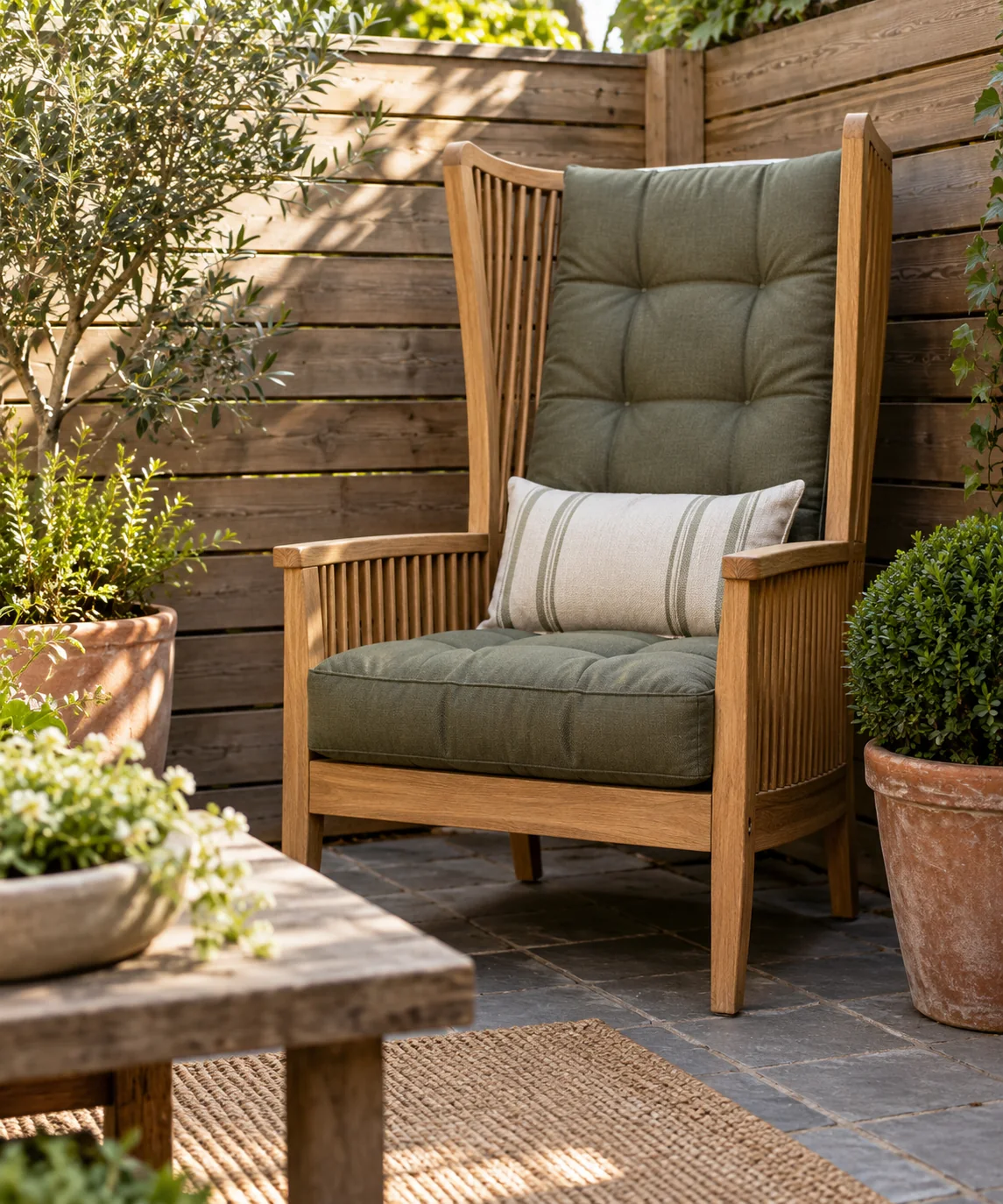
Corner Orientation and Airflow Observation
A traditional wingback design features extended side panels framing a tall backrest. Placing the chair in a corner formed by an exterior wall and a fence can offer sensible shelter from prevailing breezes, provided prevailing wind directions are observed across seasons. Rather than relying on a fixed forty-five-degree angle, experiment with shifting the chair periodically to see how local drafts move across your specific patio. Keep in mind that outdoor furniture remains vulnerable to strong gusts regardless of its position, so sheltered spots should still be monitored during inclement weather.
Evaluating Slatted Backs and Wind Resistance
Exterior wing chairs often feature slatted backrests rather than solid sheets of timber. Narrow gaps between slats allow some air passage, which helps reduce the sail effect that solid panels experience during sudden breezes. While slatted designs cannot completely eliminate wind pressure or prevent tipping in severe conditions, they offer a practical balance between draft reduction and stability. Before purchasing, verify that the chair base has a broad, well-proportioned footprint to help keep it grounded during typical outdoor conditions.
Layering Weather-Resistant Textiles
Solid wood surfaces readily absorb ambient chill, especially in shaded northern exposures. Adding dense, outdoor-rated seat pads and back cushions provides insulation between the wood frame and the body. Fabrics such as solution-dyed acrylic or UV-stabilized polyester resist moisture and hold up well to outdoor wear. Incorporating a supportive lumbar cushion and an exterior-grade throw blanket allows you to adapt to changing temperatures, creating a comfortable seating nook without permanently altering the patio structure.
Maintaining Ventilation Around Surfaces
Although placing a wing chair near a wall helps block drafts, avoid pushing the chair tight against exterior siding or fencing. Leaving visible breathing room between the chair frame and any vertical surface allows airflow to dry out damp surfaces after rainfall, helping to protect both the furniture finish and exterior building materials. Additionally, ensure that furniture placement preserves accessible walkways so family members can navigate the patio comfortably without squeezing past bulky armrests.
Protecting Chair Bases from Patio Moisture
Because north-facing patios receive limited direct sunlight, pavers and decking stay wet longer after rain. Elevating wooden chair legs with non-marking nylon glides or manufacturer-approved riser pads helps keep the end grain out of small puddles and slow-draining surface water. Periodically inspect the base of the legs for signs of moisture retention or wear. Following the manufacturer's recommendations for periodic wood sealing or oiling will help preserve the timber finish across wet seasons.
YOUR STARTING POINT
A little checklist.
Original editorial guidance. Images are AI-generated concepts, not photographs of completed projects. Our sources and approach.
Questions to consider
Can high-back wing chairs tip over in strong winds?
Yes. Any high-profile outdoor furniture piece can tip or shift during severe gusts. In open or windy locations, choose pieces with a sturdy, broad base, move them to sheltered storage when storms are forecast, and never assume weight alone guarantees stability.
Which timber species are suitable for shaded, damp outdoor settings?
Dense hardwoods like teak or appropriately treated exterior timbers resist decay better than untreated softwoods. However, any wood exposed to persistent shade and moisture requires routine maintenance, regular cleaning, and periodic oiling or sealing according to manufacturer instructions.
How should outdoor cushions be managed on shaded patios?
North-facing patios lack direct sunlight to speed up drying, so cushions should be brought indoors or stored in a weatherproof deck box between uses, especially before heavy rain or during long periods of damp weather.