Small Kitchen Organization · THE GUIDE
Immersion Blender and Attachment Basket in a Lower Drawer
Stick immersion blenders are versatile kitchen workhorses, but their awkward shape, long electrical cords, and multiple attachments often create chaos in standard drawers. Loose whisk heads, mini chopper blades, and aerator wands drift around, tangling cables and posing injury risks when reaching blindly inside. Allocating a dedicated, compartmentalized felt storage basket in a lower kitchen drawer provides safe, structured housing for the motor housing and its accessories. This reversible containment method protects blade edges, keeps cords untangled, and speeds up prep work by gathering all blending parts into one defined kit.
Jump to the checklist ↓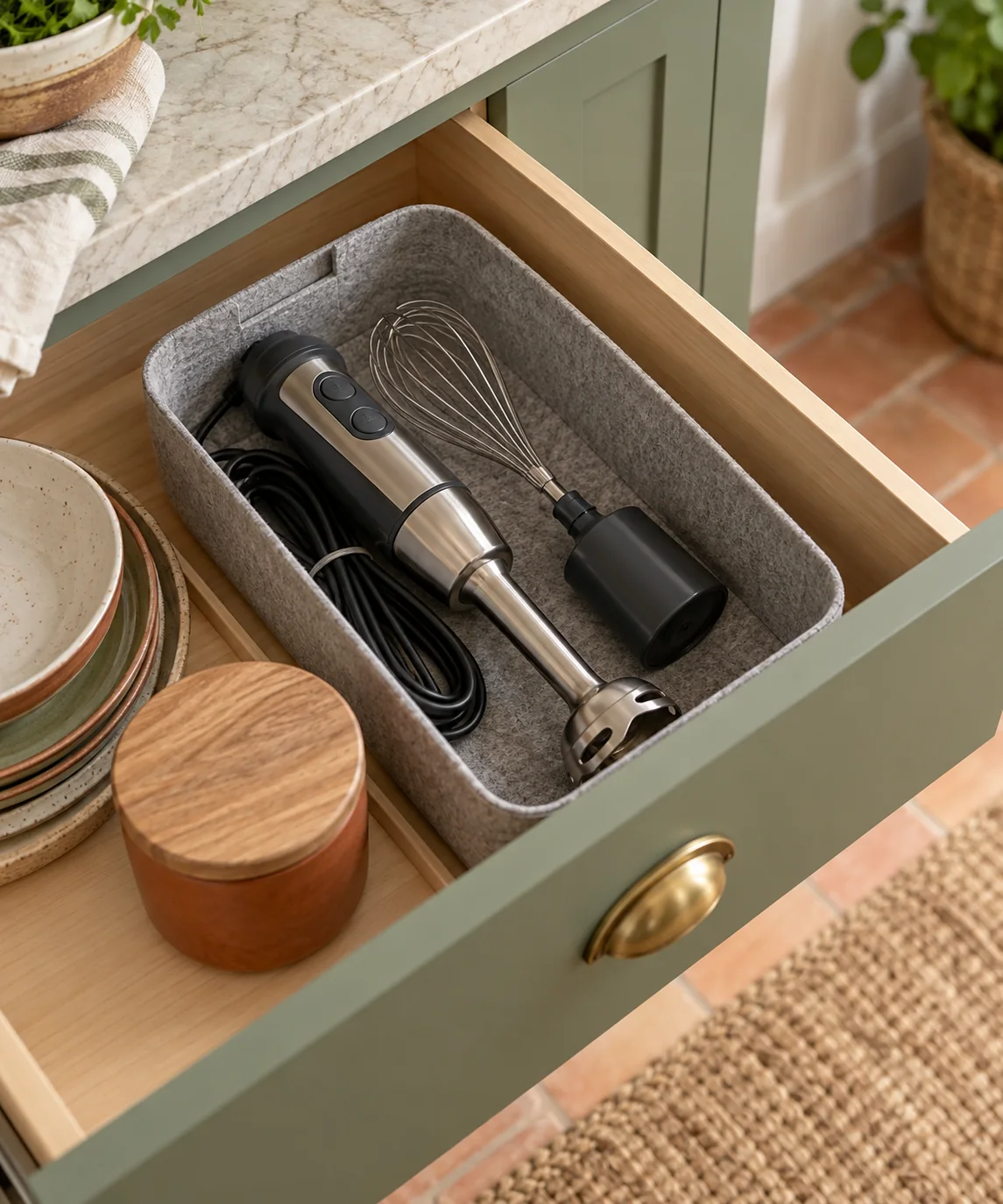
Drawer Dimensions and Basket Sizing
Assess the depth of your lower kitchen drawers before purchasing a storage basket. Most stick blender motor bodies measure twelve to sixteen inches in length, requiring a medium-to-deep drawer profile with at least four inches of vertical height. Select a semi-rigid felt storage bin that fills half of the drawer width, leaving the remaining section free for measuring cups or mixing jars. Measure drawer interior dimensions carefully to ensure the drawer glides shut smoothly.
Managing Power Cord Strain and Coiling
Improper storage often ruins small appliances through bent or pinched electrical wiring. When stowing the immersion blender, avoid winding the power cable tightly around the motor casing, which strains the internal copper filaments near the strain relief boot. Instead, gather the cord in loose, four-inch figure-eight loops and secure it with a soft fabric hook-and-loop strap. Place the looped bundle alongside the blender handle within a designated partition inside your basket.
Isolating Blades and Whisk Heads
Loose stainless steel accessories can dull or dent when colliding with other utensils during daily drawer movement. Choose a felt bin equipped with interior dividers or drop in smaller insert cups to separate attachments. Store the sharp blending wand, balloon whisk, and frother stem in individual slots. This isolation keeps small attachments upright, protects delicate whisk tines from crushing, and ensures you can grab the needed tool instantly without sorting through metal parts.
Felt Maintenance and Moisture Control
Felt provides a soft, sound-dampening barrier that protects drawer baseboards and stops metal components from rattling. However, wool and synthetic felt readily absorb lingering moisture and food residue. Always hand-wash and thoroughly air-dry every blender shaft, blade head, and accessory before returning it to the storage basket. Periodically shake out the felt basket to eliminate stray dust crumbs, spot-cleaning any grease marks with a lightly dampened cloth and mild detergent.
Layout Adjustments for Compact Storage
If drawer depth is constrained, detach the stainless blending wand from the motorized handle and store the two primary pieces side by side. Laying components parallel cuts the required basket length nearly in half, letting the assembly sit across shallower nine-inch drawer widths. Group any auxiliary chopper lids or beaker attachments directly behind the felt bin, ensuring the entire blending station functions as a unified prep zone in your lower kitchen cabinet.
YOUR STARTING POINT
A little checklist.
Original editorial guidance. Images are AI-generated concepts, not photographs of completed projects. Our sources and approach.
Questions to consider
Why use felt instead of rigid plastic for appliance drawer bins?
Felt cushions metal attachments against scratching, prevents sliding and rattling when opening heavy drawers, and holds its shape softly without chipping or scuffing delicate painted drawer interiors.
Can I store the processing chopper bowl inside the same basket?
If the basket footprint allows, place the bowl beside the motor. Otherwise, nest the motor basket inside the drawer and set the wider bowl beside it on drawer liner.
How do I secure loose cord straps inside the drawer?
Use reusable hook-and-loop cable ties attached directly to the cord. They remain on the cable during blender operation and fasten quickly before putting the appliance back into the basket.