Rental-Friendly Decor · THE GUIDE
Improve Desk Illumination with a Padded Clamp-On Task Lamp
Rented workspaces often feature inadequate overhead lighting paired with strict leases that forbid installing hardwired wall sconces. At the same time, compact work surfaces quickly become overcrowded when standard table lamps occupy valuable desktop territory. A padded clamp-on task lamp provides focused illumination directly where you read or write while keeping the desktop clear. Because the mounting bracket grips the edge of the furniture without screws or adhesive tape, the setup remains entirely reversible. Selecting the right clamp design and positioning protects your furniture finish while creating a comfortable, glare-free environment for detailed desk work.
Jump to the checklist ↓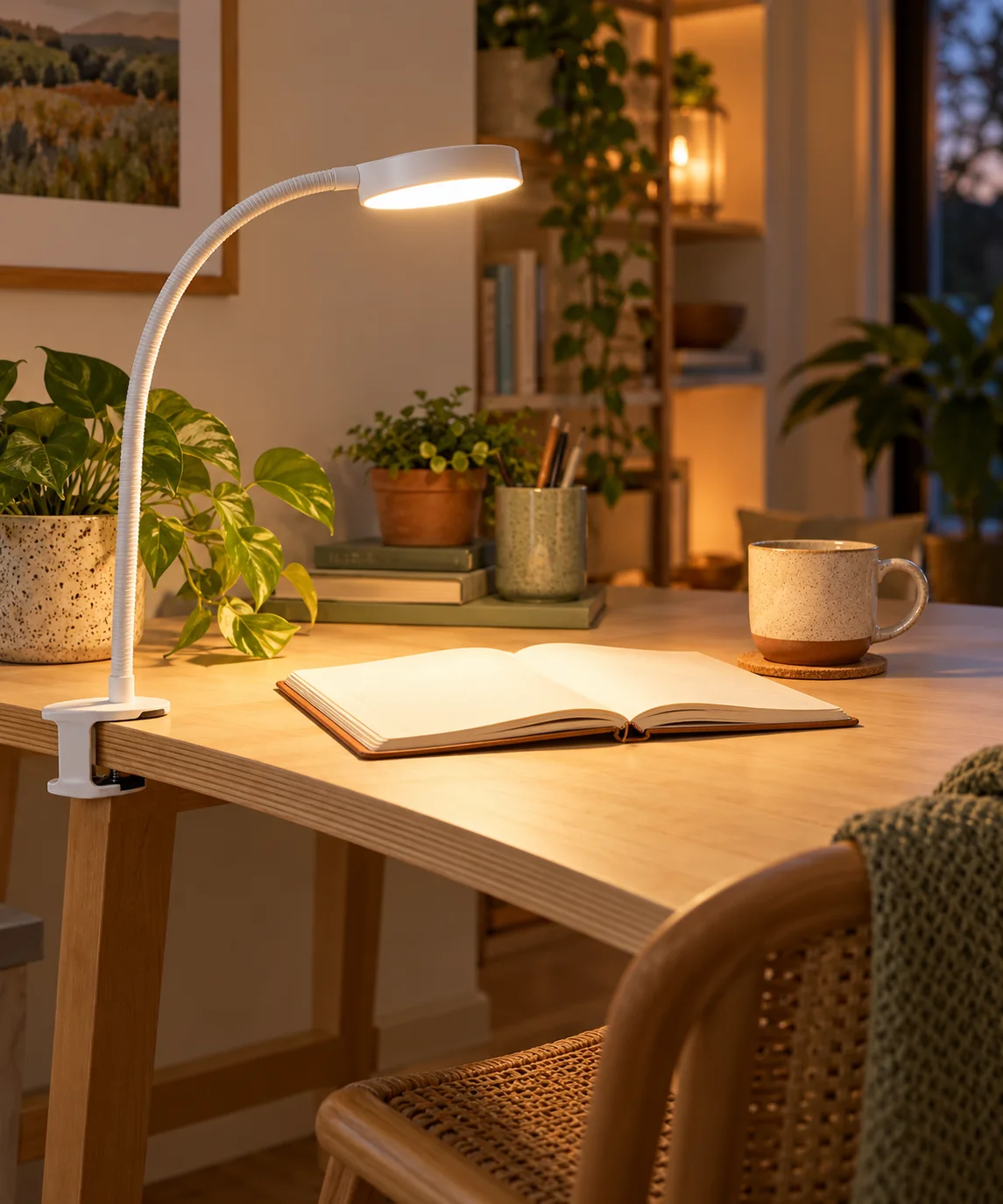
Assessing Desk Edge Clearance and Bevels
Before choosing a clamp lamp, measure the thickness of your desktop and check the edge profile against the lamp manufacturer's stated clamping range. Most clamp brackets accommodate thicknesses between half an inch and two and a half inches. Square, flat edges provide the most secure grip. Desks with rounded bullnose profiles, sloping decorative bevels, or deep chamfers may prevent the clamp jaws from seating evenly, increasing the risk of slippage. Additionally, check the underside of the desk edge to verify that the clamp bracket has sufficient unobstructed depth to clear any underlying support rails, modesty panels, or structural framework.
Protecting Furniture Finishes with Padding
Metal mounting brackets can indent soft wood species or scratch delicate veneers when tightened down. Inspect the clamp to confirm it includes manufacturer-installed dense rubber or foam pads on both contact surfaces. If the lamp features bare metal clamping plates, adhere thin pieces of felt or dense silicone sheet to line the contact zones. Avoid overtightening the screw mechanism; hand-tighten until the fixture sits firmly without wobbling. Excessive mechanical force can crush composite substrates, deform hollow-core tabletops, or split solid wood edges.
Optimal Lamp Positioning for Glare Reduction
Position the lamp base on the side opposite your dominant writing hand to prevent casting harsh hand shadows across paperwork or notebooks. Adjust the shade or flexible neck so the light beam illuminates your active work area rather than shining directly toward your eyes. When using the task lamp near a computer monitor, keep the shade lower than eye level and direct the beam downward onto desktop references to avoid creating distracting reflections or veiling glare across the display screen.
Managing Cords Along Furniture Legs
A loose power cord can drag on the fixture head, loosen the clamp over time, or create a tripping hazard. Route the cord from the lamp base along the rear or side of the desk frame using removable hook-and-loop cable ties. Fasten the cable neatly along the furniture leg toward the nearest wall outlet, leaving sufficient slack near the lamp head so adjusting the arm does not yank the cord. Avoid running electrical cords under desk chair wheels, rugs, or across primary footpaths.
Practical Limitations and Weight Distribution
Clamp-on task lamps with long articulated arms exert rotational leverage against the mounting point when extended. Lightweight gooseneck models work well on thinner surfaces, whereas heavy multi-jointed architect fixtures require substantial, rigid desk frames to remain stable without tilting. Always support the clamp base with one hand while adjusting the lamp neck or arm with the other to avoid loosening the mounting bracket. Periodically check the hand screw, as normal room temperature shifts and everyday desk movement can gradually reduce clamping tension.
YOUR STARTING POINT
A little checklist.
Original editorial guidance. Images are AI-generated concepts, not photographs of completed projects. Our sources and approach.
Questions to consider
Can I mount a clamp lamp onto glass-top desks?
Tempered glass tops present a significant risk of cracking under concentrated clamping pressure. It is best to avoid clamping heavy task lamps directly to unreinforced glass, opting instead for freestanding compact weighted bases.
Can I mount a clamp lamp onto a beveled or curved desk edge?
Clamps require flat, parallel surfaces to grip safely. Beveled, chamfered, or bullnose edges can cause the bracket to tilt, twist, or slide off under the lamp's leverage. If your desk lacks a flat edge with adequate clearance, use a weighted freestanding base or an edge-mount system specifically rated by the manufacturer for non-standard profiles.
What bulb type works best for task illumination?
Choose a shielded LED bulb rated between 2700K and 3000K for comfortable reading. Ensure the bulb wattage does not exceed the fixture manufacturer's maximum rating, and choose frosted finishes to prevent harsh directional glare.