Small Balcony Layouts · THE GUIDE
Incorporate a Ceramic Garden Stool as a Dual-Purpose Table
Small balconies require furnishings that serve multiple roles without deteriorating under shifting weather conditions. A glazed ceramic garden stool offers a dense, weather-resistant surface that functions reliably as an accent drink table during solitary mornings and transitions quickly into a spare guest seat when entertaining. Because high-fired ceramic is non-porous, it resists standing moisture and sunlight that can degrade certain outdoor plastics. Integrating this classic drum-shaped fixture provides steady utility without consuming excessive floor area, making it a practical option for narrow apartment balconies and open-air decks.
Jump to the checklist ↓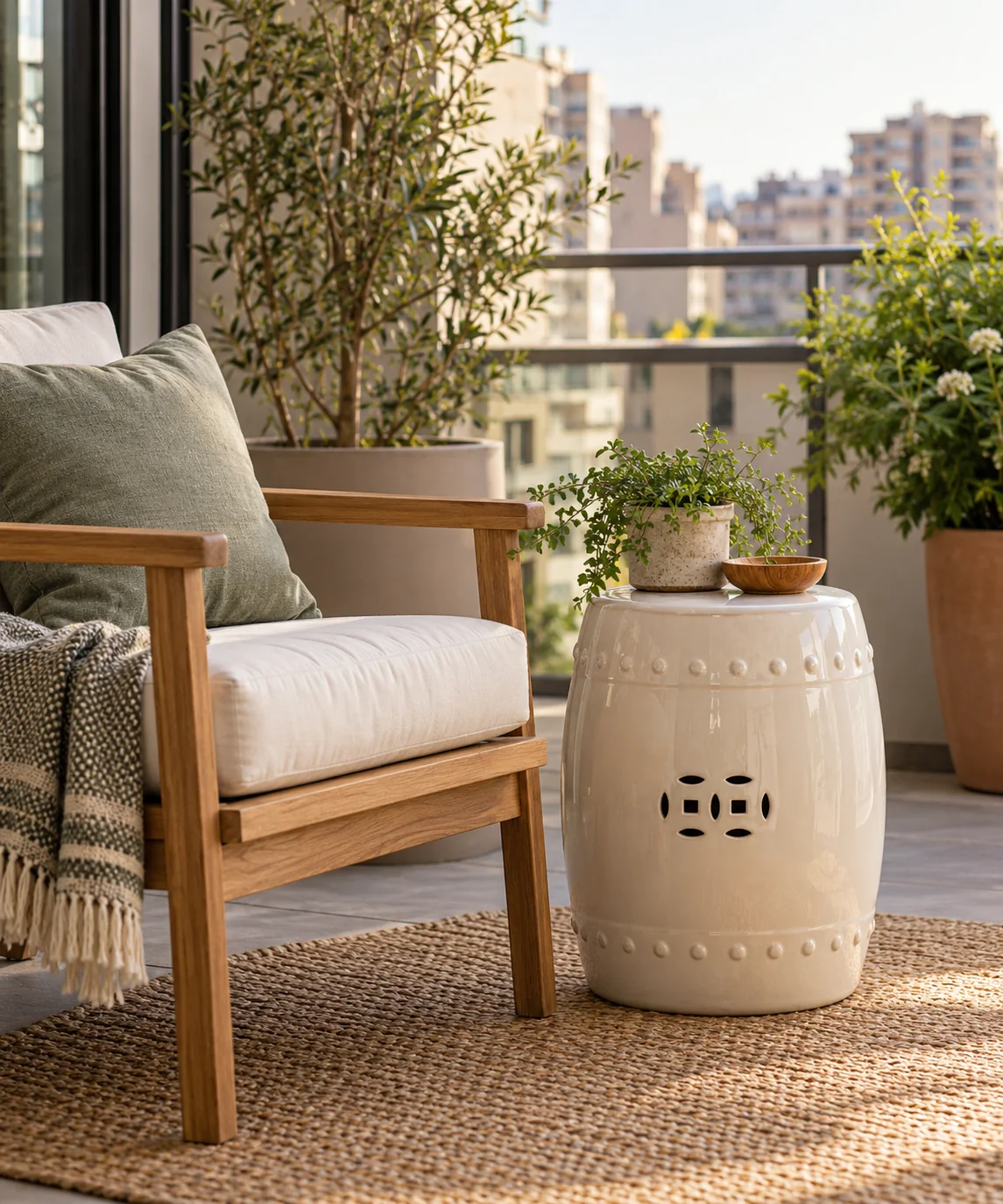
Assessing Mass, Stability, and Decking
A glazed ceramic stool features a low center of gravity and noticeable mass, which helps it remain stable during moderate balcony breezes where lightweight resin tables might shift. However, ceramic stools vary widely in weight, wall thickness, and stability, so they should still be monitored during severe wind events. Additionally, consider point loading on your balcony floor: when an adult sits on a small cylindrical base, that concentrated load transfers directly to the decking. Confirm that delicate wood tiles or soft composite planks are protected from pressure marks or scratching.
Checking Scale and Egress Pathways
Garden stools typically feature compact dimensions, often measuring around twelve to fourteen inches across and sixteen to eighteen inches tall. This modest profile aligns well with standard balcony chair seat heights, making it easy to reach for a book or beverage. Before adding a stool to a narrow balcony, plan your layout to maintain an unblocked walking path to doors and emergency exits. Using removable painter's tape to mark the stool's footprint on the floor helps verify that circulation paths remain clear.
Evaluating Surface Shape and Top Utility
Many ceramic stools feature a slightly domed top or decorative piercing. While pierced details allow rainwater to drain naturally, uneven crowns can make balancing cups or drinking glasses precarious. For reliable tabletop use, look for designs with a flattened central surface. If your stool has a curved or patterned top, using a flat, stable coaster or small wooden tray creates a secure resting area for drinks. When used as occasional seating, pierced side cutouts also serve as convenient handholds for repositioning.
Winterizing Hollow Ceramic Fixtures
Although vitrified ceramic withstands summer rain and heat, prolonged freezing temperatures pose a risk to hollow earthenware and stoneware. Moisture that seeps into unglazed bottom rims or interior cavities can expand during freeze-thaw cycles, leading to structural cracks or surface spalling. In regions with freezing winters, bring hollow ceramic stools indoors before the first hard freeze, or store them in a dry, sheltered location protected from standing water and snow accumulation.
Balancing Layouts and Circulation
Positioning a solid ceramic piece alongside open-frame chairs creates an attractive visual balance without obstructing sightlines across the balcony railing. Placing the stool within reach of the primary chair's armrest keeps items accessible while preventing the stool from jutting into walkways. When not in active use as a side table or guest perch, tucking the stool against an adjacent exterior wall or beside a planter maintains clear floor space for watering, cleaning, and daily access.
YOUR STARTING POINT
A little checklist.
Original editorial guidance. Images are AI-generated concepts, not photographs of completed projects. Our sources and approach.
Questions to consider
Can a ceramic garden stool be used safely as an outdoor seat?
Many ceramic garden stools can support seated adults, but weight capacities vary significantly by manufacturer and construction quality. Always verify the manufacturer's specified load rating rather than assuming all ceramic stools support sitting, and remember that unpadded ceramic is best suited for brief occasional seating.
How can I protect composite or wood decking from ceramic scuffs?
Adhering heavy-duty exterior silicone or rubber bumper pads to the unglazed bottom rim creates a protective barrier. These pads prevent direct abrasive contact against deck boards, reduce sliding, and allow water to drain freely beneath the base rather than creating trapped moisture rings.
Can ceramic garden stools remain outdoors year-round?
In mild climates without freezing conditions, ceramic stools can generally stay outside throughout the year. However, in areas subject to freezing temperatures, any water absorbed by unglazed clay inside the base can freeze and crack the stool, making dry winter indoor storage essential.