Indoor Plant Styling · THE GUIDE
Incorporate a Desktop Terrarium Beside Everyday Stationery
Adding live plants to a workstation can create a calming environment, but open pots and drainage trays introduce moisture risks near paperwork, books, and electronics. A compact, lidded desktop terrarium offers an enclosed alternative by keeping humidity and substrate contained within glass. By selecting a modest container size and placing it away from high-movement typing and writing areas, you can enjoy greenery at your desk while protecting your workspace from soil spills and condensation damage.
Jump to the checklist ↓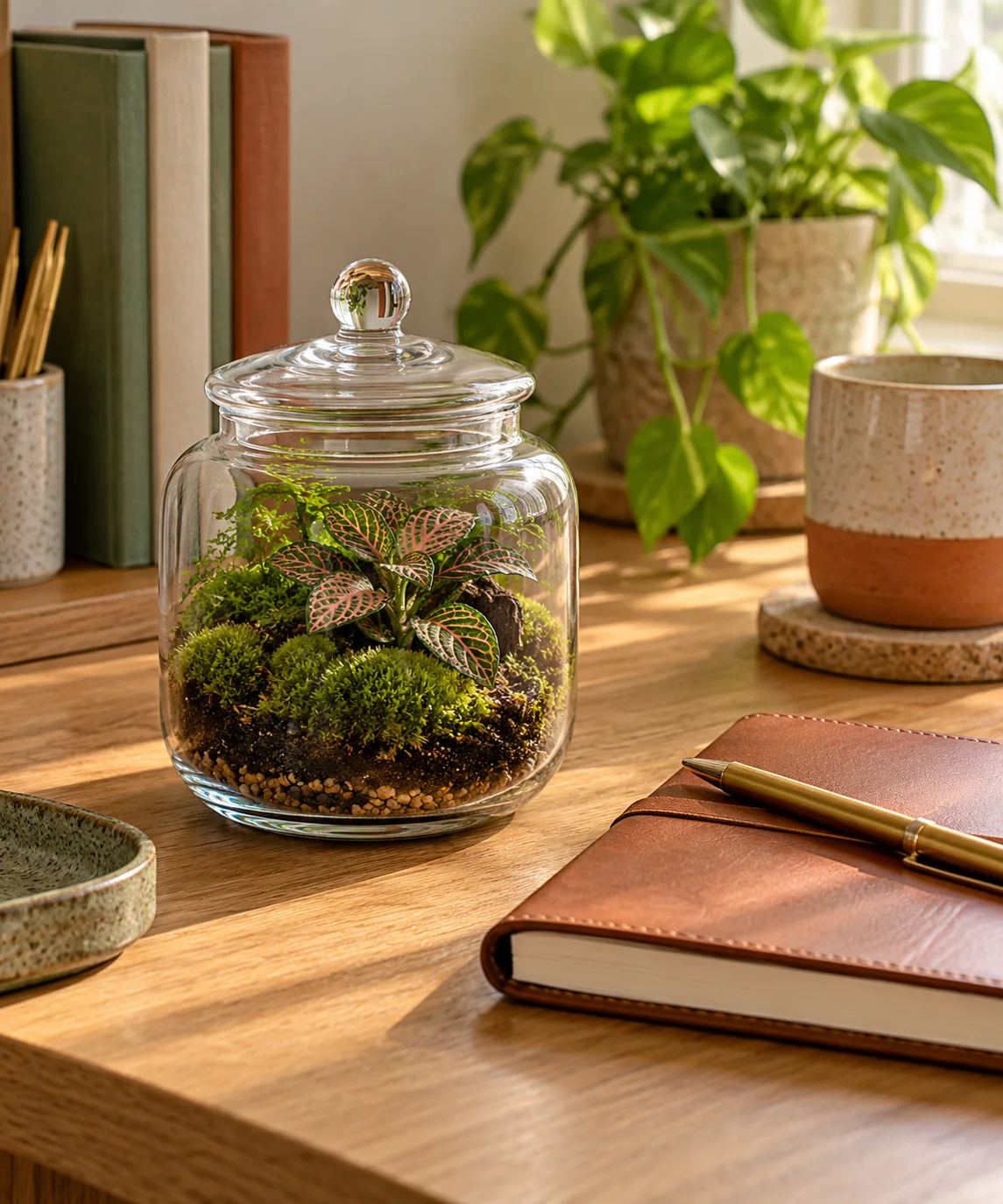
Evaluating Desk Footprint and Vessel Selection
Select a modest glass vessel with a well-fitting lid that fits comfortably on your desk without crowding everyday necessities. Keep the container footprint proportional to your available work area so it does not interfere with computer peripherals, writing materials, or task lighting. Place the terrarium outside your primary arm movements and away from keyboard and mouse paths, reducing the likelihood of accidental bumps or spills during busy work sessions.
Structuring Internal Substrates Without Drainage
Because a sealed terrarium lacks drainage holes, water management relies on careful layering and conservative moisture application. A foundational base of small pebbles or coarse gravel provides a catchment area where excess moisture can settle below the root zone, while a modest layer of horticultural charcoal can help reduce sour odors. Add a well-aerated potting mix suited to terrariums, keeping substrate levels low enough to leave ample headroom for foliage growth.
Selecting Compact Flora for Enclosed Glass
Choose slow-growing, humidity-tolerant plants that adapt well to closed containers, such as dwarf nerve plants (Fittonia), small ferns, or cushion moss. Avoid desert succulents and cacti, which quickly deteriorate in humid, enclosed environments. Arrange plants so that leaves do not press directly against the glass sides, as trapped moisture between glass and foliage can encourage leaf blemish and localized rot.
Protecting Writing Materials and Desk Surfaces
Glass containers can accumulate exterior moisture during room temperature changes or after periodic misting. Safeguard wood finishes, leather desk blotters, and paper stationery by setting the terrarium on a cork coaster, ceramic tray, or non-absorbent mat. Maintain a practical separation between the vessel and loose papers, journals, or electronics so that opening the lid for maintenance does not risk water droplets landing on important documents.
Managing Light Exposure and Condensation
Position the terrarium where it receives gentle, indirect natural light or moderate illumination from an office lamp. Avoid placing closed glass containers on sunny windowsills, as enclosed glass traps solar heat rapidly and can harm delicate foliage. Observe internal condensation patterns: a light mist on the glass in the morning is typical, but if heavy water droplets continuously obscure the glass, open the lid for a few hours to vent excess humidity.
YOUR STARTING POINT
A little checklist.
Original editorial guidance. Images are AI-generated concepts, not photographs of completed projects. Our sources and approach.
Questions to consider
How often do I need to water a sealed desktop terrarium?
Closed terrariums recycle moisture and require watering only infrequently, often weeks or months apart. Add tiny amounts of water with a dropper or light mist only when the soil appears dry and glass condensation ceases completely.
Can I use artificial desk lamps to provide light for the plants?
Yes, standard neutral LED task lamps positioned at a reasonable distance provide suitable light without generating excess heat. Avoid incandescent or high-heat halogen bulbs placed close to the glass lid.
What should I do if mold appears inside the terrarium?
Open the lid to increase air circulation, carefully remove affected plant tissue or moss with tweezers, and let excess moisture vent before resealing the container.