Small Balcony Layouts · THE GUIDE
Incorporate a Foldable Drying Tower with Multi-Tier Wire Shelves
Drying laundry outdoors saves household energy, yet traditional horizontal drying racks monopolize valuable balcony floor area and obstruct sliding doors. A vertical folding drying tower solves this bottleneck by stacking wire drying rungs upward across multiple tiers on an ultra-compact footprint. When positioned deliberately in a sheltered alcove, it holds several loads of wash while maintaining functional pathways. Understanding how to manage load balancing, wind safety, and folding clearance allows you to dry clothing efficiently outdoors without turning your limited leisure space into an impassable storage yard.
Jump to the checklist ↓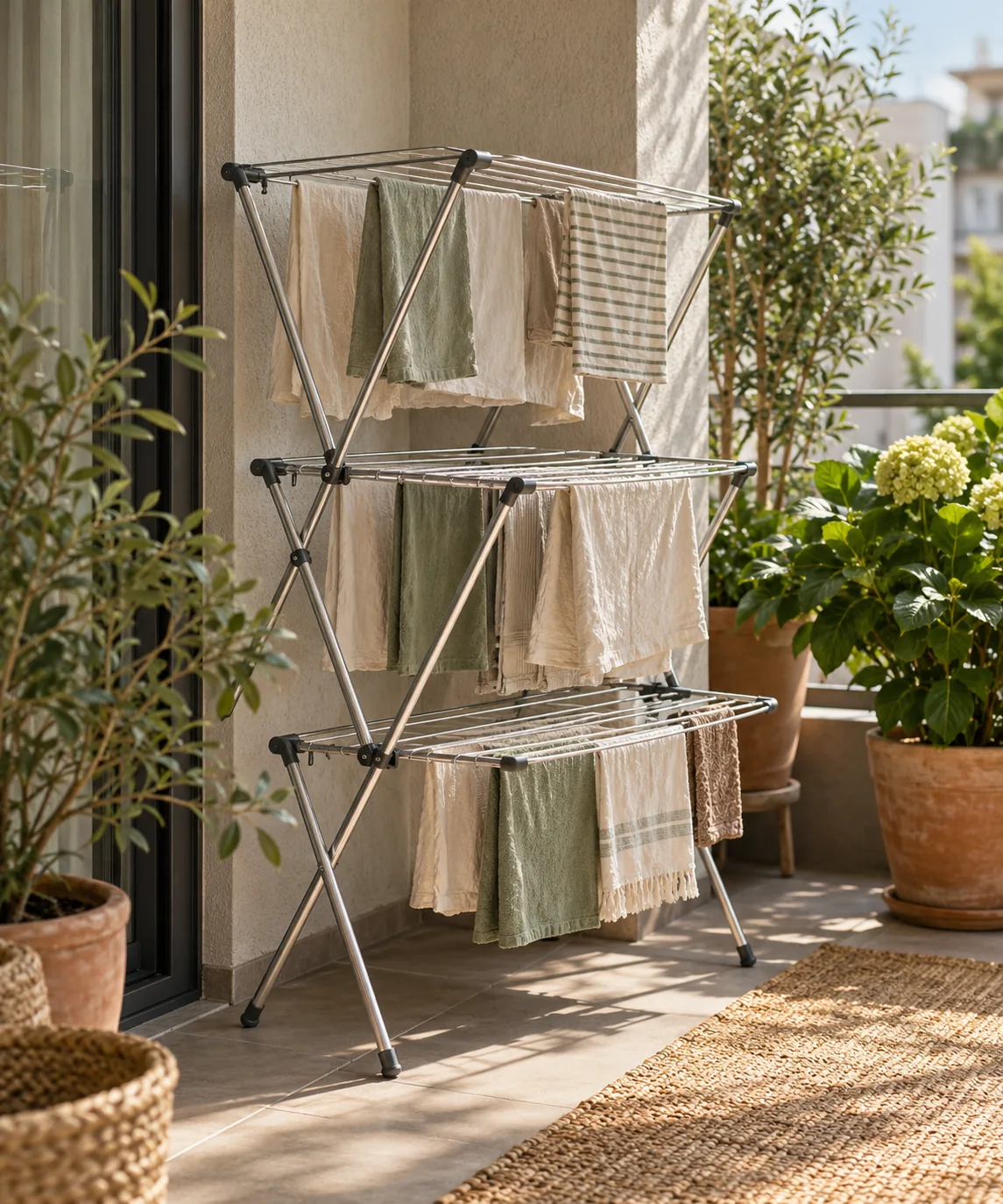
Assessing Balcony Space and Egress Clearance
A vertical drying tower utilizes upward vertical space, making it useful for narrow outdoor areas where horizontal clotheslines cannot fit. Before setting up the tower, inspect the proposed location to ensure it does not impede doorway swings, building emergency paths, or drainage pathways. Balcony regulations and building codes require clear egress corridors; check building rules for specific clearance mandates. The rack must always rest on a level deck surface and should never be propped against or attached to balcony railings.
Balancing Load Distribution Across Tiers
Wet clothing carries significant weight that can raise the rack's center of gravity if improperly loaded. Hang heaviest wet items, such as denim or bath towels, on the lowest rungs to keep weight centered near the base. Distribute garments symmetrically across front and rear wings to prevent accidental tipping. Lighter items, including shirts and linens, belong on upper tiers. Space garments along the rungs to permit natural airflow between fabrics, which promotes consistent drying without crowding.
Managing Airflow and Evaporation
Drying efficiency on an enclosed balcony depends on ambient ventilation and humidity rather than direct sunlight alone. Position the drying rack where natural airflow can move freely through the hanging textiles, avoiding tight dead-air corners behind solid privacy dividers. Avoid draping wide sheets or large blankets over the topmost shelf, as doing so creates a canopy effect that traps rising moisture around the lower racks. Fold larger linens lengthwise across single rungs instead.
Managing Wind Exposure and Structural Stability
Elevated balconies frequently experience turbulent, unpredictable gusts that turn laundry-laden towers into sails. Integrated frame latches and leg braces must be fully engaged before hanging garments. Do not rely on planters or outdoor furniture as makeshift windbreaks, as they do not reliably divert strong gusts and can cause unstable air turbulence. When breezy or gusty conditions arise, move the rack indoors immediately rather than risking rack toppling or falling garments.
Collapsing and Maintenance Routines
When laundry is dry, promptly fold the rack flat to reclaim balcony floor space and prevent prolonged weather exposure. Storing the folded unit indoors or in a dry utility closet extends the life of the protective finish. Periodically inspect the wire rungs and hinge rivets for signs of wear or chipping in the powder coating. Wipe down the rungs with a clean, damp cloth before each use to prevent ambient outdoor dust and pollen from transferring onto clean garments.
YOUR STARTING POINT
A little checklist.
Original editorial guidance. Images are AI-generated concepts, not photographs of completed projects. Our sources and approach.
Questions to consider
Can a drying tower be used with only half of the shelves deployed?
Many multi-tier designs allow users to fold down one side so the rack sits closer to a structural wall. Ensure the base remains balanced and that heavier items are still placed on the bottom rungs to prevent leaning.
What should I do if unexpected wind begins while clothes are drying?
Bring the drying tower indoors immediately. Hanging laundry acts as a sail in elevated balcony wind, and makeshift weights or planters do not provide dependable wind protection.
How do I prevent outdoor wire drying racks from developing rust?
Choose models with durable exterior-grade powder or epoxy coatings, and store the collapsed rack indoors when not in use. Immediately wipe away moisture or grit, and avoid scratching the finish with metal hangers.